Economy
Taxing mobile phones: when the State undermines its own digital ambitions
Success in digital transformation begins with connecting citizens and lowering access costs to technology. Yet in Cameroon, the government has chosen a different path: imposing a hefty tax on mobile phones. A decision that risks widening the digital divide rather than bridging it.
Cameroon’s latest fiscal policy sends a contradictory message. On one hand, officials tout digital transformation, economic innovation, and connectivity as national priorities. On the other, a new tax has been introduced that directly penalizes the use of mobile phones—the very tools essential to achieving these goals.
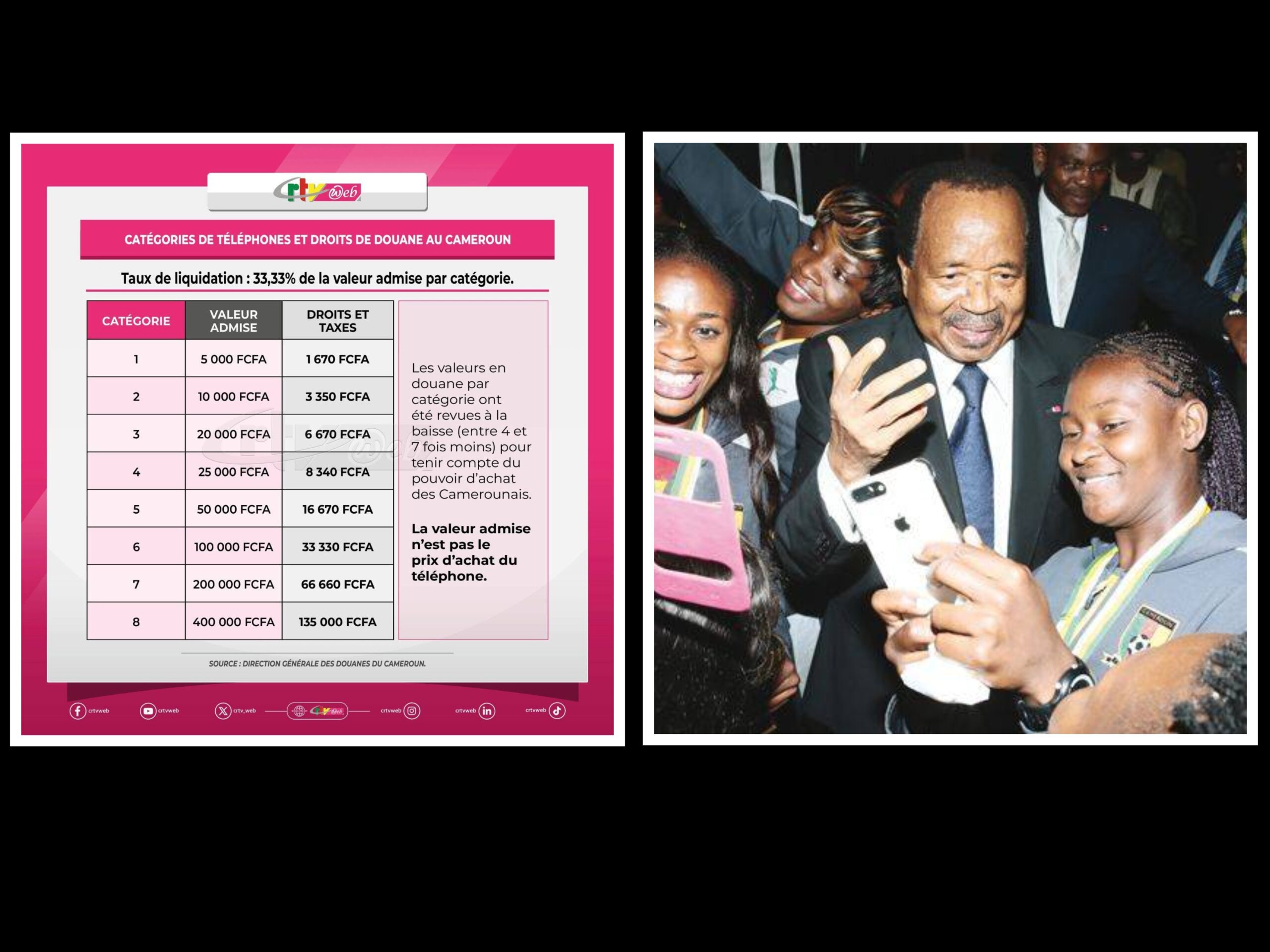
Under this measure, every mobile phone owner must pay a tax equivalent to 33.33% of the device’s declared value. The burden ranges from 1,670 FCFA for basic models to 135,000 FCFA for premium smartphones. This fee is mandatory simply to use the device within Cameroon’s borders.
Contradiction at the heart of digital policy
This tax is not just a financial hurdle—it’s a barrier to inclusion. Mobile phones are more than communication tools; for millions of Cameroonians, they are lifelines to education, commerce, and public services:
- Students access online learning platforms
- Small business owners process payments via mobile money
- Agricultural workers check market prices in real time
- Artisans promote their services on messaging apps
- Informal workers register for social and administrative services
For many, a smartphone isn’t a luxury—it’s the only gateway to the digital economy. Taxing it means charging entry to a national project the government claims to champion.
A tax with no industrial justification
The measure is even more puzzling given Cameroon’s industrial reality: it has no domestic mobile phone manufacturing, no assembly plants, and no announced plans to develop local alternatives. Citizens are left with no choice but to import devices—and now, to pay a tax just to use them.
Typically, import taxes aim to protect or stimulate local industry. But with no local production to protect, this tax doesn’t build anything—it only extracts revenue from an already stretched population.
What’s next? Laptops, tablets, and beyond?
The question is urgent: if mobile phones are taxed at 33%, which digital tool will be next? Laptops? Tablets? Desktops? The logic suggests no limit. With each new tax, the digital divide deepens between those who can afford connectivity and those who cannot—eroding competitiveness and pushing the nation backward.
The world moves forward. Cameroon risks falling behind.
Across Africa, nations are investing in digital inclusion as a driver of economic growth. A connected citizen is a productive citizen. A connected population is a competitive economy. The data is clear: digital access fuels development.
By making mobile phones more expensive, Cameroon is choosing exclusion over inclusion. And should the tax extend to other devices, it will not only abandon its digital future—it will actively sabotage it.