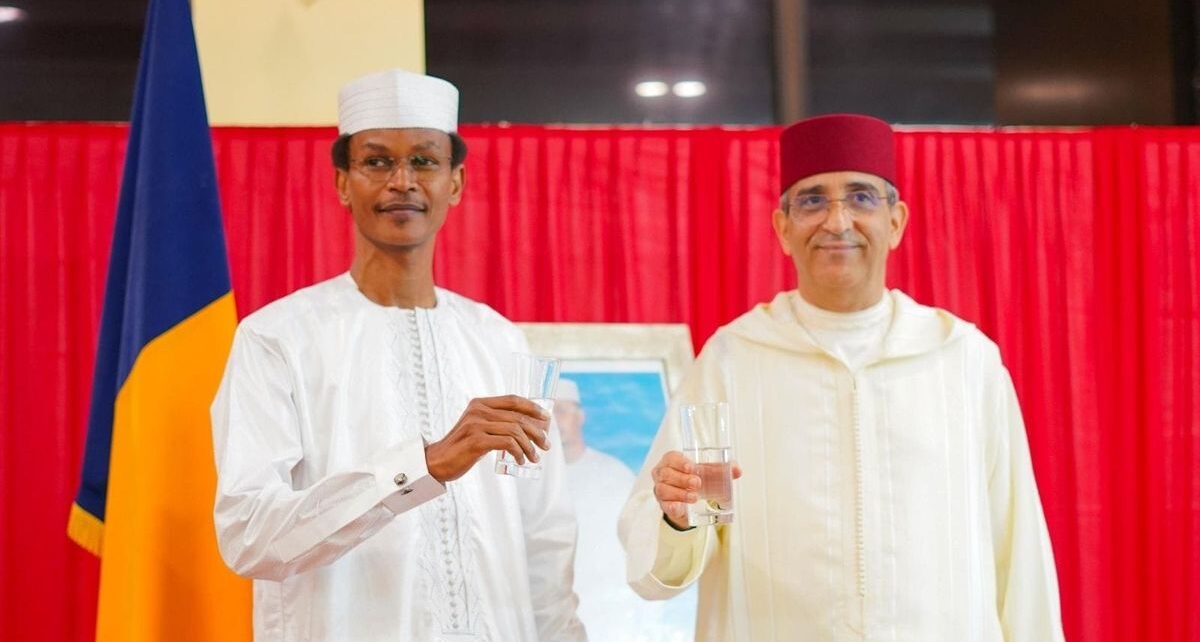
The 27th anniversary of King Mohammed VI’s accession to the throne was marked with great prominence in Chad’s capital, N’Djamena, where Ambassador Abdellatif Erroja underscored the flourishing Morocco-Chad partnership. The event, held on July 30, 2026, brought together Chad’s top officials, including Secretary General Mahamat Issa Zakaria of the Ministry of Foreign Affairs and African Integration, alongside diplomats and key national figures.
Honoring Morocco’s National Pride
The Throne Day celebration on July 30 commemorates King Mohammed VI’s ascension to the throne in 1999. This year’s gathering at the Moroccan Embassy in N’Djamena was a showcase of the kingdom’s institutional strength and historical legacy. Ambassador Erroja described the occasion as a “cornerstone of Morocco’s national identity,” emphasizing how the day reflects the nation’s transformative journey under the King’s leadership.
Economic Resilience Under the Monarchy
Morocco’s economic performance took center stage during the event. The Ambassador highlighted a 4.6% growth rate in the first quarter of 2026, coupled with controlled inflation at 1.1%. Agriculture, a vital sector, saw an 18.4% increase in value added. The African Development Bank (AfDB) recognized Morocco as Africa’s leading industrial power in May 2026, driven by competitive ecosystems in automotive, aeronautics, agri-food, and renewable energy.
The tourism sector continued its upward trajectory, welcoming over 7.7 million visitors by the end of May 2026, including 1.7 million in May alone. Casablanca Finance City also climbed to the 49th spot in the Global Financial Centres Index, signaling strong investor confidence. Preparations for the 2030 FIFA World Cup, co-hosted with Spain and Portugal, are underway with substantial investments in infrastructure upgrades.
Diplomatic Influence Across Continents
Ambassador Erroja also highlighted Morocco’s strengthened diplomatic standing, particularly through the landmark UN Security Council Resolution 2797, which recognized Morocco’s autonomy plan for the Sahara as the sole basis for a lasting political solution. October 31 was designated as “Aïd Al Wahda” (Unity Day) in recognition of this milestone.
On the African continent, Morocco continues to deepen its cooperative ties through a model of solidarity and mutual benefit. The Africa-Atlantic Gas Pipeline project, connecting Nigeria to Morocco, exemplifies this vision. The intergovernmental agreement for the pipeline was signed on July 19, 2026, during the ECOWAS summit in Freetown.
With over 1,600 cooperation agreements spanning diverse sectors, Morocco stands as a hub for African youth development, having trained more than 1,200 professionals in 2025. It also ranks as the top investor in West Africa and the second-largest on the continent.
N’Djamena and Rabat: A Model Partnership
A significant portion of the Ambassador’s address was dedicated to the robust Morocco-Chad relationship, described as a benchmark for South-South collaboration. The two nations collaborate extensively across higher education, health, agriculture, livestock, housing, transport, energy, culture, vocational training, trade, and aviation.
Notable achievements include:
- An increase in Moroccan scholarships for Chadian students, rising to 250 for the 2025-2026 academic year, up from 150 previously.
- The inauguration of the Mohammed VI Mosque in N’Djamena in 2026, symbolizing the deep spiritual and historical bonds between the two peoples.
- Enhanced technical exchanges in sectors such as health, housing, urban planning, animal health, justice, vocational training, military affairs, customs, anti-corruption, cybersecurity, and media.
- The resumption of direct flights by Royal Air Maroc between Casablanca and N’Djamena in September 2025, a major boost for connectivity.
The Ambassador also noted that Morocco is Chad’s top African investor, driven by a strong presence of Moroccan private enterprises.
Chad’s Vision 2030: A Shared Future
Ambassador Erroja praised Chad’s “Tchad Connexion 2030” national development plan, calling it a promising framework for high-value projects in key sectors. He reaffirmed Morocco’s commitment to strengthening the centuries-old ties between the two nations, in line with the aspirations of King Mohammed VI and Chadian transitional leader Mahamat Idriss Déby Itno.
Celebrating Human Bridges
In his closing remarks, the Ambassador expressed deep gratitude to individuals and organizations fostering bilateral relations. He particularly thanked his Chief Advisor, Hassan Bahadi, who is concluding his mission, as well as Moroccan businesses, the Moroccan community in Chad, and associations like the Mohammed VI Foundation of African Ulemas, the Association of Chadian Graduates and Friends of Morocco (ALTAM), and the Amicale of Doctors trained in Moroccan university hospitals.
A Partnership Without Limits
The event concluded with a resounding affirmation of the unbreakable friendship between Morocco and Chad. Ambassador Erroja stated, “Our partnership with the land of Toumaï knows no bounds. It is built on mutual trust, respect, and a relentless pursuit of tangible, sustainable outcomes that serve the aspirations of both our peoples.”