
the dark shadow over Congo’s power struggles
by gilbert muhika / political analyst
In the Democratic Republic of Congo, power has never been seized through parliamentary debates—it has always been taken in the shadows. Since gaining independence in 1960, every president, rebellion, and transition has relied on a shadowy figure: the master spy. Unseen, feared, and indispensable, these figures have shaped the nation’s destiny behind closed doors.
Congo’s intelligence services are not just state apparatuses—they are the state itself. When the Sûreté coughs, the Presidential Palace shudders. When the CND listens, ministers fall silent. When the ANR acts, justice obeys. Why? Because the Congo emerged from the Cold War, coups, and deep-rooted suspicion. On June 30, 1960, independence was declared; by September 14, Mobutu had staged his first coup. Between those dates? A void—one that the Sûreté filled.
Officially, their mission was to gather political, economic, and social intelligence. Unofficially, they did three things:
- Protect the leader—from enemies, the military, and the people;
- Monitor everyone—opposition figures, ministers, bishops, students, and the diaspora;
- Instill fear—ensuring no one dared challenge the status quo.
From 1960 to 1990, one system, three faces. Three men defined the grammar of fear in Congo:
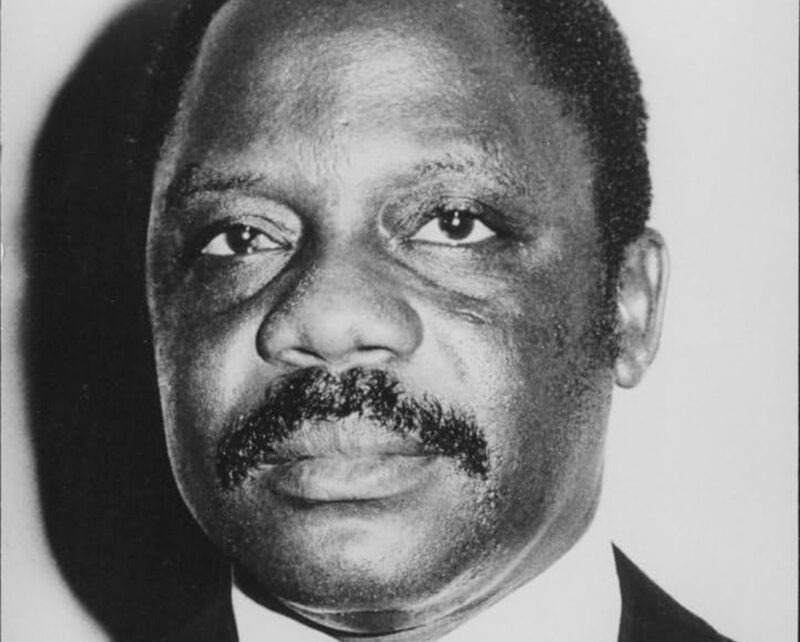
1. Victor Nendaka Bika, the “Oufkir of Congo”
A former nurse turned spymaster, Nendaka transformed the colonial-era Sûreté into a political police force. His golden rule? The head of intelligence answered only to the head of state—not ministers. In December 1961, Minister of the Interior Christophe Gbenye attempted to dismiss him. Nendaka’s response was swift: he surrounded his office with troops, backed by Mobutu, and forced Gbenye’s resignation. The message was clear—no one could challenge the Sûreté.
Nendaka’s legacy includes orchestrating the transfer of Patrice Lumumba, Maurice Mpolo, and Joseph Okito to Élisabethville in January 1961—a decision that sealed their fate. Though he later claimed innocence, historians and contemporaries have long suspected his involvement. Some Congolese writings even label him the “bloody terminator,” a moniker that haunted him until his death.
2. Seti Yale, the “Grey Eminence”
Trained by Israel and the United States, Seti Yale professionalized Congo’s intelligence apparatus. He built the CND—a zaïrois KGB—installing wiretapping, surveillance, and torture as standard methods. Under his leadership, the CND became an entity unto itself, spying on ministries and embassies alike. His influence extended even to Europe.
3. Honoré Ngbanda, the “Terminator”
Ngbanda industrialized fear. During his tenure, every ministry had its spy, every embassy its antenna. He exported terror beyond Congo’s borders, earning the nickname “Terminator” for his ruthless efficiency. Mobutu, ever cautious, ensured no single figure controlled the machine for too long—Nendaka was ousted in 1965, Yale sidelined, and Ngbanda dismissed in 1990.
The system collapsed with Mobutu in 1997, but it did not die—it evolved. The SNIP, AND, and later ANR took over, changing acronyms but keeping the same underground methods. This series peels back the layers of 30 years of history, from the emergency appointment of an infirmary-trained spy in 1960 to the exile of the “Terminator” in 1990. Between these dates lie wiretaps, disappearances, forced transfers, and twisted coups.
Welcome to the real story of power in Kinshasa—a story told in hushed tones in windowless offices, never broadcast on the news. It begins in October 1960, three months after independence. Mobutu had just overthrown Lumumba, and Congo needed a man to hold the reins—someone who asked no questions. That man was Victor Nendaka Bika.
“The Oufkir of Congo: How Victor Nendaka built the machine that crushed dissent”
He never wore a uniform, yet from 1960 to 1965, this infirmary-trained spy reshaped Congo’s power dynamics. As the first director of the Sûreté Nationale, Nendaka redefined the rules of the game: threatening ministers, manipulating documents, and eliminating opponents. His archives tell the story of a machine designed to grind dissent into submission.
On January 16, 1961, a yellowed note became a death sentence. Forty years later, Nendaka held up this document—a handwritten order altering the evacuation plans for three prisoners, including Patrice Lumumba. The next night, they were executed in Élisabethville. Nendaka’s defense? He claimed he was merely following orders, absolving himself of responsibility. Yet historians remain unconvinced.


Related Articles