The once-ambitious strategy of the Kremlin to expand its influence across Africa—through mercenaries, disinformation campaigns, and anti-Western populism—now faces an undeniable reckoning. Far from delivering on its promises of security and stability, Russia’s approach has faltered under the weight of unmet expectations, military setbacks, and growing public disillusionment. What once seemed like an unstoppable advance now appears to be a fleeting chapter in the continent’s evolving geopolitics.
the illusion of russian security dominance
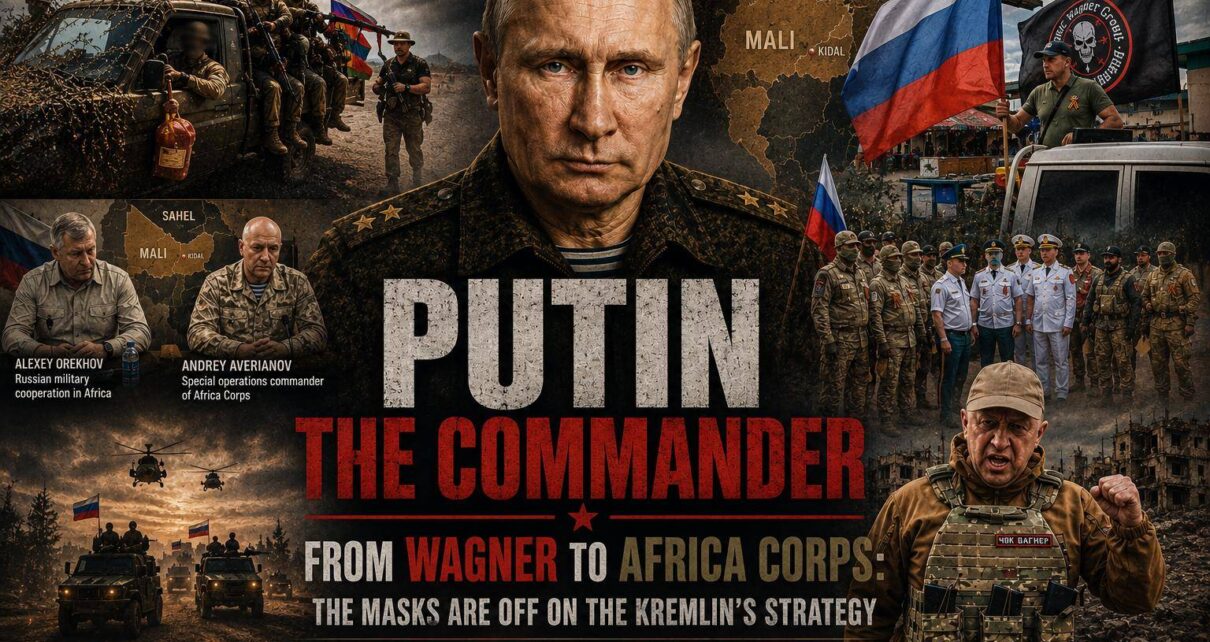
During the mid-2010s, Russia capitalized on the perceived retreat of traditional powers, particularly France, by positioning itself as a viable alternative in Africa’s security landscape. From Bamako to Bangui, and through Ouagadougou and Niamey, Moscow marketed a ready-made solution: a security model free from human rights conditionalities, embodied by the Wagner Group (now rebranded as Africa Corps).
Yet, the results have been far from promising. In the Sahel, instability has not diminished; it has deepened. The myth of Russian military invincibility was shattered following a devastating battle at Tinzawatane, near the Algerian border, where dozens of Russian mercenaries and Malian soldiers perished. The reality is stark: Russia’s presence in Africa was never about peacekeeping—it was about securing access to mineral wealth, including gold, diamonds, and uranium, through extractive arrangements with local regimes.
three pillars of Russia’s retreat
The erosion of Russian influence across Africa can be attributed to three critical structural weaknesses:
1. the ukrainian war’s financial and military drain
The prolonged conflict in Ukraine has drained Russia’s resources, both financially and militarily. Elite forces have been redeployed to the European front, while heavy weaponry, once freely exported to African allies, is now rationed for domestic military needs. The Kremlin’s capacity to sustain its African ambitions has been severely compromised.
2. the absence of a viable economic model
Russia’s strengths lie in military prowess and narrative control, not economic development. With a GDP comparable to that of Spain, it cannot compete with the European Union’s developmental aid or China’s infrastructure investments. Once the initial political honeymoon faded, African governments and juntas realized that Moscow’s offerings—aid packages and social media disinformation campaigns—could not address the fundamental needs of their populations.
3. the rise of african nationalism
The Russian strategy relied heavily on the rhetoric of a « second decolonization, » appealing to anti-Western sentiments. However, the new generation of African leaders and citizens, empowered by digital connectivity, rejects external domination in any form. The shift from French to Russian influence is no longer seen as liberation but as a misguided substitution of one foreign overlord for another.
a multipolar reconfiguration in the making
The decline of Russian influence does not signify a return to Western dominance. Instead, it signals a recalibration of alliances toward actors who prioritize pragmatism over ideological posturing.
The People’s Republic of China continues to strengthen its economic foothold, favoring stable trade agreements over military adventurism. Meanwhile, Turkey and the United Arab Emirates have emerged as key alternative partners, offering advanced drone technology and financial investments without the geopolitical baggage associated with Moscow.
lessons from a failed experiment
Russia’s imperial venture in Africa, though intense, has proven short-lived. It has underscored a critical truth: influence cannot be sustained through brute force or manipulation alone. For African leaders, the lesson is unmistakable—there are no shortcuts in geopolitics. Security and development cannot be outsourced to foreign mercenaries, regardless of their origins. The waning of Russian dominance may well mark the beginning of a new era in Africa’s quest for true sovereignty, where partnerships, not patronage, define the continent’s future.