Balancing sovereignty with foreign reliance in a tech-driven era
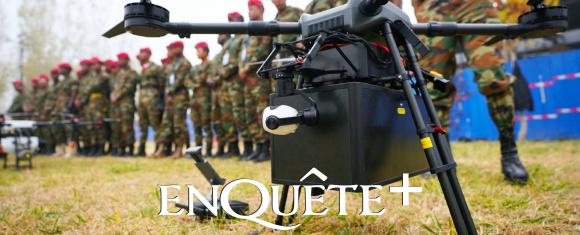
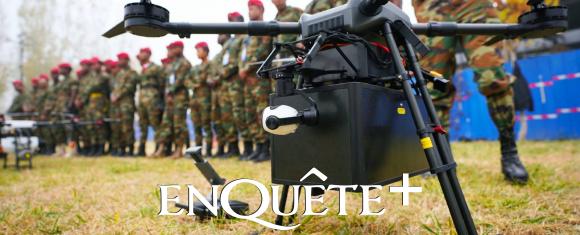
Across Africa, drones are transforming military strategies and reshaping the landscape of modern warfare. Once limited to surveillance and intelligence gathering, these unmanned systems now play a pivotal role in security operations, with governments and non-state armed groups alike integrating them into their arsenals. While drones enhance operational capabilities and reduce risks to deployed troops, their rapid adoption has also exposed critical vulnerabilities in technological dependence, governance, and civilian protection.
Drones as strategic assets in Africa’s evolving security landscape
Research highlights a dramatic shift in how conflicts are conducted on the continent. Military drones, once rare, have become central to both state-led operations and insurgent tactics. The acceleration in acquisitions is striking: from a single drone purchase deal in 2001 to over twenty by 2021. Between 1980 and 2024, African nations procured more than 1,500 military drones, with 2020–2023 seeing a particularly sharp increase. North Africa accounts for over half of these acquisitions, while Nigeria stands out as one of the continent’s top buyers.
The surge in drone use stems from worsening security challenges. In nations like Sudan, Mali, Burkina Faso, Niger, Somalia, and Ethiopia, these systems are deployed for intelligence, targeted strikes, and real-time battlefield coordination—offering militaries a way to project force without endangering personnel. Yet, this technological leap is not without consequences. Armed groups such as Boko Haram, Al-Shabaab, and the Group for Support of Islam and Muslims (JNIM) have repurposed commercially available drones into weapons, altering the dynamics of asymmetric warfare.
From surveillance to combat: the dual-use dilemma
Drones are no longer mere tools for observation; they now execute precision attacks, coordinate ground operations, and amplify psychological impacts through carefully curated video releases. This dual-use potential complicates efforts to contain violence, as civilian casualties mount alongside tactical gains. In 2024 alone, drone strikes resulted in 1,176 civilian deaths across thirteen African countries. In Sudan, reports indicate nearly 700 civilians were killed in the first three months of 2026 due to drone-led operations.
Foreign dominance in Africa’s drone market
Despite growing local innovation, African states remain heavily reliant on foreign suppliers. China, Israel, the United States, and increasingly Turkey dominate the market, providing not only hardware but also training, maintenance, software updates, and spare parts. This dependence creates lasting strategic vulnerabilities, particularly around data sovereignty and the security of collected intelligence. While some nations are pushing for self-reliance, progress is uneven.
Local production: a step toward autonomy
Efforts to build domestic drone industries are gaining traction. South Africa leads the continent’s manufacturing sector, while Morocco combines local production with international partnerships. Other countries, including Nigeria, Egypt, Ethiopia, Tunisia, and Algeria, are ramping up initiatives to bolster their industrial capacities. Senegal is also making strides through Ndobine, a company developing drones for maritime surveillance, precision agriculture, and mapping. Yet, local production still represents only about 12% of the African drone market—a figure that underscores the scale of the challenge.
The limits of drones in resolving Africa’s conflicts
Experts caution that drones, while tactically valuable, do not address the root causes of Africa’s crises. Their proliferation may even exacerbate violence, with civilian harm rising alongside military gains. To avoid deepening dependence or fueling further instability, analysts urge African governments to adopt robust public policies. Key recommendations include developing employment doctrines aligned with international humanitarian law, improving operator training, enhancing transparency in acquisitions, fostering local industries, and harmonizing continental regulations under the African Union’s framework.
The path forward, researchers argue, hinges not on the mere acquisition of drones but on mastering their ethical and strategic use. Without deliberate action, the drone revolution risks entrenching foreign dependencies and intensifying cycles of violence rather than delivering lasting security.