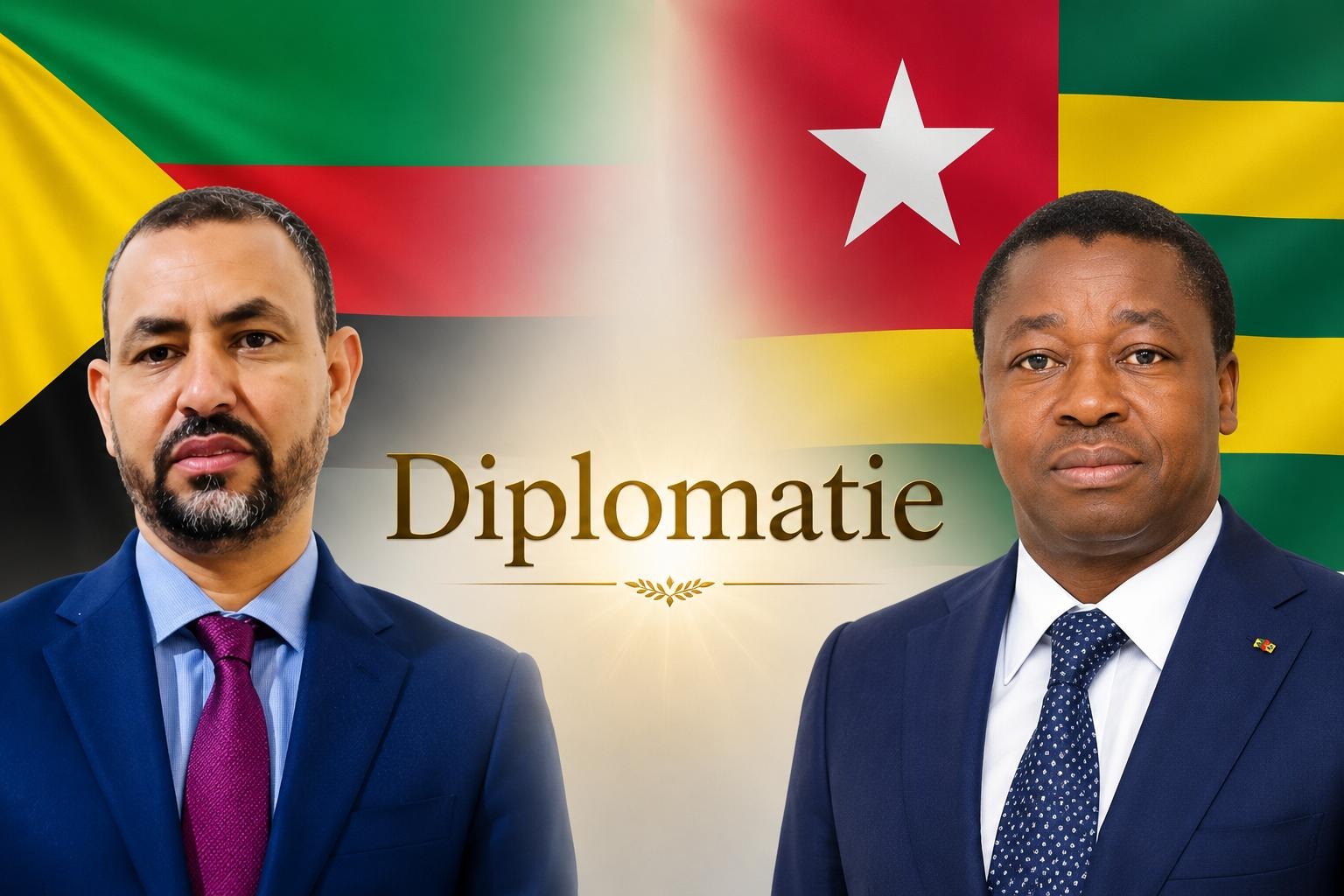
Lomé’s strategic pivot in West African diplomacy
In the ever-shifting landscape of West African diplomacy, Lomé is poised to make a bold statement. High-level sources confirm that the Togolese government is preparing to officially recognize the Front de Libération de l’Azawad (FLA), a move that could reshape regional alliances and challenge conventional diplomatic norms.
The FLA’s regional charm offensive
Emerging from the shadows of political obscurity, the FLA is stepping into the West African spotlight. The movement, which opposes Mali’s central authority over the northern territories, is embarking on a strategic tour of regional capitals to secure international legitimacy and break free from the isolation imposed by Bamako’s transitional government.
Lomé’s selection as the first major stop on this diplomatic circuit is no coincidence. The FLA’s envoys are seeking receptive ears—voices willing to lend credibility to their claims of autonomy or sovereignty. By agreeing to host these discussions and signaling its intent to recognize the FLA, Togo is positioning itself at the heart of this unfolding geopolitical shift.
Faure Gnassingbé’s ‘diplomatic tightrope’
For seasoned observers of Togolese politics, this move aligns with President Faure Gnassingbé’s long-standing approach to diplomacy—a strategy built on openness to dissent and alternative channels of engagement. While neighboring leaders often prioritize rigid institutional stances, Gnassingbé has cultivated a reputation for engaging with political outliers, even at the risk of defying regional consensus.
The potential recognition of the FLA fits seamlessly into this pattern. By refusing to toe the line of entrenched diplomatic dogma, Lomé is positioning itself as a neutral but bold interlocutor, willing to dialogue with forces excluded from the international stage.
From AES to FLA: A consistent gamble on disruption
This pragmatic—or, critics argue, opportunistic—approach has defined Togo’s recent diplomatic maneuvering. When coups reshaped the Sahel’s political map, the Economic Community of West African States (ECOWAS) responded with sanctions and isolation. Togo, however, took a different path.
Lomé quickly emerged as a diplomatic hub for the military juntas of the Alliance des États du Sahel (AES), positioning Gnassingbé as a key mediator in Bamako and Niamey. Now, by entertaining the FLA’s overtures, the Togolese capital is applying the same playbook—but this time, in support of a rebel movement challenging Mali’s transitional government. A paradox that underscores a clear principle: Togo seeks to be the indispensable crossroads for all transitions and rebellions in the subregion.
Regional blowback and shifting alliances
The impending recognition of the FLA is likely to strain diplomatic relations across West Africa. For Bamako’s transitional authorities, Lomé’s engagement with the FLA amounts to direct interference in Mali’s internal affairs—a move that could fuel instability in the north.
Within ECOWAS, already weakened by the Sahelian schism, Togo’s initiative risks further eroding the bloc’s solidarity. By acting independently, Lomé is signaling that the region’s traditional principles—such as non-interference and border inviolability—are giving way to a more fluid, pragmatic geopolitical reality.
As the FLA’s regional tour gathers momentum, Togo’s decision to recognize the movement reaffirms Lomé’s role as a laboratory for West African diplomacy. Faure Gnassingbé’s strategy—anticipating fractures, engaging with the marginalized, and asserting Togo’s influence—could either solidify Lomé’s diplomatic clout or leave it increasingly isolated in a region increasingly divided along shifting lines.