Journalistic accountability under scrutiny as Togo tightens media regulations
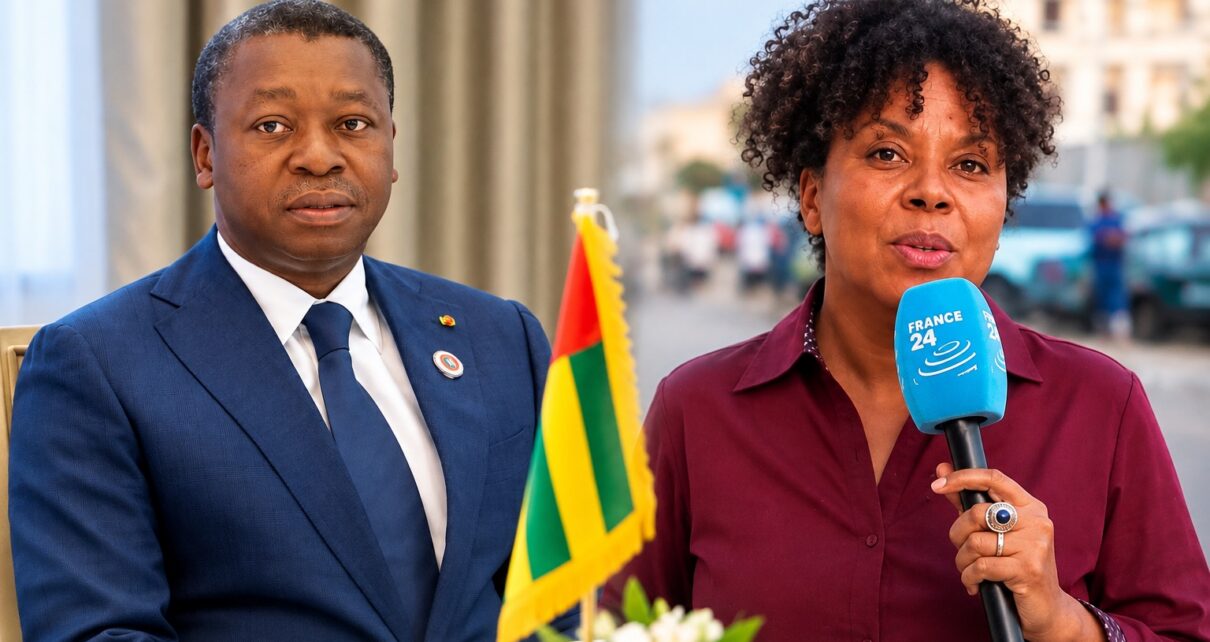
The recent sanction against a prominent journalist in Togo has exposed deep vulnerabilities in the country’s media landscape—raising urgent questions about how press restrictions can ripple through society, affecting not just reporters but businesses and ordinary citizens alike. The case of Emmanuelle Sodji, a France 24 correspondent, has become a flashpoint in an ongoing struggle over whether journalism can operate freely when political interests loom large.
On August 18, 2026, Sodji reported on the detention of two French nationals—filmmakers Gaël Mocaër and Sebastian Perez Pezzani—who were arrested on July 27 while documenting a project in northern Togo. Though the information she shared had already circulated publicly, including on social media, authorities cited regulatory violations as grounds for her removal. The controversy lies in the timing: if the facts were already in the public domain, why was she penalized for reporting what was accessible?
The blurred line between oversight and overreach
Togo’s media regulator, the Haute Autorité de l’audiovisuel et de la communication, has repeatedly suspended international broadcasters like RFI and France 24, accusing them of bias and fact-checking failures. Yet critics argue that such measures blur the line between legitimate oversight and politically motivated censorship, particularly in a climate where dissenting voices face increasing pressure.
The detainment of the French filmmakers—who were later granted provisional release and allowed to leave the country—further underscores the tension. Their case highlights how even foreign journalists working on sensitive subjects can become entangled in local disputes, with their work subjected to arbitrary scrutiny.
Economic and social ripple effects of media restrictions
The fallout from these restrictions extends far beyond newsrooms. Businesses relying on transparent communication, including tourism operators, investors, and local entrepreneurs, now operate under greater uncertainty. A shrinking press space means fewer avenues to expose corruption, hold officials accountable, or even circulate critical civic information—all of which can deter economic growth and public trust.
For ordinary citizens, the stakes are equally high. Independent media often serve as a watchdog for public health crises, labor rights, and environmental risks. When journalists face sanctions for reporting widely known facts, the message is clear: self-censorship may be the safer option. Yet this comes at a cost—misinformation thrives, and communities lose their most reliable source of verified news.
The danger of retroactive enforcement
The crux of the Sodji case revolves around retroactive punishment. If an information is already public, and even authorities acknowledge its circulation ahead of time, punishing its dissemination sets a troubling precedent. It suggests that rules can be applied selectively, depending on political convenience rather than objective standards. Such ambiguity weakens journalistic integrity and erodes public confidence in institutions meant to guarantee press freedom.
Democracy in the balance: can Togo reconcile order with press freedom?
Under President Faure Gnassingbé’s leadership, Togo has grappled with political transformations, including the controversial restructuring of the Prime Minister’s office in 2025. Against this backdrop, each media restriction is interpreted as part of a broader pattern—one that risks deepening divisions between the state and civil society. The question is no longer whether journalists should adhere to professional standards, but whether those standards are applied fairly and transparently.
For democracy to function, the press must be able to challenge power without fear of reprisal. Today, Togo stands at a crossroads: Will it uphold the principles of an open society, or will it continue down a path where the cost of truth is self-censorship? The answer will resonate far beyond its borders, shaping perceptions of press freedom not just in West Africa, but globally.
What lies ahead for journalists and the public
The Sodji case forces a reckoning. Regulators, media leaders, and policymakers must clarify the rules governing journalism—ensuring they are neither so rigid that they stifle reporting nor so vague that they enable arbitrary punishment. Citizens too have a role to play, demanding accountability and supporting outlets that operate with integrity. In a world where misinformation spreads faster than fact, a free press isn’t a luxury; it’s a necessity for progress.