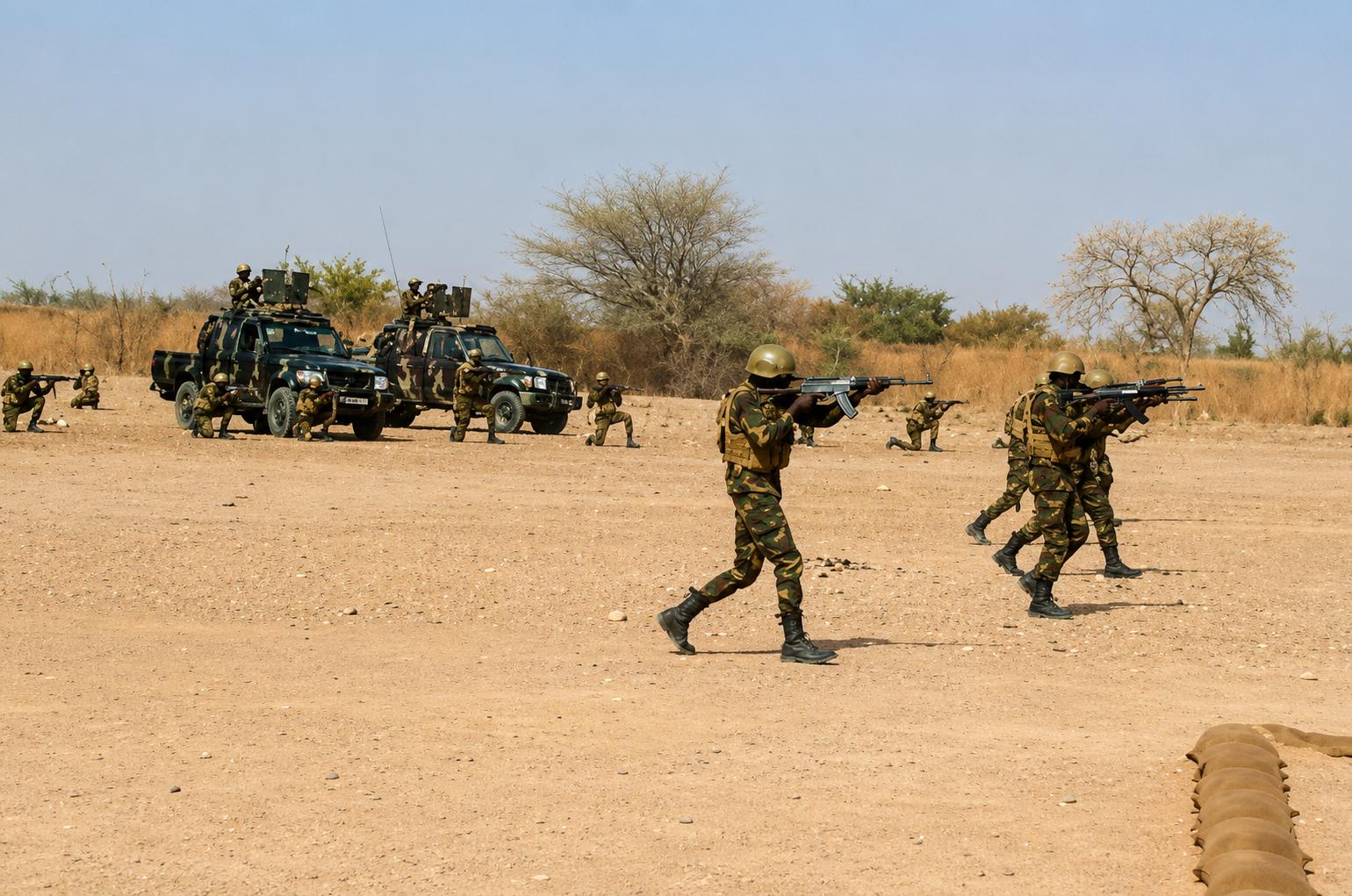
A detachment of Niger’s Defense and Security Forces (FDS) fell victim to a deadly ambush on Friday, July 17, 2026, within the Tillabéri region. Initial reports from the military indicated fifteen fatalities among service members.
The Ministry of National Defense in Niger subsequently released an official statement confirming the full toll from the major assault. The incident, which unfolded in the Téra department, part of the Tillabéri region (an area critically known as the “three borders zone”), resulted in the loss of sixteen soldiers’ lives. Twenty-three others sustained injuries, with nine requiring urgent medical evacuation to the Army’s central hospital due to their critical condition.
The ambush occurred along the vital route connecting Bankilaré to Téra, specifically near the village of Doungouro. Military authorities described the encounter as a “complex attack.” A FDS unit, engaged in an administrative liaison mission, was first struck by improvised explosive devices, followed by intense gunfire from armed groups.
In their robust counter-response, the Nigerien army reported neutralizing fifteen assailants. Furthermore, approximately ten motorcycles were either destroyed or recovered, alongside various pieces of light military equipment. Immediate aerial and ground search operations were launched across the affected sector to track down and apprehend any remaining fleeing attackers.
The permeable frontier: a persistent vulnerability in the three borders zone?
The Téra ambush serves as a somber confirmation that the ongoing wave of terrorist attacks in Niger is inextricably linked to the extreme porosity of the