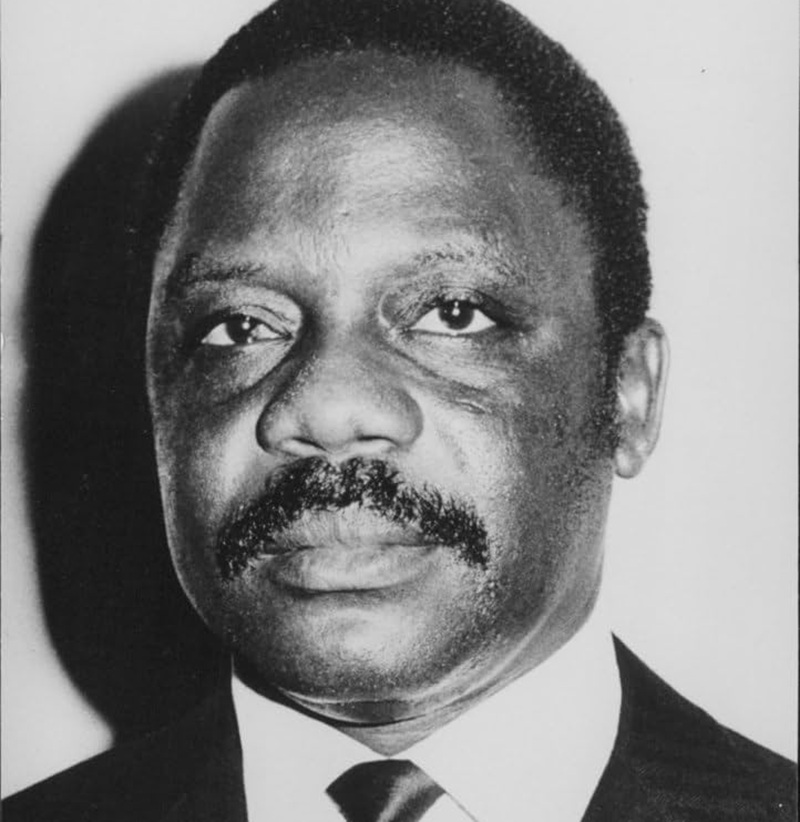

the shadow network that shaped Congo’s political destiny
By Gilbert MUHIKA / Political Analyst
In the Democratic Republic of Congo, power has never been seized through parliamentary debates. It has always been taken in the darkness, behind closed doors. Since gaining independence in 1960, each leader, rebellion, and transition has relied on a shadow mastermind—an invisible yet indispensable figure who pulls the strings from the shadows.
The Congolese intelligence services are not merely a state apparatus; they are the state itself. When the National Security Council coughs, the Presidential Palace shudders. When military intelligence listens, cabinet ministers fall silent. When the National Intelligence Agency arrests, the courts comply without question.
Why does this apparatus wield such unchallenged power? Because the Congo was born in the crucible of Cold War intrigue, coups d’état, and deep-seated distrust. On June 30, 1960, independence was proclaimed. By September 14, Mobutu had already executed his first coup. Between these two dates lay a dangerous void—a void the National Security apparatus rushed to fill.
Their true mandate was never documented in any official charter. Formally, they were tasked with gathering political, economic, and social intelligence. Unofficially, they operated with three core objectives:
- Protect the leader—from internal and external enemies, from the military, even from the people.
- Monitor everyone—opposition figures, ministers, religious leaders, students, and the diaspora.
- Instill fear—to ensure no one dared challenge the status quo.
From 1960 to 1990, a single system wore three distinct faces. Three men etched the grammar of fear into Congo’s political DNA:
1. Victor Nendaka Bika, the “Congolese Oufkir”: A former nurse who transformed the colonial-era security apparatus into a political police force. He established the golden rule: the head of security answered only to the head of state, not to ministers.
2. Seti Yale, the “Grey Eminence”: A professional who refined the system. Trained in Israel and the United States, he built the National Documentation Center (CND), the Zairian KGB. He introduced wiretapping, covert surveillance, and torture as institutionalized methods.
3. Honoré Ngbanda, “Terminator”: The industrialist who scaled the apparatus to unprecedented heights. Under his leadership, the CND became a state within a state. Every ministry had its informant. Every embassy hosted a listening post. The terror he unleashed extended even into European capitals.
The unbroken thread from 1960 to 1990 was this: “He who controls intelligence controls power.” Mobutu understood this from the beginning. He deliberately multiplied intelligence agencies—CND, SNIP, SARM, DSP—ensuring they monitored one another. Yet he never allowed one man to dominate the machine for too long. Nendaka was dismissed in 1965. Seti Yale was sidelined. Ngbanda was removed in 1990.
In 1997, the system collapsed with Mobutu’s regime. But it did not vanish—it evolved. The SNIP became the AND, which later transformed into the ANR. The acronyms changed. The basements remained. The methods endured.
This chronicle peels back 30 years of history, revealing it as it unfolded in the secret corridors and windowless offices. It begins in October 1960, when a desperate Mobutu appointed an unlikely figure to head the National Security apparatus—a nurse with no prior experience in espionage. The story ends in 1990, with the exile of a man known as “Terminator,” swept away by the winds of democratic change.
Welcome to the true story of power in Kinshasa—the one never spoken aloud into a microphone, the one whispered in rooms with no windows.
It all began in October 1960. The Congo was barely three months old. Mobutu had just overthrown Lumumba. A man was needed to secure the levers of power—someone who asked no questions. That man was Victor Nendaka Bika.
“The Congolese Oufkir: How Victor Nendaka Invented the Power-Shaping Machine”
He never wore a uniform. Yet from 1960 to 1965, this former nurse-turned-spymaster sent tremors through the Congo. Victor Nendaka Bika, the first director of the National Security apparatus, laid down the rules of the game: intimidate ministers, manipulate documents, deliver opponents to their fate. Now, we delve into the archives of terror.
December 13, 1961: The Day the Police Overthrew a Minister
The scene unfolded in the headquarters of the National Security apparatus. Christophe Gbenye, the Minister of the Interior, believed he still held command. He signed a communiqué dismissing Victor Nendaka, the agency’s director, and reassigning him to another post.
Nendaka’s response was swift and decisive. He placed a single call—and within hours, armored troops loyal to Mobutu surrounded the agency’s offices. The message was clear: Nendaka stayed. Gbenye vanished from the political scene.
This was the first time in Congo’s history that a security chief openly threatened a minister with military force—and won. The “Oufkir model” was born.
January 16, 1961: The Handwritten Note That Sealed Lumumba’s Fate
Four decades later, an elderly man still clutched a yellowed sheet of paper before a Belgian inquiry commission. “When we learned Tshombe would receive Lumumba, the evacuation plans for three prisoners were altered by André Lahaye, a Security agent […] I kept this document,” Victor Nendaka testified.
This document was the order transferring Patrice Lumumba, Maurice Mpolo, and Joseph Okito to Elisabethville. As chief administrator of the National Security apparatus, Nendaka organized the convoy. On the night of January 17, the three men were executed.
His defense? “Kasa-Vubu approved the transfer because, like me, he believed Lumumba would not be killed in Katanga. In our traditions, we settle disputes under the baobab tree, not with bloodshed.”
Historians have noted: “Victor Nendaka, who had strained relations with Lumumba since the 1960 elections, was suspected of involvement in this incident.”
October 1960: The Nurse Who Turned Security Into a Political Weapon
One month after Mobutu’s first coup, Nendaka was appointed director of the National Security apparatus.
“Nendaka rapidly reorganized the institution, transforming it into an efficient intelligence-gathering service,” historical records state.
He established the National Investigations Bureau (BIN), shifting its mission from petty crime to tracking, surveilling, and neutralizing Lumumbists. He joined Mobutu’s inner circle, the “Binza Group,” becoming a key architect of the shadow government that ruled the country.
Why was he nicknamed the “Congolese Oufkir”? Like the Moroccan general, Nendaka imposed three rules that would haunt Congo for 60 years:
- Security above the law: He surrounded his office with troops when a minister attempted to dismiss him.
- Intelligence as a political project: As a member of the Binza Group, he helped appoint and remove prime ministers, often with CIA backing.
- Plausible deniability: On Lumumba’s fate, he always claimed, “It wasn’t me—it was D’Aspremont, Tshombe, Lahaye.”
In 1965, Mobutu removed him from power—for being too influential. But the machine was already in motion. Seti Yale and Honoré Ngbanda would later industrialize the methods Nendaka pioneered.
In the next installment: How Seti Yale transformed the fledgling BIN into the CND, the Zairian KGB, trained by Israel and the United States. Exclusive testimonies from the CND’s underground chambers in the 1970s will reveal the depths of the terror.
The “Darkness Monster” Through the Eyes of His Contemporaries
Some Congolese writings describe him as “BLOODTHIRSTY TERMINATOR, VICTOR NENDAKA BIKA, THE DARKNESS MONSTER,” for his role in “organizing the fatal transfer” of Lumumba. Nendaka maintained his innocence until his death, insisting the Lumumba Commission was “trying to frame him.”
