AES-ECOWAS : Diplomaties d’urgence
Au cœur des initiatives diplomatiques visant à « normaliser » les relations entre les pays de la Cédéao et ceux de l’AES, l’urgence sécuritaire et les enjeux économiques communs. Retour à une diplomatie du réalisme et du pragmatisme en Afrique de l’Ouest.

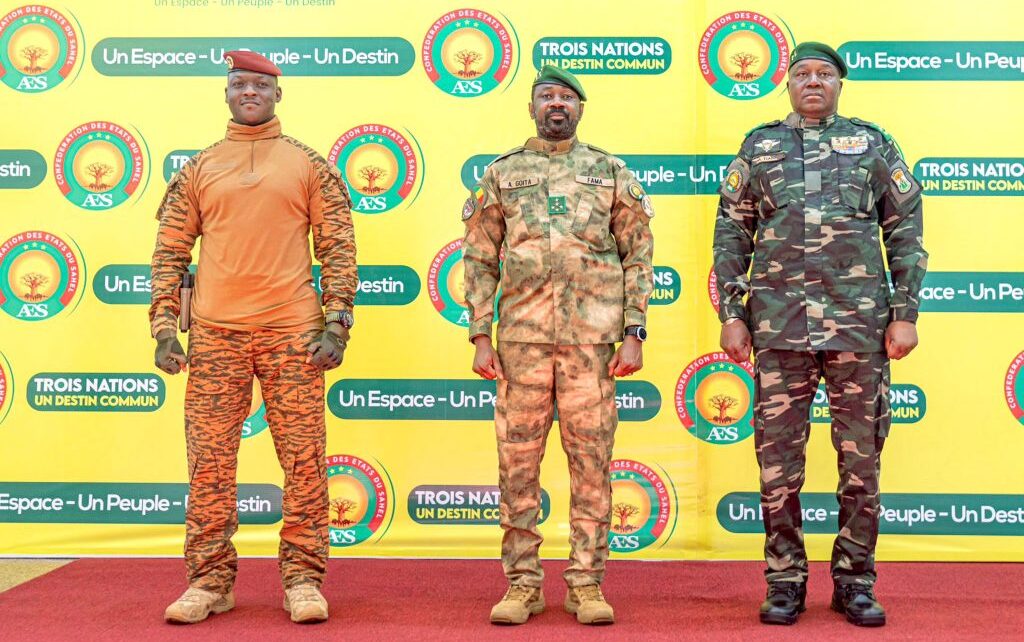
In recent weeks, diplomatic initiatives across West Africa have multiplied, aiming to rebuild bridges for dialogue and consultation between ECOWAS member states and the Alliance of Sahel States (Mali, Burkina Faso, Niger). At the core of these subtle efforts lie security concerns and the imperative to craft common policies that harmonise actions while working toward the much-needed pooling of resources. To give this emergency diplomacy every chance of success, the actors involved must respect a few unspoken requirements: sidestep the dispute over the three AES countries’ withdrawal from ECOWAS, bury the resentments fuelled by hostile communication campaigns from AES regimes against certain regional neighbours, and move beyond the consequences of geopolitical restructuring in the Sahel that have created a climate of cold war between AES and ECOWAS. In short, it means setting aside grudges, overcoming tensions and inappropriate displays of pride, to address the shared challenges of the moment.
Ivory Coast ‘ready to resume cooperation’
Among the strong signals of this shift are the recent statements by Ivory Coast’s Defence Minister, Tene Birahima Ouattara. On 15 June, he declared himself ‘sincerely ready to resume security cooperation’ with Mali and Burkina Faso, arguing that ‘terrorism, as it presents itself today, cannot be defeated by a single state. There must be collaboration, a pooling of forces.’ This is an obvious truth worth repeating, especially as some decision-makers warn that the consequences of the security crisis in the Sahel ‘could become untenable in the medium term’ for the entire region.
How will Mali and Burkina Faso respond to this call from Ivory Coast? For now, nothing suggests a collective surge of lucidity among all relevant actors to jointly produce solutions to the urgent issues. Even if the leaders of Mali and Burkina Faso admit that the break with ECOWAS ‘does not exclude bilateral cooperation,’ it is difficult for them to suddenly shift their stance toward the Ivorian interlocutor. Regularly accused of hosting terrorist elements ‘financed’ or ‘sponsored’ by French imperialism, Ivory Coast is one of the prime targets in the AES’s narrative of external, even imaginary, enemies. And although these accusations have never been backed by facts or evidence, they feed the doctrinaire narrative of regimes born from coups that led to their withdrawal from ECOWAS. However, despite these frayed diplomatic relations, Ivory Coast maintains discreet channels of exchange and cooperation with Mali and Burkina Faso, whose nationals enjoy refugee status in Ivory Coast by the thousands.
‘New era’ for Bénin and Niger
Also targeted by the same accusations, Bénin, under its new president, Romuald Wadagni, shortly after his inauguration on 24 May, undertook gestures of rapprochement and appeasement toward AES countries. A special mention goes to Niger, whose common border with Bénin has remained closed since the aftermath of the July 2023 coup in Niamey. With all dialogue seemingly impossible between the two countries, the arrival of a new leader in Bénin provided an opportunity to end what had become a petty personal quarrel between Nigerien military authorities and former Béninese President Patrice Talon.
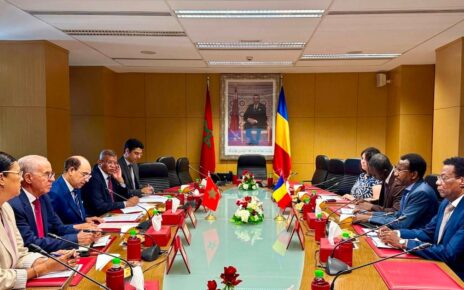
The change at the helm of Bénin’s presidency has thus acted, over the past few days, as an accelerator of ‘reconciliation’ between these two neighbours. In this spirit, a ‘meeting of experts’ from Niger and Bénin took place in Cotonou on 20 and 21 June, aimed at drafting the terms of a new cooperation, focusing primarily on defence, security, and the conditions for reopening the shared border—a decisive factor for resuming economic activities between Bénin and Niger. On this last point, the Nigerien delegation did not fail to emphasise its wish to obtain more information about the alleged presence of ‘foreign elements’ at the Bénin-Niger border. This request echoes the persistent suspicion of the Niamey military authorities that Bénin hosts a ‘French military base’ intended to ‘destabilise Niger’ or ‘finance terrorism.’ An accusation that defies common sense: why would Bénin ‘finance’ terrorism when it itself is a target and victim? In short, such statements are now part of the routine narrative of AES regimes, which are struggling to curb the continuous deterioration of the security situation on their own territories. Their promise to unite military means to fight terrorism has not gone beyond rhetoric. Today, entire swathes of Niger, Mali, and Burkina Faso have become grey zones administered by armed terrorist groups, whose expansion and formidable agenda the ruling juntas cannot contain.
The moment is therefore one of reconciliation between Niger and Bénin. And if Niger’s Interior and Security Minister, Mohamed Toumba, is to be believed, ‘a new era is opening’ for both countries. According to him, ‘by choosing dialogue over confrontation, we have created value for our economies and security for our populations.’ Nigerien and Béninese actors are well aware that behind the security challenge lies the equally crucial issue of the economy, in a region where peoples share intertwined destinies. As we witness a return to realist and pragmatic diplomacy, what is happening between Bénin and Niger looks like a case study or pilot event for a re-evaluated, intelligent management of shared vulnerabilities in the common West African space.
Endogenous responses to the security crisis
Initiatives aimed at ‘normalising’ relations between ECOWAS and AES countries should become even clearer in the coming months. Beyond reactivating the neighbourly logics that have prevailed in this region for decades, they underscore the urgency of endogenous responses to the security equation. This echoes recommendations made last year by UN Secretary-General António Guterres, for ‘a resumption of dialogue among all West African countries.’ In December 2025, Russia, AES’s privileged partner, sent the first signals of a diplomatic recalibration in West Africa by calling for ‘continued pragmatic and mutually beneficial dialogue between ECOWAS and AES, to find common solutions to counter shared challenges and threats, including the fight against regional terrorism.’ These words hint at a paradigm shift in international cooperation—a way, after all, of reminding Africans that it is up to them alone to craft the most efficient solutions to their current challenges.
Already, bilateral relational protocols are being observed between AES and certain countries such as Ghana, Guinea, Togo, and Sénégal. Despite their withdrawal from ECOWAS, the Sahel’s military regimes have maintained their presence within the West African Economic and Monetary Union (UEMOA), and their nationals continue to benefit from the principle of free movement within the ECOWAS area. In the end, one will have to question the justification for the AES promoters’ withdrawal from the regional community. The only available answer points back to the initial dispute: ECOWAS’s condemnation of the coups in AES countries and, above all, the refusal of that entity’s leaders to work toward ‘restoring constitutional order.’ In many respects, the rupture between AES and ECOWAS resembles an artificial or incomplete divorce.
Francis Laloupo, Journaliste, Enseignant en Géopolitique.