Mali’s already fragile security landscape experienced a significant downturn in late April 2026. A series of orchestrated assaults struck multiple urban centers, leading to the tragic death of Defense Minister Sadio Camara and several Malian soldiers.
These recent incidents underscore a worrying escalation of aggression targeting the Malian army and state institutions over the past few years.
With over a decade dedicated to researching insecurity and political dynamics across West Africa and the Sahel, our analysis suggests that the root cause of these renewed attacks lies in the unaddressed concerns of the Touareg people, which the current military administration has failed to resolve. The Touareg are nomadic Berber communities primarily inhabiting northern Mali.
A primary contributing factor is the persistent failure or refusal to acknowledge and address Touareg discontent. Their core grievances revolve around demands for political autonomy, feelings of marginalization, the quest for cultural recognition, control over vital resources, security provisions, and a pervasive sense of state neglect.
Secondly, the military’s ongoing strategy of using force against rebels in the northern regions, often with severe collateral damage, exacerbates tensions. The Touareg have historically opposed the militarization policies implemented by successive Malian governments.
The third key factor is the profoundly unequal distribution of resources, which perpetuates the marginalization of the northern region. This includes critical resources found in northern Mali, such as gold deposits, salt mines, grazing lands, and strategic trade corridors. Revenues generated from these valuable assets continue to be centrally controlled by the state apparatus, predominantly based in the south.
Tackling this economic marginalization could yield substantial benefits. It has the potential to alleviate Touareg grievances, rebuild trust in the Malian state, and fundamentally shift the conflict’s dynamics from rebellion towards political integration, fostering stability and enduring peace across northern Mali.
The evolving situation
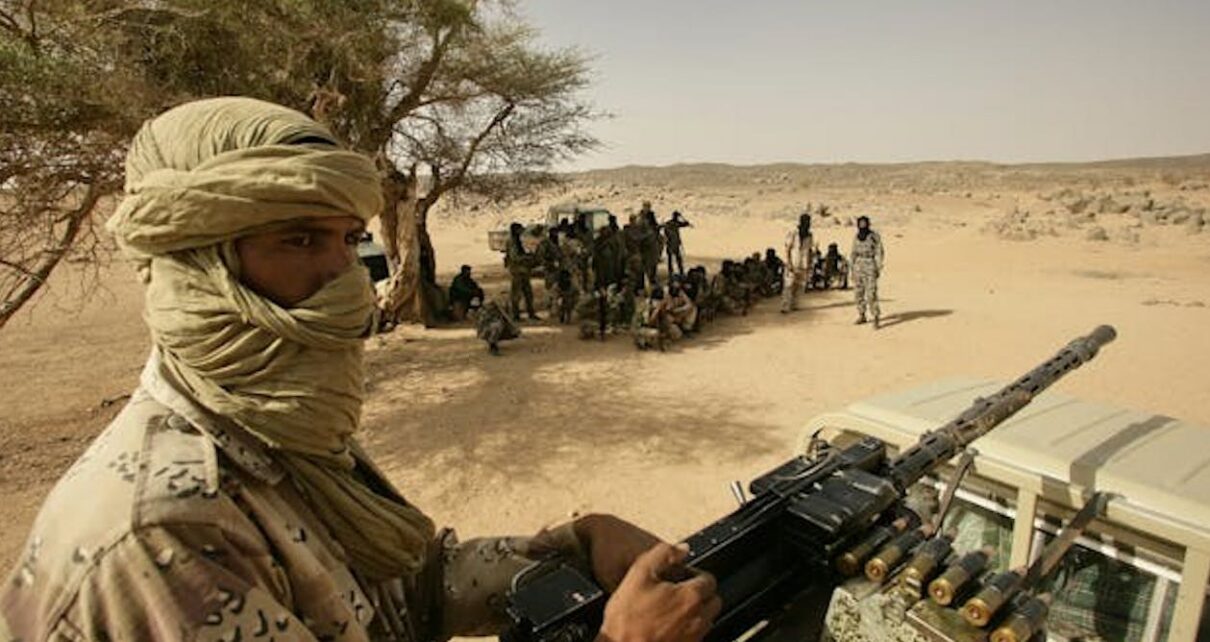
In April 2026, the Group for the Support of Islam and Muslims (JNIM) forged an alliance with Touareg rebels from the Azawad Liberation Front (FLA) to launch coordinated assaults on several towns nationwide.
This echoed a similar offensive in 2012, when Touaregs and militants linked to Al-Qaeda initiated a large-scale attack against the state. The National Movement for the Liberation of Azawad (MNLA), a predominantly Touareg group, sought secession and ignited a rebellion.
The MNLA is a separatist organization dominated by Touaregs. Established in 2011, its ranks were primarily composed of former fighters returning from Libya and Touareg individuals from northern Mali. At its peak in 2012, the group commanded approximately 10,000 combatants.
Despite their considerable numbers, the MNLA lacked the necessary military might to maintain territorial control independently. Consequently, they allied with Islamist groups such as Ansar Dine, Al-Qaeda in the Islamic Maghreb (AQMI), and the Movement for Oneness and Jihad in West Africa (MUJAO). However, shortly after repelling Malian forces in late 2012, this alliance fractured.
The Islamist factions were better equipped and funded. They successfully dislodged the secular separatists from major cities including Gao, Timbuktu, and Kidal. A French military intervention in 2013 was instrumental in helping the Malian government reclaim most of the lost territories.
AQMI and its affiliates subsequently retreated into the surrounding mountains and desert expanses. There, they adopted guerrilla warfare tactics, including suicide bombings and the deployment of landmines.
The withdrawal of French forces in 2022 appears to have emboldened Islamist militants. This move eased counter-terrorism pressure, disrupted intelligence networks and logistical support, and created a significant security vacuum amidst the Malian state’s limited capabilities. These conditions allowed Islamist groups to broaden their operations, recruit locally, and re-establish territorial influence.
Unheeded lessons
The military regime under Assimi Goïta has notably failed to address the demands of Touareg separatists. Touaregs have long articulated grievances about their exclusion from power by a Malian state historically dominated by the south. Since the nation’s independence in 1960, Touareg leaders have consistently argued that the Malian state structure does not adequately reflect their political identity, economic interests, or traditional governance systems. Their calls for autonomy or special status have frequently been met with repression, often violently.
More recently, the escalating impact of drought, desertification, and climate variability has devastated the livelihoods of Touareg pastoral communities. These deep-seated grievances predate the Islamist insurgency and are fundamental to understanding the groups’ motivations.
A second unaddressed issue is the reliance on force in counter-terrorism operations, which invariably leads to collateral damage. Recent analyses demonstrate that counter-terrorism efforts in northern and central Mali have inflicted considerable harm on civilians, caused mass displacement, and resulted in collective punishments, including arbitrary arrests and massacres.
These combined factors have created an environment that Islamist groups have skillfully exploited for recruitment, territorial expansion, and to legitimize their presence.
Responsibility for this precarious situation has been attributed to successive Malian regimes and the previous French operations. This is a primary reason why French interventions have often been perceived as failures.
The third significant driver of violence in Mali is linked to the imbalanced distribution of resources. Since independence, public investment, infrastructure development, social services, and political attention have been heavily concentrated in the southern parts of the country.
Prior peace agreements included promises of decentralization, financial allocations, and the integration of northern elites and ex-combatants. However, the implementation of these commitments has been notably slow, or in many cases, entirely absent.
Charting a course forward
Resolving the Touareg issue is imperative to de-escalate tensions between the country’s regions. While Touareg actors may have erred twice by forming alliances with jihadist groups, this does not diminish the urgent need to address the deep-seated structural inequalities and long-standing grievances that underpin their demands.
To achieve this, the Malian regime could draw inspiration from the successful model implemented by former Nigerien President Mahamadou Issoufou in Niger. Before his presidency, Nigerien Touaregs also experienced significant grievances. Upon becoming president in 2011, Issoufou initiated several key measures:
He integrated Touareg elites and former rebels into state institutions.
He decentralized state authority, granting administrative and budgetary control at the regional level.
He established comprehensive disarmament, demobilization, and reintegration (DDR) programs.
Issoufou also made significant investments in infrastructure development, specifically targeting the needs of Touareg communities. This included support for pastoralism, education, and various livelihood initiatives. Access to water in arid pastoral zones was substantially improved, and efforts were made to enhance road connectivity and security.
Ultimately, a genuine commitment to addressing the legitimate demands of the Touareg people holds the key to significantly reducing tensions and fostering lasting peace in Mali.