Recent debates in Senegal have centered on a pivotal question: Is the current political climate a sign of institutional crisis or the dawn of a democratic rebirth? The stakes are far greater than individual power struggles—they strike at the very core of how governance functions in the country.
The latest analysis from Abdou Fall, Nasser Niane, and El Hadj Kassé highlights a critical issue: Senegal’s political system has been dominated by an overpowered executive branch since 1963. This excessive centralization has repeatedly led to instability whenever rival factions emerged at the highest levels of government.
While their assessment is insightful, it overlooks a groundbreaking development: for the first time in over two decades, Senegal’s Parliament is no longer under the direct control of the president. During the presidencies of Abdoulaye Wade and Macky Sall, the legislature operated as little more than a rubber stamp, enabling constitutional manipulations, opportunistic reforms, and executive overreach. The frequent amendments and selective interpretations of the constitution weakened the country’s legal stability.
Senegal’s political landscape was one where power flowed downward from the top, with any shift in leadership or power-sharing arrangements risking instability. Yet today’s situation should not be dismissed as mere crisis—it marks a potential democratic renaissance. The Parliament, once silenced, is now asserting its constitutional role, demonstrating a healthy balance of power rather than dysfunction.
Consider France, where the National Assembly often rejects presidential proposals and cohabitation between branches is common. These tensions are not crises but essential checks and balances that prevent power concentration. Similarly, Senegal appears to be transitioning into a system where the executive no longer holds unchecked authority, and the legislature functions as intended.
This shift represents a historic turning point. For the first time, Senegal’s democracy is testing its institutional resilience—not through submission but through equilibrium. Far from signaling collapse, this evolution reflects a normalization of democratic principles: negotiation, power-sharing, legislative oversight, and shared responsibility. What some perceive as chaos is, in reality, an opportunity for growth.
Building a stronger democratic framework
This moment demands a reevaluation of Senegal’s institutional model. Strengthening parliamentary culture, stabilizing constitutional rules, fostering civic engagement, and reinforcing checks and balances are essential steps. Democracies thrive not by avoiding conflict but by managing it constructively.
Senegal now has the chance to join the ranks of Africa’s democratic leaders—like Cape Verde, Ghana, Botswana, and South Africa—where institutional resilience turns tensions into lasting balance. The key to their success lies not in the absence of challenges but in their ability to institutionalize conflict resolution.
Today’s developments should be celebrated and nurtured. A resilient democracy is measured not by the absence of disputes but by the strength of its checks and balances, the maturity of its institutions, and the Parliament’s ability to fulfill its constitutional duties. This is not a crisis—it is a rebirth. Perhaps the most significant institutional advancement Senegal has seen in two decades.
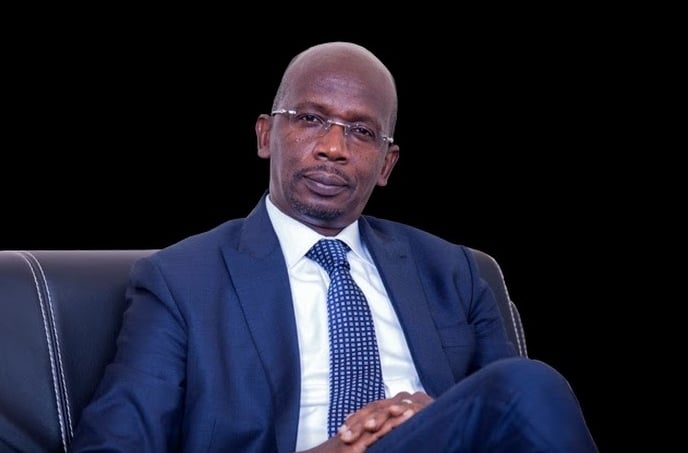
Lansana Gagny Sakho
President, Cercle des administrateurs publics