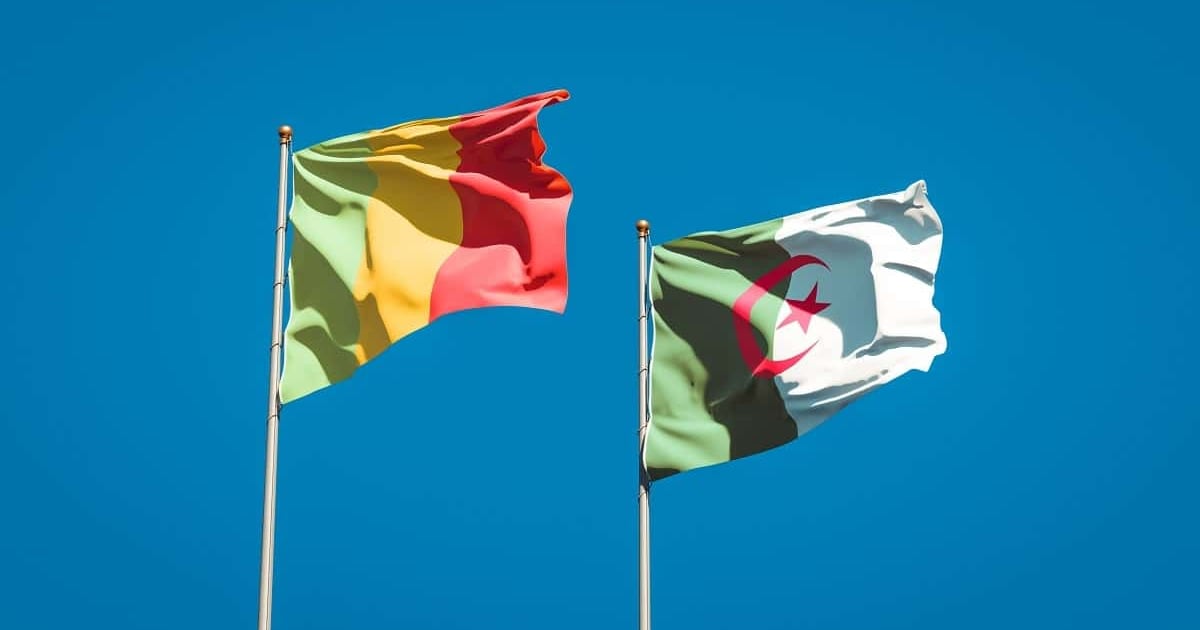
Relations between Algeria and Mali, which had significantly deteriorated in recent years, particularly since the current Malian government took power amidst accusations of Algerian interference in its internal affairs, are now on a path to restoration.
In a recent statement, the Malian government announced its decision to «reopen national airspace to all civil and military aircraft operating flights to or from» Algeria.
Bamako further confirmed the return of its ambassador to Algiers, who had been recalled in April 2025, though a specific date for his resumption of duties was not provided.
Just hours prior, Algiers had declared similar measures concerning its neighbor’s airspace. This decision, effective from this Friday, encompasses «all air traffic to and from Mali across various international destinations,» as detailed by the Algerian Ministry of Defense in its own communique.
Mirroring Mali’s move, Algeria also revealed on Friday the imminent return of its ambassador to Mali.
Drone incident
The Algerian Ministry of Foreign Affairs confirmed that Kamel Retieb, who served in Bamako before his recall by Algiers following a dispute over the destruction of a Malian drone by Algerian forces in April 2025, will resume his ambassadorial duties.
Algeria, instrumental in mediating the 2015 peace accord between Bamako and northern armed groups, found its influence challenged by Mali’s new authorities, who repeatedly accused the nation of meddling in their domestic affairs.
Since 2012, Mali has grappled with a severe security crisis, fueled by violence from groups aligned with Al-Qaeda and the Islamic State (EI), alongside community-based criminal gangs.
The diplomatic rift between the two countries escalated in the spring of 2025 following the downing of a Malian military drone near their shared border.
Algeria asserted the aircraft had breached its airspace, while Mali maintained the drone was operating within its own territory.
This incident triggered a full-blown diplomatic crisis, characterized by the recall of ambassadors, reciprocal airspace closures, and a series of accusations exchanged between Algiers and the member states of the Alliance of Sahel States (Mali, Burkina Faso, and Niger).
Further complicating relations, tensions were also exacerbated in April by Mali’s public declaration of support for Morocco’s autonomy plan for Western Sahara, a stance directly opposing Algeria’s long-held position.
Despite these significant disagreements, both nations share an extensive border and face common security imperatives, particularly the ongoing battle against jihadist organizations active throughout the Sahel region.