Algeria’s latest commercial push into Niger isn’t just about trade—it’s reshaping the country’s economic landscape. A 25-truck convoy recently departed from Adrar in southern Algeria, carrying 1,050 tons of goods destined for Niger’s markets. Dried dates, detergents, packaging materials, and salt are at the heart of this initiative, marking another step in Algiers’ strategy to expand its non-oil exports across Africa. But as these foreign products flood in, a critical question emerges: can Niger’s local producers withstand the pressure or will they be pushed to the brink?
Algeria’s trade surge: a strategic move with far-reaching consequences
The convoy’s departure on November 7, 2026, was no random shipment. Organized to coincide with Algeria’s National Export Day, it reflects a deliberate effort by Algerian authorities to strengthen trade ties with landlocked Sahelian nations. For Algeria, the goal is clear: leverage geographic proximity to secure new markets, boost sales for domestic industries, and diversify its economic influence beyond hydrocarbons. Niger, heavily reliant on cross-border trade for basic goods, represents a key target in this expansion.
The stakes are high for both economies. While Algerian exporters see an opportunity to tap into a neighboring market with unmet demand, Nigerien producers face an existential challenge. The influx of cheaper, readily available imports threatens to erode their market share, squeeze profit margins, and force closures in industries already struggling with structural weaknesses.
The date dilemma: local know-how vs. imported competition
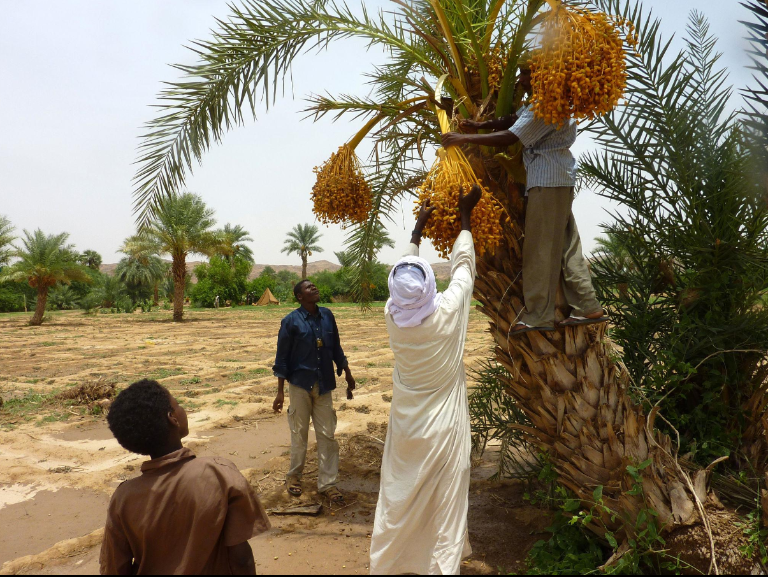
Niger’s date palm sector, particularly in the Kawar region around Bilma, Fachi, Dirkou, and Djado, boasts generations of expertise and a variety of date palms adapted to the harsh Sahara climate. Yet, despite these strengths, local producers face crippling obstacles: low yields, water scarcity, exorbitant transport costs, and a lack of storage and packaging infrastructure. These challenges make it difficult to compete with imported dates, which are often cheaper and more consistently available.
Industry insiders warn that the arrival of even more Algerian dates could tip the scales further. Distributors may prioritize the imported goods over local produce, especially when price, quality consistency, or marketing plays a decisive role. For local farmers and cooperatives, the battle isn’t just about selling dates—it’s about survival.
Small industries on the brink: detergents, packaging, and the cost of competition
The consequences extend beyond agriculture. Local manufacturers of detergents and packaging materials already grapple with rising costs of raw materials, unreliable supply chains, and logistical nightmares. The entry of imported alternatives at competitive prices only exacerbates their struggle. Reports indicate that some small-scale factories have shuttered operations in recent months, unable to keep pace with the influx of foreign goods. The risk now is that this trend could accelerate, leaving Niger’s industrial sector weakened and its employment landscape destabilized.
The pressure isn’t uniform, though. Some distributors and consumers benefit from lower prices and greater product diversity. Yet, the broader question lingers: at what cost does this commercial openness come for Niger’s economic autonomy?
Regulation and strategy: can Niger strike a balance?
In response to these challenges, Nigerien authorities have taken steps to level the playing field. On July 30, 2026, the Minister of Trade and Industry announced a sweeping inspection program to scrutinize the compliance of imported goods. The initiative targets three key areas:
- Consumer protection: Weeding out unsafe or substandard products that could harm public health.
- Fair competition: Preventing foreign sellers from gaining an unfair advantage due to non-compliance with local standards.
- Market transparency: Ensuring that operators who follow regulations are not penalized by unscrupulous competitors.
However, inspections alone won’t revive struggling industries. Experts argue that a more holistic approach is needed—one that combines financial support, infrastructure upgrades, improved access to markets, and technical assistance for local businesses. Without these measures, even the most robust quality controls may prove insufficient to halt the erosion of domestic industries.
Partnership or dependency? Rethinking Niger’s role in regional trade
The influx of Algerian goods has sparked a broader debate about the nature of economic ties between the two nations. On one hand, Niger gains access to a wider range of products at potentially lower prices, reducing logistical bottlenecks and diversifying its supply chains. On the other, there’s a growing concern that repeated exposure to foreign competition could stunt the development of its own productive capacities.
A sustainable partnership shouldn’t revolve solely around one-directional trade. For Niger, the opportunity lies in leveraging these exchanges to attract investment, foster joint ventures, transfer technology, and develop its industrial base. Failure to do so risks cementing its role as a consumer market for neighboring countries, with limited advancement in its own economic diversification.
The convoy of 25 trucks from Adrar is more than a logistical feat—it’s a symbol of evolving trade dynamics. As Niger navigates this new reality, the choices it makes today will determine whether its industries thrive or wither in the face of foreign competition.
Key takeaways for producers and policymakers
- Local industries need support: Without access to finance, better infrastructure, and technical training, Nigerien producers will struggle to compete.
- Quality control is only a start: While inspections protect consumers, they don’t address the structural issues crippling local businesses.
- Trade should empower, not erode: The goal should be mutual benefit—where imports complement, rather than replace, domestic production.
A tipping point for Niger’s economy?
The question isn’t whether Algerian imports should enter Niger’s markets—it’s about how to ensure this trade relationship doesn’t come at the expense of Niger’s industrial future. The future of thousands of producers, factory workers, and distributors hinges on finding a path forward that balances openness with protection. Will Niger seize the opportunity to turn this challenge into a catalyst for growth, or will it find itself at the mercy of imported goods?