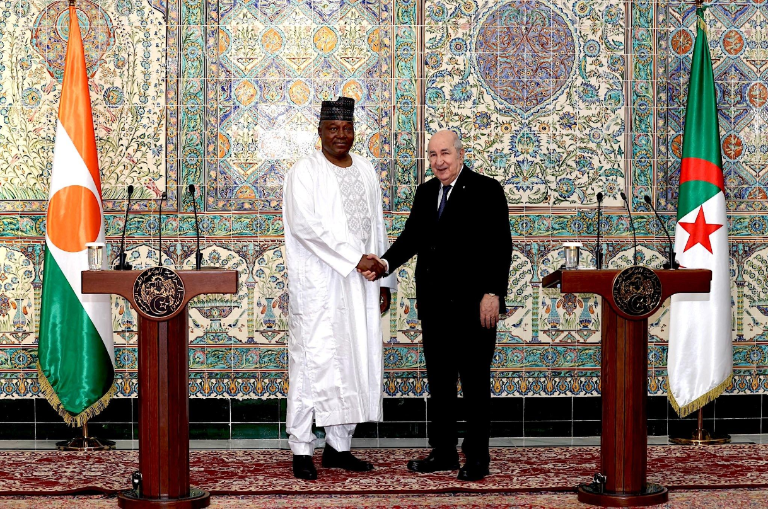
When diplomacy meets sovereignty: Niamey stands firm against EU’s security concerns
Niger’s transitional government has drawn a clear line in the sand, summoning the European Union’s chargé d’affaires in Niamey following comments from Brussels about Algeria’s military deployment in southern Niger. This diplomatic confrontation underscores a growing friction over the boundaries of sovereignty versus international oversight, particularly in a region plagued by escalating security threats.
The meeting, held on November 9 at the Prime Minister’s office with Ali Mahamane Lamine Zeine, was triggered by statements from an EU spokesperson deemed by Nigerien authorities as condescending and unacceptable. The EU had raised questions about the scope, objectives, and legal framework of Algeria’s military presence on Nigerien soil, prompting concerns over potential regional destabilization.
At the heart of the debate lies a critical question: Can the EU legitimately express concerns over bilateral military cooperation between two sovereign nations without overstepping diplomatic boundaries? International law suggests no—unless such remarks are framed as coercive interference, which, in this case, they are not.
Sovereignty versus international scrutiny: What does the law say?
Niger and Algeria retain full autonomy in their defense and security alliances. Both countries are entitled to forge military partnerships based on their national priorities, provided they comply with international obligations. The EU, however, is not barred from expressing its views on geopolitical developments that may impact regional stability.
The United Nations Charter, specifically Article 2(7), prohibits intervention in matters within a state’s domestic jurisdiction. Yet, this provision does not render every external inquiry or critique an act of meddling. For an act to qualify as unlawful interference, it must involve coercive measures aimed at dictating sovereign decisions—something Brussels has not done.
Asking for clarification is not an ultimatum. Raising concerns about troop movements, their command structure, or duration does not constitute an erosion of Niger’s autonomy. Instead, it reflects a legitimate need for transparency in a region where cross-border threats—from armed groups to trafficking networks—pose existential risks.
The Sahel’s security dilemma: Why transparency matters
The Sahel faces a multifaceted crisis, where militant groups, weak governance, and porous borders create a powder keg of instability. In such an environment, any military collaboration between neighboring states can have cascading consequences, extending beyond national frontiers.
Key factors driving EU’s questions
- Regional spillover risks: Unchecked military movements could exacerbate tensions or inadvertently fuel conflicts.
- Command and control structure: Clarity over who leads operations is vital to avoid miscommunication or unintended escalation.
- Legal and operational transparency: Which laws govern these deployments? How do they align with international humanitarian and human rights standards?
- Economic and political repercussions: Could such alliances strain relations with other regional partners or global allies?
For the EU, a major stakeholder in Sahelian security, these are not rhetorical questions. They reflect a broader commitment to preventing destabilization that could trigger displacement crises, economic upheaval, or even spill over into North Africa and Europe.
Words matter: Diplomacy in the balance
While Niger is justified in defending its sovereignty, the EU too has a right—indeed, a responsibility—to voice concerns that could impact regional peace. The crux of the issue lies not in whether Brussels can speak, but how it does so.
A poorly worded statement or an accusatory tone can escalate tensions unnecessarily. Conversely, a measured and respectful dialogue could pave the way for constructive engagement. The tone of Brussels’ initial remarks may have struck a chord in Niamey, but the core issue remains: Can Niger and the EU navigate these disagreements without derailing cooperation?
The path forward: Dialogue over confrontation
The summons of the EU representative was a strong diplomatic signal, but it should not signal the end of meaningful exchange. Instead, Niger and the EU must leverage this moment to reinforce mutual understanding.
For Niamey, this means:
- Articulating the strategic rationale behind Algeria’s deployment.
- Holding transparent discussions on its objectives and governance.
- Reassuring partners that all military actions align with regional security frameworks.
For Brussels, the challenge is to:
- Frame concerns in concise, non-inflammatory language.
- Engage bilaterally with both Niger and Algeria before going public.
- Offer support—technical or diplomatic—where possible, rather than limiting itself to criticism.
In a region where security vacuums breed extremism and state fragility, the EU’s role is not to police, but to partner. And partnership demands mutual respect—not just in words, but in action.
Conclusion: Two rights do not make a wrong
Niger’s firm stance reaffirms its sovereign right to determine its alliances. The EU’s inquiries, in turn, uphold its interest in preventing broader instability. The tension is not between legality and illegality, but between perception and intention, between rhetoric and reality.
A robust diplomatic framework emerges not when each party refuses to budge, but when they recognize that their distinct roles—Sovereign Authorities on one side, Concerned Partner on the other—can coexist without conflict. The Sahel’s future depends on it.