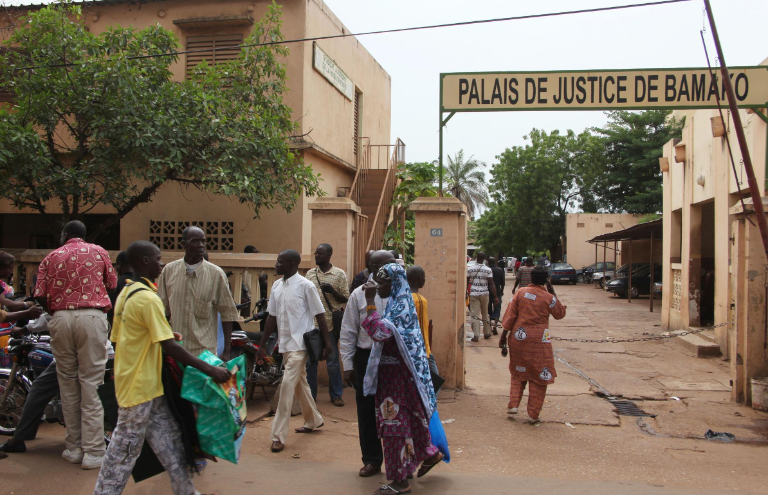
From mayor to convict: the administrative-to-penal shift that shook Bamako’s property market
The historic conviction of Adama Sangaré, former mayor of the Bamako district, to a ten-year prison sentence on October 26, 2026, has sent shockwaves through Mali’s real estate landscape. This landmark ruling, pronounced by the National Economic and Financial Crimes Court’s Criminal Chamber, is more than a judicial milestone—it has exposed deep fractures in how public land is allocated, regulated, and contested in one of West Africa’s fastest-growing cities.
At the core of the controversy lie alleged irregularities in the partitioning, allocation, and regularization of parcels within the Bamako-Sénou airport zone. The prosecution framed the case as a deliberate breach of public assets, including charges of forgery, embezzlement, and public fund misappropriation. Yet, from the outset, Sangaré’s defense has fiercely challenged the very legal basis of these accusations, arguing that the acts in question fall under administrative law—not penal jurisdiction. This stand has ignited a nationwide debate on the blurred lines between administrative decisions and criminal offenses in land governance.
Was it policy or crime? Reclassifying municipal decisions under criminal scrutiny
Central to Sangaré’s defense is the contention that the contested land decisions were executed within the scope of his executive functions as mayor. His legal team contends that municipal decisions, even when flawed, do not automatically constitute criminal acts. They argue that administrative irregularities should be addressed through administrative or civil channels—not criminal courts.
This position received a significant boost from a prior ruling by the Supreme Court, which the defense cited as precedent in challenging the court’s jurisdiction. However, the judges presiding over the case dismissed these preliminary objections early in the trial, paving the way for the proceedings to proceed under criminal law. The rejection of these jurisdictional challenges underscores a pivotal tension: can routine governance decisions be retroactively criminalized without clear legal thresholds?
Did presidential instructions justify contested land allocations?
In a dramatic courtroom revelation, Sangaré claimed he acted on verbal instructions from former President Ibrahim Boubacar Keïta—now deceased. According to his testimony, the land allocations were intended to facilitate the resettlement of internally displaced persons from northern Mali, framed within broader national reconciliation efforts. Sangaré further insisted that the parcels in question were not part of the airport’s official perimeter, but rather peripheral zones under communal jurisdiction.
The prosecution dismissed this explanation, arguing that such orders do not absolve officials of legal responsibility, especially when administrative procedures were bypassed. While the claim of presidential directive adds a political dimension to the case, it does not resolve the key legal question: were the land transactions legally sound and transparent?
Financial damages and systemic vulnerabilities in public land management
The economic impact of the alleged misconduct is staggering. Prosecutors point to 49.39 million FCFA in unpaid development fees and a total financial loss of 483.964 million FCFA linked to unauthorized demolitions and allocations. Sangaré countered that fee exemptions were within his discretionary powers as mayor, and denied involvement in fund management for demolition activities, attributing oversight to state agencies.
The court, however, sided with the prosecution, ordering Sangaré and co-accused to jointly pay 483.964 million FCFA in demolition-related costs and 50 million FCFA in damages to the state—a ruling that raises concerns about collective liability and the proportionality of fines in relation to individual culpability.
Who else was found liable in Mali’s land scandal?
Sangaré was not alone in facing severe consequences. Former sub-prefects Daha Keïta and Ibrahim Koïta, as well as municipal officials Adam Aïché Traoré, Fatouma Samassékou, and Bourama Komagara, were each sentenced to ten years in prison, with five years suspended for the latter three. A particularly harsh judgment fell on Souleymane Dagnon, former mayor of Bamako’s Commune VI, who was sentenced in absentia to twenty years—prompting the issuance of an arrest warrant. In a contrasting outcome, Sékou Keïta was acquitted of all charges.
The prosecution had initially sought a fifteen-year prison term for Sangaré, Daha Keïta, and Ibrahim Koïta, and twenty years for Dagnon—sentences that, while severe, now seem moderate in light of the final rulings. These disparities highlight the judicial inconsistency in evaluating the gravity of similar acts across defendants.
What’s next: an appeal that could redefine Mali’s land governance
With the defense vowing to appeal, the legal saga is far from over. This next phase will not only scrutinize the legality of the conviction but may also force a national reckoning on how land is governed, allocated, and protected in Mali. The case has already spotlighted systemic weaknesses in public land administration, including inadequate record-keeping, opaque decision-making, and the conflation of political directives with legal compliance.
The verdict signals a turning point: it raises the stakes for future public officials, who now face increased scrutiny over land decisions. But it also underscores the need for clearer legal frameworks that distinguish between administrative policy errors and criminal misconduct. Until such clarity is achieved, land governance in Bamako—and across Mali—remains shrouded in uncertainty and risk.