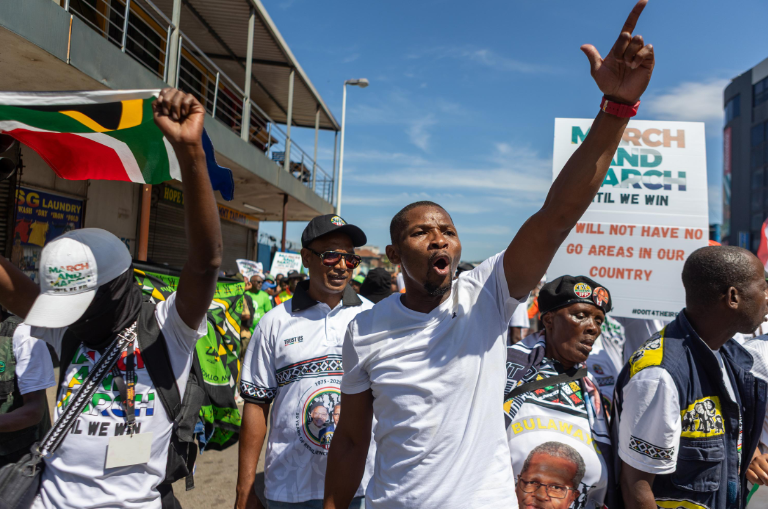
How a brutal mob attack in Durban exposes South Africa’s fragile social fabric
The fatal beating of a foreign national by a frenzied mob in Durban has sent shockwaves through South Africa, forcing the nation to confront a growing crisis of xenophobic violence that threatens both its people and its global standing. With the African Commission on Human and Peoples’ Rights warning of potential crimes against humanity, Pretoria now faces mounting pressure to dismantle the systemic conditions fueling these deadly attacks.
What happened in Durban on October 22, 2026
On a quiet street in central Durban, a foreign man in his thirties or forties became the latest victim of vigilante violence in South Africa. According to police reports, the victim, whose nationality remains undisclosed, was assaulted by approximately fifty people before succumbing to his injuries on the spot.
The attack occurred against a backdrop of rising anti-immigrant sentiment, with local activists accusing foreigners of fueling unemployment and straining public services. However, the brutal nature of this incident has brought into sharp focus the dangers of unchecked mob justice and the failure of authorities to protect vulnerable populations.
Could this incident amount to crimes against humanity?
The African Commission on Human and Peoples’ Rights has issued a stern warning, suggesting that the circumstances of the Durban lynching could meet the criteria for crimes against humanity under international law. While such a classification requires a pattern of widespread or systematic attacks against a civilian population, the commission’s statement underscores the gravity of the situation and demands immediate government action.
Legal experts caution that this assessment is not yet a judicial conclusion but serves as a wake-up call for South Africa. The state’s responsibility extends beyond combating xenophobia within its institutions; it must also prevent violence orchestrated by private actors and ensure those responsible face justice.
Xenophobia and migration: the dangerous intersection fueling unrest
Over the past year, South Africa has seen a surge in protests targeting immigrants, particularly those from other African nations. Critics blame foreigners for contributing to economic hardship, crime, and overburdened social services. These frustrations have occasionally spiraled into violence, property destruction, and looting, with Durban emerging as a flashpoint for such unrest.
The tragic irony is that many immigrants—including refugees and asylum seekers—arrive in South Africa fleeing conflict and poverty elsewhere on the continent. The violent backlash they now face threatens the very ideals of African solidarity and regional integration that the continent has long championed.
Meanwhile, rights advocates emphasize that economic grievances cannot justify assaults, intimidation, or killings. Immigration policy remains the domain of the state, and no group has the right to act as judge, jury, and executioner.
South Africa’s government under the spotlight
The South African Human Rights Commission has joined the chorus of condemnation, labeling the Durban incident a potential crime against humanity and urging authorities to uphold the constitutional right to life for all individuals—regardless of nationality or immigration status.
The government now faces a dual challenge: addressing public concerns about border control while safeguarding every resident from mob violence. Anti-immigration rhetoric, no matter how politically expedient, cannot excuse the state’s failure to enforce the law and protect lives.
Legal experts and rights groups agree that the outcome of the Durban investigation will send a powerful message. A thorough and transparent inquiry, followed by prosecutions, could deter future vigilante justice. Conversely, inaction risks normalizing violence and further emboldening those who take the law into their own hands.
Is this a turning point for African unity?
Beyond South Africa’s borders, the Durban incident challenges the very foundations of the African Union’s vision for unity and integration. Historically, many African nations stood in solidarity with South Africa during its fight against apartheid. Yet today, South Africans are perpetrating violence against fellow Africans based on nationality—a stark contradiction to the ideals of pan-Africanism.
The African Commission’s intervention is more than a condemnation; it is a call for accountability. Leaders across the continent must reflect on how their rhetoric and policies contribute to or combat xenophobia. Failure to do so risks eroding trust in regional institutions and undermining the shared progress of an interconnected continent.
What comes next: justice, prevention, and reconciliation
The death of one man in Durban should not become the prologue to further tragedies. To break the cycle of violence, South Africa must take decisive steps:
- Investigate thoroughly: An independent inquiry must uncover the full chain of events and hold all perpetrators accountable.
- Confront systemic issues: Authorities must address the underlying causes of xenophobia, including economic inequality and political scapegoating of immigrants.
- Amplify voices of solidarity: Civil society, faith leaders, and community organizations must counter hate speech with messages of unity and shared humanity.
- Strengthen legal protections: Laws must be rigorously enforced to prevent vigilante violence and protect the rights of all residents.
As investigations unfold, one truth remains clear: no nation can claim progress while allowing mob violence to replace justice. South Africa’s response to this tragedy will shape not only its own future but also the integrity of the African project.