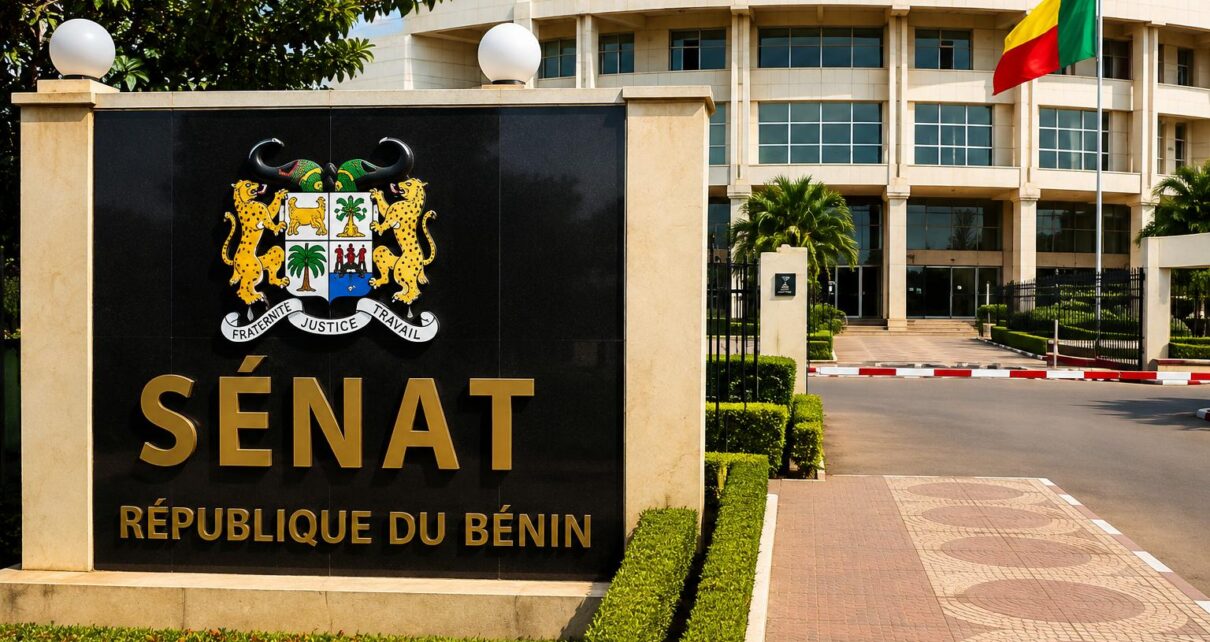
Since the swearing-in of former president Patrice Talon as head of the Senate in Bénin, digital platforms have buzzed with theories and misconceptions. Yet a closer look at the constitutional framework reveals a different picture: one where the executive power remains fully intact, while the legislative branch gains new strength.
Why the executive power remains unchanged in Bénin
Under the Beninese Constitution, the president of the Republic holds sole authority over the executive branch. This means the head of state is responsible for shaping national policy, appointing cabinet members, defining their roles, and overseeing public administration. The transfer of power from Patrice Talon in 2021 was absolute — no remnants of influence remained behind the presidency.
The idea that his new role as Senate president could allow him to steer government decisions is a misunderstanding of institutional design. The executive remains fully vested in the elected president, who serves as head of government, commander-in-chief of the armed forces, and guarantor of public order. Budget execution, major infrastructure projects, and civil service management all fall under presidential control.
The Senate: a legislative body, not a shadow cabinet
Some observers mistakenly view the Senate as a parallel governing body. In reality, its mandate is strictly legislative. The chamber does not participate in cabinet meetings, draft decrees, or influence executive decisions. Its core functions include reviewing legislation, overseeing government action, and representing territorial authorities. The Senate president chairs debates and ensures constitutional compliance — but never takes part in day-to-day governance.
Bénin’s presidential system vs regional parliamentary models
It’s often suggested that Bénin now resembles its neighbor Togo, where constitutional changes shifted power to a parliamentary regime. But this comparison fails under legal scrutiny. In Togo, the prime minister — drawn from the legislative majority — wields true executive power. In contrast, Bénin maintains a strong presidential system: the head of state is directly elected and retains exclusive executive authority. The creation of the Senate simply adds a second legislative chamber, enhancing oversight without altering the balance of power.
How the Senate strengthens democracy and stability
The Senate brings together former officials, seasoned politicians, and constitutional experts — a blend that fosters reasoned debate. In a political climate often driven by electoral fervor, this institution acts as a stabilizing force, ensuring laws are carefully deliberated and national unity is preserved. Though Patrice Talon now leads it, his role is advisory, not operational. He guides legislative reflection, upholds republican values, and safeguards institutional memory — all while staying clear of routine governance.
A milestone in Beninese institutional maturity
The introduction of the Senate marks a significant step toward democratic consolidation in Bénin. Far from blurring power lines, the constitutional design reinforces separation of powers: the president leads the executive, the Senate shapes laws, and both institutions operate within clearly defined roles. This clarity fosters more informed public debate and greater trust in governance.