- Bénin
- Culture
Bénin Horizon 2035: Le Code d’or de la culture béninoise ou l’avènement du quatrième pilier économique
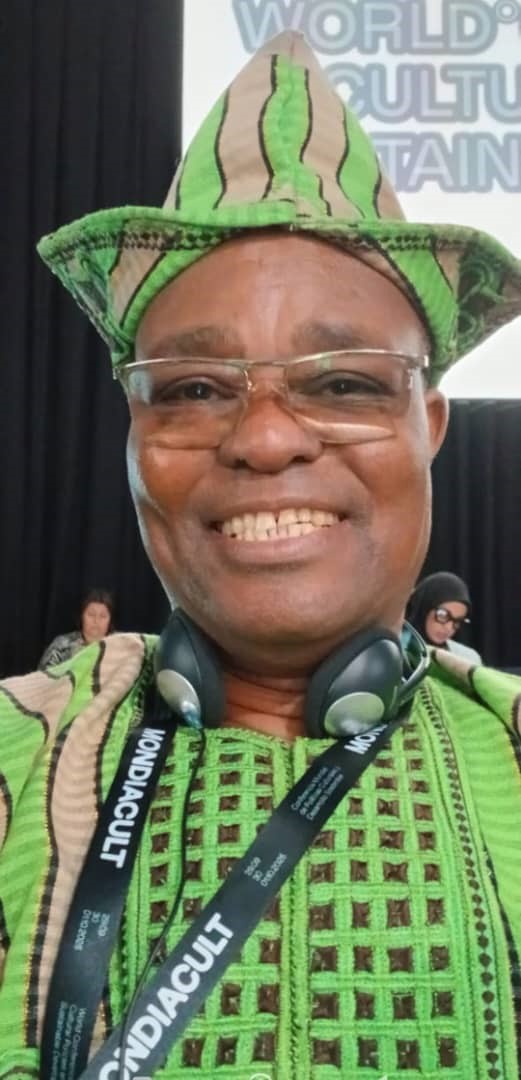
As a consultant specializing in cultural heritage and President of TOWARA-BENIN, the only Béninese NGO accredited by UNESCO, I have witnessed Bénin’s unique position at the nexus of the intangible and authentic in a rapidly evolving global economy. Our nation, the birthplace of Vodoun, a land of ancient monarchies, vibrant arts of rare virtuosity, and a youth brimming with creativity, holds an invaluable treasure. Yet, a striking paradox persists: this extraordinary heritage largely remains an untapped economic giant. For too long, culture has been relegated to a mere spiritual embellishment or an ornamental budgetary expense.
Our ambitious vision for 2035 is clear, systematic, and self-reliant: to elevate culture into the fourth pillar of Bénin’s economy. This is not about celebrating historical nostalgia, but about establishing a productive sector that generates wealth, decent employment, and territorial innovation. To achieve this systemic transformation, eight significant initiatives must be implemented.
- The legal imperative: liberating artists from precarity through law
A robust economy cannot be built on shifting legal sands. While Bénin has recently made some regulatory progress, the immediate need is to advance to a higher level. The status of artists and cultural workers, along with the establishment of the Artists’ House, should not rely on the fragile nature of simple decrees, which are inherently reversible and subject to political fluctuations.
The development of this sector demands the enactment of laws passed by the National Assembly, as these alone can guarantee lasting legal stability and genuine enforceability. In the absence of an immediate framework law, the rigorous, accelerated, and binding implementation of recent related decrees must serve as a temporary bridge.
It is time to enshrine social protection for creators, modernize the governance of copyright, provide substantial tax incentives for private investors, and legally recognize professions within intangible cultural heritage. Securing the artist means securing investment.
- Human capital: revitalizing human ingenuity
The lifeblood of this creative economy lies in its human resources. Amateurism must give way to elite professionalization. Bénin needs to launch a comprehensive training program encompassing not only artistic disciplines but also cultural management, entrepreneurship, conservation-restoration techniques, and the integration of digital technologies applied to heritage. Every commune should become an incubator for its own talents, aligning training with the specific characteristics of its local area.
- Sanctuaries of knowledge: specialized schools and centers of excellence
To institutionalize this transmission of knowledge, the nation’s academic structure must establish three major pillars:
A National Superior School of Arts: Dedicated to nurturing the avant-garde of the contemporary scene (dancers, choreographers, set designers, performing arts technicians).
A Superior Institute of Cultural Heritage: A cutting-edge scientific laboratory focused on safeguarding tangible and intangible heritage, museography, and archives.
An Academy of Arts and Traditions of Bénin: A sacred space for cultural diplomacy and transmission, where master custodians of traditions document and legitimize ancestral knowledge for future generations.
- The physical footprint: deploying international-class infrastructure
Creativity demands appropriate venues. Bénin’s territorial network must be strengthened with modern, versatile, and decentralized infrastructure. From communal cultural centers to regional theaters, including digital creation complexes and artisan villages, each department needs the physical tools necessary for creation, production, dissemination, and engagement with audiences.
- The sinews of war: revolutionizing access to financing
Artistic ambition without financial means remains an illusion. We advocate for a three-dimensional financial architecture to propel the creative economy:
A National Fund for Cultural Development focused on pure creation, research, and international mobility.
A Creative Economy Desk within financial institutions, offering preferential interest rates, guarantee mechanisms, and loans tailored to the specific cycles of artistic production.
A Public-Private Cultural Investment Fund, capable of raising capital from the State, local authorities, employers’ organizations, and the diaspora.
- The sector approach: from craftsmanship to visual arts
The Béninese cultural sector suffers from fragmentation, which dilutes its impact. Whether it’s cinema, fashion, music, dance, or literature, each discipline must be structured as an autonomous industrial sector. This implies that each segment should have a ten-year strategic plan, a training roadmap, dedicated distribution channels, and an aggressive marketing strategy for regional and international markets.
- Intangible heritage: Bénin’s unique singularity
Our masks, ritual rhythms, initiation narratives, and artisanal expertise are not mere folklore; they are invaluable intangible assets. By investing in the digitization of collections, the labeling of heritage festivals, and the creation of national cultural itineraries, Bénin can transform its living traditions into powerful drivers of local development and tourist appeal.
- Strategic convergence: culture, tourism, and agro-industry
Finally, the influence of Béninese identity requires an organic symbiosis between culture, experiential tourism, and agro-industry. Valuing our local products through the lens of our aesthetics and designing territorial labels of excellence will enable each region to transform its culture into an argument for economic prosperity. The tourist of 2035 will not merely seek a landscape; they will come to experience a culture, taste a terroir, and inhabit a history.
Towards the grand rendezvous of 2035
Building the Bénin of tomorrow demands a break from the rentier paradigms of the past. By 2035, our nation has a historic opportunity to establish itself as the beacon of the creative economy in Sub-Saharan Africa.
This transition is not poetic fancy but a high-level state strategy. By providing our artists with a protective and ambitious legal framework, funding audacity, and safeguarding our memories, we will make culture the engine of sustainable, inclusive growth, proudly rooted in Béninese genius. The time for mere decree promises is over; it is time for legal consecration and decisive action.
By Marcel ZOUNON