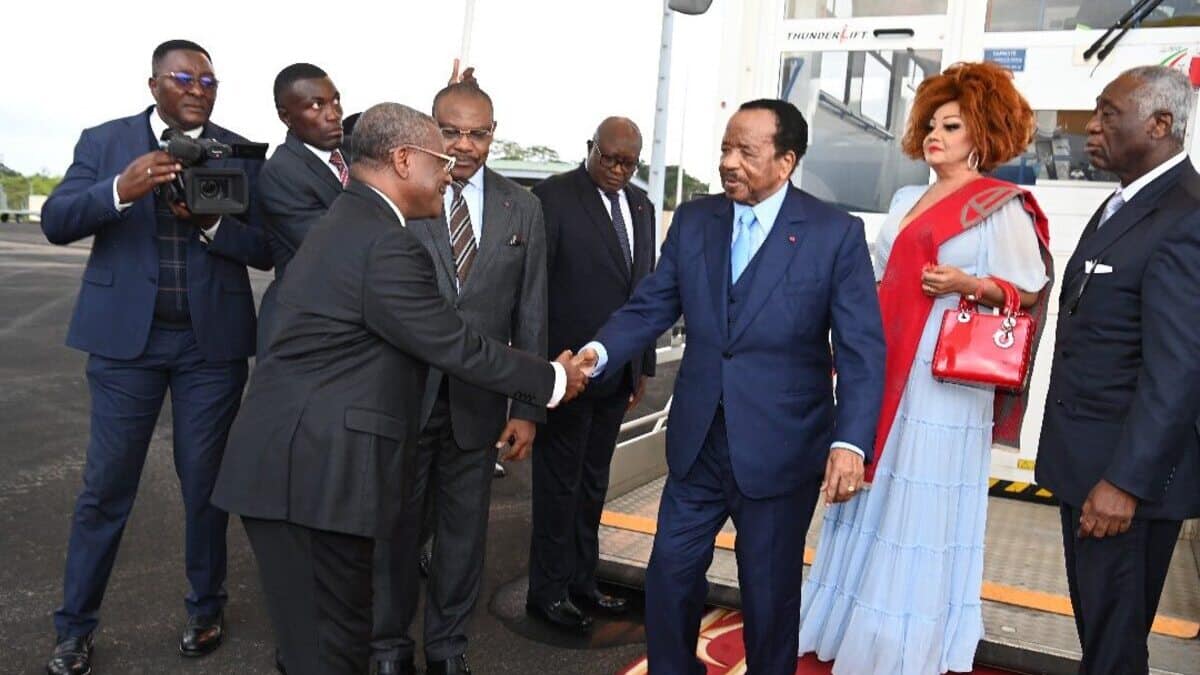
Cameroon politics: is presidential power vacant amid Biya’s extended stay abroad?
In his Monday July 20, 2026 editorial, broadcast on Radio Tiémeni Siantou’s airwaves, commentator Eric Boniface Tchouakeu examines the implications of the Cameroonian Head of State’s prolonged private visit to Europe.
The Monday July 20, 2026 editorial on Radio Tiémeni Siantou (90.5 FM in Yaoundé and Bafang) by commentator Eric Boniface Tchouakeu raises critical questions about the Cameroonian Head of State’s extended private visit to Europe.
President Paul Biya left Cameroon on June 7, 2026, officially for what was described as a “short private stay” in Europe, according to a statement issued by his Cabinet Director, Samuel Mvondo Ayolo.
While Jeune Afrique and other outlets have confirmed the President is currently in Geneva, Switzerland—a city he has frequented since assuming power in 1982—the duration of his stay has sparked widespread speculation. Many are questioning whether his prolonged absence signals potential health concerns, particularly given his advanced age of 93. Authorities have repeatedly attempted to dispel such concerns, yet public skepticism persists, with some even suggesting the possibility of a power vacuum in Cameroon.
However, it is essential to clarify that Cameroon’s constitutional framework does not allow for a power vacuum based solely on the Head of State’s extended absence from the country. The 1972 Constitution, which remains in effect, explicitly defines only three scenarios in which a power vacuum can be declared: the death, resignation, or definitive impediment of the President. Notably, the constitution does not specify what constitutes a “definitive impediment,” leaving this interpretation open to debate.
Therefore, the prolonged foreign stay of a sitting President does not, in itself, constitute grounds for declaring a power vacuum. Legally, the President could continue governing from abroad throughout his mandate without violating any constitutional provisions—though such an arrangement would undoubtedly raise ethical and political concerns.
The delayed formation of the government following the October 12, 2025 presidential election, as well as the swift reinstatement of the Vice-President position—a reform implemented with unusual haste—has only fueled public speculation. For over 43 uninterrupted years in power, President Biya has never issued or authorized major decrees from abroad, making his current prolonged absence all the more noteworthy.
Be the first to comment on this article
Comments