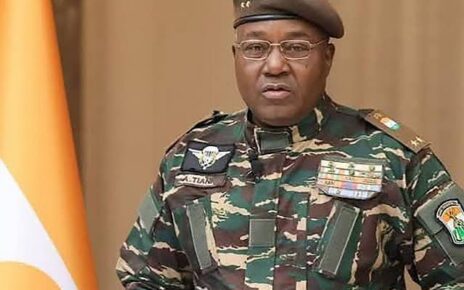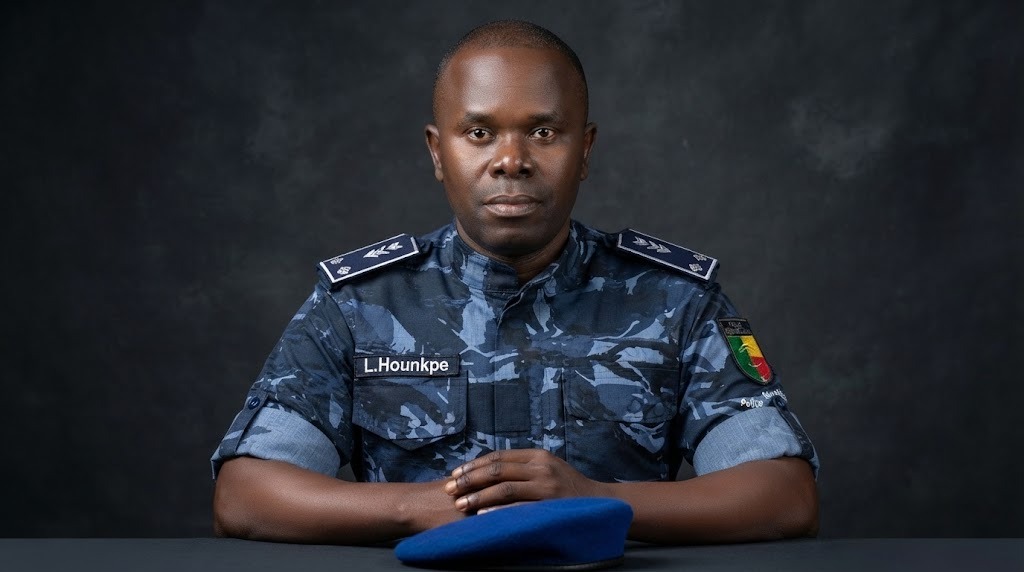
COTONOU — The highest court in Benin has shut the last extraordinary procedural door available to General Louis Philippe Houndégnon, and the tremors of that decision will be felt far beyond the walls of the courtroom. On Thursday 24 September 2026, the Supreme Court definitively threw out the cassation appeal lodged by lawyers for the former Director General of the National Police. While the judges accepted the filing on form, they rejected it outright on substance, thereby upholding the ruling handed down on 19 May 2026 by the appeal chamber of the Court for the Repression of Economic Offences and Terrorism (CRIET). By confirming that the lower judges had jurisdiction, the court has exhausted the defence’s remaining extraordinary remedies and cleared the path to a trial that now looks unavoidable.
The practical effect is immediate. A case that had been consumed for months by jurisdictional wrangling can finally move to its merits, and the man who once commanded the country’s police force will have to answer for his own words in front of a criminal bench.
A final door closes on the cassation route
Inside the hearing room, one of the accused’s counsel, Fidèle Abouta, made a last-ditch attempt to derail the process, arguing that his client’s fundamental rights had been trampled from the very first hours of the investigation. The argument did not move the bench. With that, a standoff over which court should hear the matter — a quarrel that had dragged on for several months — came to a definitive end.
For observers of Benin’s institutions, the sequence carries a message that stretches past this single defendant: procedural challenges cannot be used indefinitely to postpone a criminal reckoning.
Why the outcome reaches well beyond the courtroom
This is not an abstract legal dispute. Its consequences touch the daily relationship between citizens and the state, and they shape how the country is read from the outside.
For citizens: a test of how the state handles dissent
At its core, the file raises a question that every democracy eventually confronts: where does protected speech end and where does an assault on public order begin? A former police chief who turns into one of the loudest critics of the government is an unusual figure in any political landscape, and the way the courts treat him will be read as a signal about the space left open to ordinary people who speak out. If the trial is seen as fair and transparent, it can strengthen confidence in the judiciary. If it is seen as political score-settling, that confidence will be the casualty.
For businesses: predictability, perception and risk
Legal certainty is not a slogan for companies; it is a cost line. Investors and local firms alike price in how quickly disputes are resolved, how independent courts appear, and whether the rules apply evenly to the powerful and the powerless. A high-profile prosecution that moves from procedural limbo into open argument offers at least one clear benefit: it restores a sense of forward motion to a system that had appeared stalled. Conversely, a prolonged or opaque process feeds the uncertainty that discourages long-term commitment and slows the flow of capital into a country that needs it.
The accusations at the centre of the file
The state accuses its former top police officer — now one of the most trenchant voices against those in power — of a series of serious breaches.
- Incitement to rebellion and civil disobedience, linked to speeches said to have encouraged uprising.
- Harassment through electronic communications, tied to the spread of sharp messages on social media.
- Breach of the duty of reserve, over the disclosure of confidential information connected to his former duties.
The matter was initially handled as a lesser offence before being reclassified by the CRIET as a criminal case, on the view that it amounts to an attempt against the security of the state. That reclassification is precisely what makes the stakes so high: the difference between a correctional file and a criminal one is the difference between a manageable legal headache and years of a man’s life.
What now lies ahead before the CRIET
With the Supreme Court’s refusal, procedural arguments fade and the substance takes over. The central issue is no longer which bench should sit, but what the general actually said, in what context, and with what intent. Judges will have to weigh whether his public statements belonged to the protected exercise of free expression or constituted a deliberate effort to destabilise the institutions of the Republic.
For a public that has followed the saga closely, the shift is significant. After months of technical debate, the country is about to see a genuine contest of evidence — testimony, messages, speeches and legal argument — played out in the open. The verdict, whatever it is, will settle more than one man’s fate: it will define, for the years to come, how far a former guardian of public order may go in challenging the state he once served.