Border security in Africa hinges on neighborly cooperation, Benin asserts at UN
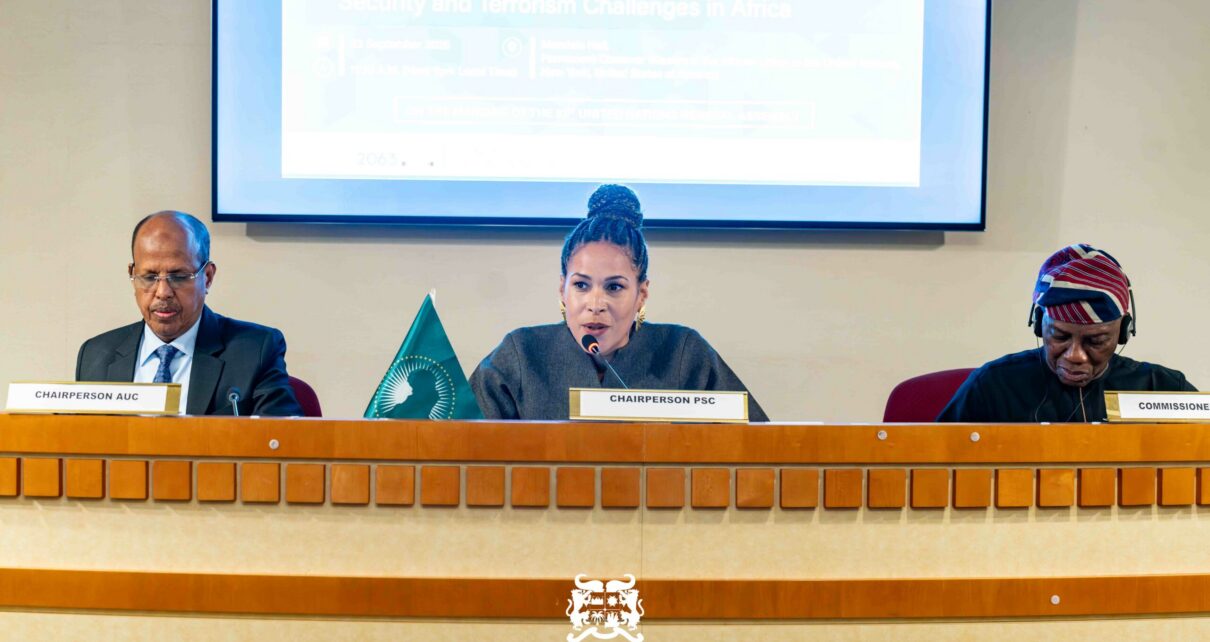
During a pivotal session of the African Union’s Peace and Security Council in New York on Wednesday, September 23, 2026, Benin made a bold case for strengthening cross-border partnerships as a foundation for regional stability. Led by Foreign Minister Corinne Amori Brunet, the ministerial-level meeting brought together African Union Commission Chair Mahmoud Ali Youssouf and AU Commissioner for Political Affairs, Peace, and Security Bankole Adeoye, among other high-level delegates.
The gathering, held on the sidelines of the 81st UN General Assembly, focused on “Neighborly Relations and Regional Responses to Security and Terrorism Challenges Across Africa,” uniting representatives from AU member states, regional organizations, and international partners in a shared pursuit of durable solutions to transnational threats.
The ripple effects of insecurity: Why borders are more than lines on a map
Minister Brunet opened the meeting by framing national boundaries not just as markers of sovereignty, but as living spaces where millions of Africans work, trade, and maintain family ties. When violence takes root in these zones, she emphasized, it ripples through multiple countries—disrupting economies, displacing communities, and undermining decades of development gains.
Investing in neighborly cooperation, she argued, is not merely diplomatic rhetoric. It requires tangible action: robust state presence in border areas, rapid intelligence sharing, joint security operations, and streamlined judicial collaboration. These steps, she noted, directly support the daily lives of people whose livelihoods depend on open and secure frontiers.
Such an approach reflects Benin’s broader foreign policy vision under President Romuald Wadagni, which prioritizes dialogue, regional security, and cooperative governance as pillars of sustainable development.
When politics falter, neighborly ties must endure
One of the most pressing challenges identified during the session was maintaining cooperation even when bilateral relations between neighboring nations face strain. The Beninese delegation urged participants to resist creating redundant structures. Instead, they called for better alignment of existing mechanisms to reflect on-the-ground realities and prevent gaps in security delivery.
This pragmatic stance underscores a growing regional consensus: the effectiveness of Africa’s security architecture depends less on new institutions and more on the adaptability and political will to implement what already exists.
Women at the frontline: The overlooked power of local voices
A recurring theme throughout the discussion was the central role of border communities—especially women—in conflict prevention and stabilization. Their lived experience, deep local networks, and intimate knowledge of daily movement patterns make them indispensable in identifying early warning signs and building trust between authorities and citizens.
The high-level meeting in New York built on the momentum of Benin’s second high-level ministerial seminar, held in Cotonou on September 9–10, 2026, under the “Women, Peace, and Security” framework. By elevating women’s participation in peace and border governance, the AU and its partners are positioning community-level insights as a strategic asset in national and regional security strategies.
The Swakopmund Process: Bridging dialogue and action
The Beninese presidency of the AU Peace and Security Council in September 2026 has placed three priorities at the forefront:
- Crisis prevention through localized intelligence – leveraging community networks to detect and defuse tensions before they escalate
- Inclusive governance at borders – ensuring women, youth, and local leaders have meaningful roles in decision-making
- Enhanced interstate cooperation – transforming neighborly relations into operational partnerships capable of addressing real threats
A diplomatic agenda with real-world impact
Looking ahead, the Beninese Foreign Minister is set to address the UN General Assembly on September 28, 2026, bringing these frontier realities to a global stage. Her address is expected to highlight how grassroots cooperation can bolster macro-level security policies—and why Africa’s future depends as much on trust between neighbors as it does on the strength of its institutions.
By turning neighborly relations into a tangible security tool, Benin is not just reshaping discourse at the African Union—it is helping redefine what peace and stability look like across the continent.