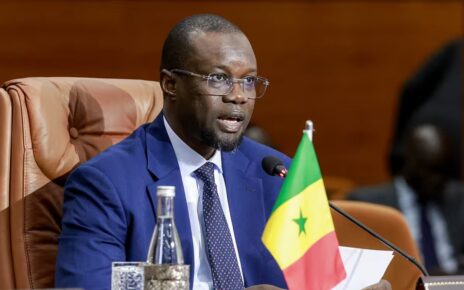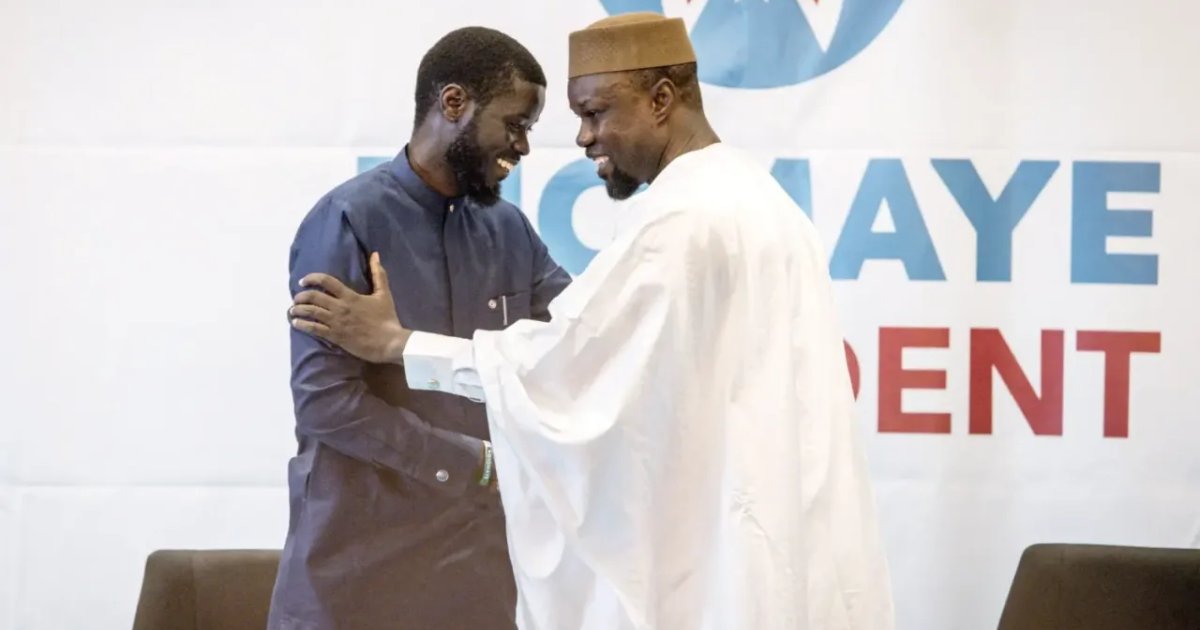
Senegal’s political tensions escalate as Diomaye Faye considers dissolving parliament
President Bassirou Diomaye Faye has left open the possibility of dissolving Senegal’s National Assembly—a move that could reshape the country’s political landscape and deepen the rift with his former ally, Ousmane Sonko. In a rare public address, the president framed the decision as a constitutional recourse, pending the shifting dynamics between Senegal’s institutions and the mounting financial pressures facing the government.
The president’s remarks, delivered during a recent international engagement, underscore the high stakes of Senegal’s political standoff. With Ousmane Sonko now presiding over the National Assembly—a position he assumed after his ouster as prime minister—the two leaders find themselves at odds over policy direction, governance, and the country’s economic future.
The constitutional leverage at play: what dissolving parliament would mean for Senegal
Faye’s response to questions about a potential dissolution was measured but deliberate. “Why rule out a constitutional prerogative granted to the presidency?” he asked, deflecting direct commitments yet signaling that the option remains on the table. His statement—“The timing will depend on necessity and context. When the moment comes, we will decide accordingly.”—hints at a high-stakes gamble: using the nuclear option to break legislative deadlock or risk political fallout.
For Faye, the threat of dissolution is more than a political maneuver—it’s a potential lifeline. With Sonko’s party, Pastef, controlling the Assembly, key financial reforms, including the upcoming rectified budget law, now face unprecedented scrutiny. A rejection of these measures by the Assembly would not only stall economic progress but also expose the fractures within Senegal’s leadership.
- Budgetary gridlock: The government’s ability to pass crucial financial adjustments hinges on Assembly approval, a process now fraught with partisan tensions.
- Institutional power struggle: Sonko’s leadership of the Assembly grants him unparalleled influence over the legislative agenda, complicating Faye’s governance.
- Public perception: Any dissolution risks being seen as a power grab, further eroding trust in an already fractured political class.
From allies to adversaries: the fallout of Faye and Sonko’s rupture
The president’s comments follow a stark admission of political divorce. Asked about his decision to replace Sonko as prime minister, Faye cited “persistent differences on critical issues.” “When trust erodes beyond repair, leadership choices must follow,” he stated, though he denied that pressure from international financial institutions played a role in the split.
The rift between the two men is no longer a behind-the-scenes affair—it has officially entered the public domain. Sonko, a former ally turned institutional adversary, now wields significant control over the legislative process, directly challenging Faye’s agenda. The president’s dismissal of allegations of betrayal from within his own ranks—“The only thing I am liable to betray is my oath to the people”— underscores the personal and political toll of their falling out.
Global stage, local stakes: Faye’s unexpected endorsement of Macky Sall
Amid the domestic turmoil, Faye made a surprising diplomatic overture: his vocal support for Macky Sall’s candidacy for UN Secretary-General. Despite skepticism about Sall’s chances, Faye framed his endorsement around “Africa’s representation and the continent’s voice on the global stage.”
The president argued that Sall’s experience navigating Senegal’s debt challenges—“someone who has endured the harsh realities of debt”— makes him uniquely qualified to advocate for international financial reform. Yet, the move has raised eyebrows, with observers questioning how this aligns with the current political climate in Dakar.
What comes next? The potential consequences of a parliamentary dissolution
As Senegal grapples with these unfolding dynamics, the nation now faces a pivotal crossroad. A dissolution of the National Assembly would trigger snap elections, reshuffling the political deck and potentially altering the balance of power. For Faye, it’s a high-risk, high-reward strategy: dissolve parliament to regain control, or risk further legislative paralysis that could stall economic recovery and deepen public disillusionment.
The coming weeks will reveal whether Faye’s constitutional gamble pays off—or if it exacerbates the very instability his government seeks to overcome. One thing is certain: in Senegal’s delicate political equation, the decision to dissolve the Assembly carries consequences far beyond the halls of power. It will ripple through businesses, households, and the broader economy, testing the resilience of a nation at a crossroads.