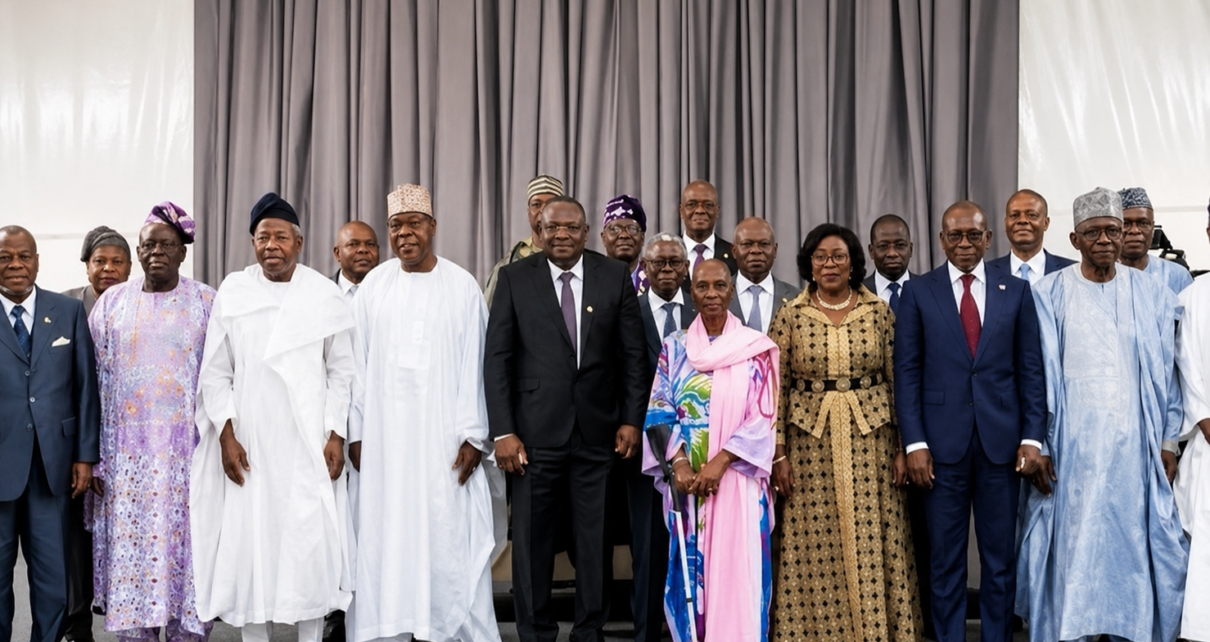
The inauguration of Benin’s first Senate on July 30, 2026, followed by former President Patrice Talon’s election to its presidency on August 6, marked a pivotal moment in the nation’s institutional evolution. Established through the constitutional revision of December 17, 2025, this second parliamentary chamber introduces a new dimension to the country’s democratic framework.
Yet this institutional milestone has sparked considerable debate. Critics have framed the Senate as a potential “shadow government,” suggesting it could serve as a vehicle for Patrice Talon to retain power beyond his presidency. However, a closer examination of the constitutional texts reveals a more nuanced reality.
Constitutional framework: the senate as an institutional pillar
The Senate is not an ad hoc creation but a direct consequence of Benin’s constitutional reform. The revised Constitution explicitly establishes a bicameral Parliament, comprising the National Assembly and the Senate, with clearly defined roles, composition, and powers.
This distinction is critical: while the Senate’s creation may be debated, its existence is anchored in constitutional law, not the agenda of any individual. Its legitimacy stems from the legal text, not the personalities involved.
Distinguishing political influence from executive power
The election of Patrice Talon as Senate President has fueled speculation about his potential influence. As a former head of state, his leadership of the chamber naturally raises questions. However, it is essential to separate political sway from constitutional authority.
Patrice Talon concluded his presidential mandate after two terms, and Romuald Wadagni was elected as his successor in April 2026, assuming office on May 24. The transition of power was formally completed, and the Senate’s role does not replicate that of the presidency.
The president of the Senate does not wield the powers of the head of state. The Constitution reserves executive authority for the presidency, while the Senate operates within the legislative branch. Article 79 explicitly designates Parliament as the body responsible for legislative functions and oversight of the government.
The senate’s role: regulation without governance
A common misconception frames the Senate as a parallel government. In reality, its mandate centers on regulation and deliberation, not executive action.
The chamber is tasked with preserving national unity, democracy, peace, political stability, and state continuity. It also monitors compliance with political ethics and the maintenance of a truce within the political sphere.
These responsibilities, while significant, do not equate to governing. Regulation differs fundamentally from execution, and oversight is not the same as administration. The Senate’s functions complement, rather than replace, the executive branch.
Legislative powers: substantial but constrained
The Senate’s influence extends to legislative processes. Certain categories of bills including constitutional amendments, electoral laws, and regulations governing political parties require its non-objection before enactment. To veto a proposal, the chamber must secure a two-thirds majority of its members. If no objection is raised within the deadline, the bill proceeds without delay.
The Senate can also request a second review of legislation passed by the National Assembly, with exceptions for budgetary and financial laws. This mechanism underscores the chamber’s role in refining and scrutinizing legislation, ensuring a more deliberate legislative process.
A chamber of experience: the rationale behind its composition
The Senate’s makeup reflects a deliberate effort to incorporate institutional wisdom. It includes ex-officio members from high-ranking positions and senior figures from defense and security sectors. If necessary, additional members are appointed to meet the constitutional minimum of 25 senators.
This structure positions the Senate as a forum where seasoned expertise can mitigate political turbulence. In a democracy, governance is not solely about majority rule but also about dialogue, mediation, and crisis prevention. The Senate’s design aims to foster these objectives by integrating experienced leaders into its ranks.
Beyond speculation: evaluating the senate’s impact
Critics who allege undue influence from Patrice Talon are not entirely unfounded former heads of state often retain significant political capital. However, conflating political influence with constitutional authority distorts the Senate’s actual role.
The pertinent question is not whether Talon can exert influence he can, as any former leader in a prominent institutional role but whether such influence can legally supplant the president’s authority. The answer, rooted in the Constitution, is no. The Senate’s powers are circumscribed, and its members are bound by an obligation of political reserve.
The true test of the Senate’s effectiveness lies in its daily operations. Will it exercise its prerogatives judiciously without becoming a mere rubber stamp? Can it engage in meaningful dialogue with the National Assembly and government? Will it leverage its legislative oversight responsibly?
These are the metrics by which its utility will ultimately be measured.
Continuity without institutional overreach
The transition from Patrice Talon to Romuald Wadagni was widely interpreted as a continuation of the same political trajectory. Wadagni, a former finance minister in Talon’s administration, won the 2026 presidential election with an overwhelming majority. While political continuity can be scrutinized, it does not inherently constitute an institutional power grab.
A democracy can experience political succession without abrupt policy shifts. The critical factor is whether institutions function within their designated boundaries, responsibilities are clearly delineated, and oversight mechanisms remain robust.
A call for empirical assessment
The Senate, as a new institution, cannot be judged solely by intentions or fears. Its performance will be determined by its actions: how it balances its regulatory role, engages with other branches of government, and upholds its constitutional obligations.
The Constitution entrusts the Senate with fostering stability, enhancing legislative quality, and promoting political dialogue. Whether it fulfills this mandate will define its legacy not the conjectures surrounding its leadership.
For Benin, the path forward requires moving beyond speculative narratives to focus on the Senate’s tangible contributions to the nation’s democratic health.