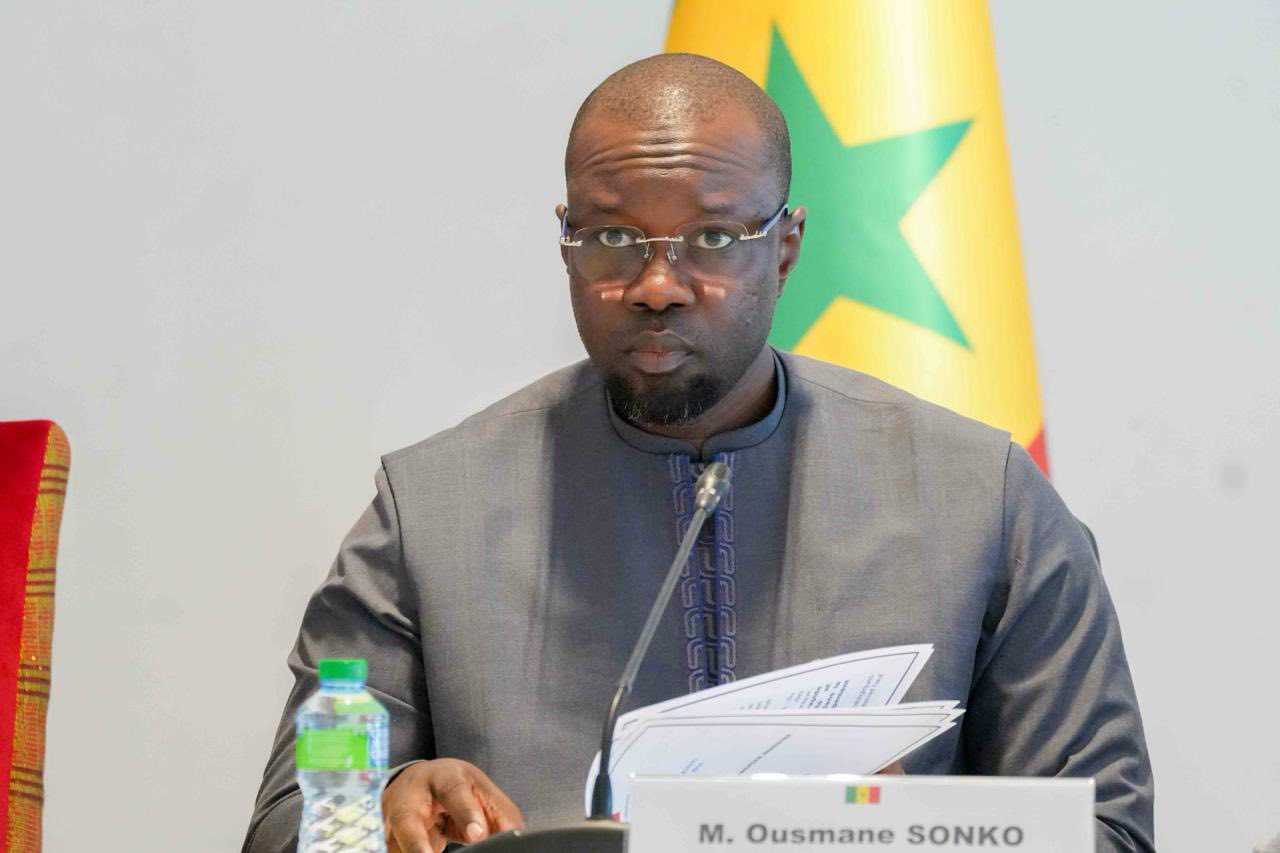
Senegal’s ex-PM Ousmane Sonko reveals behind-the-scenes of his exit from power
In a revealing public address, Ousmane Sonko, former Prime Minister and leader of the Pastef party, has shared intimate details about the events leading to his unexpected removal from office. Speaking with candor, he outlined the tense final moments of his collaboration with President Bassirou Diomaye Faye, shedding light on a political separation that had been months in the making.
The final conversation
Sonko recalled that the decisive exchange took place on May 25, immediately after a session at the National Assembly. “President Faye called me in and said he needed to see me,” Sonko explained. “During our meeting, we discussed routine matters. At the end, he stated that continuing our partnership would be extremely difficult, citing my parliamentary statements as a major source of contention.” The outgoing leader emphasized that this moment marked the beginning of the end, though tensions had been simmering long before.
A history of compromise
Sonko went on to reveal that he had repeatedly offered to step aside if his presence in government hindered the President’s agenda. “After the legislative elections, I met with him three times, in the presence of witnesses,” he recounted. “I made it clear that if my role became an obstacle, I would happily return to the National Assembly to ensure smooth governance. He consistently rejected the idea.” The former Prime Minister described how he had even sensed growing friction within the administration in the weeks prior, a concern he raised directly with the President. “I noticed warning signs of an impending crisis,” he stated. “I confronted him about it, but by then, I was already operating under his strict guidance.”
The final hours
Sonko described the last interaction as particularly abrupt. “We never discussed the terms of my departure,” he said. “He wanted me to publicly declare that we parted on good terms, but I refused.” Instead, Sonko proposed two alternatives: returning to the Assembly to allow the majority to appoint a new Prime Minister, or continuing negotiations for a mutually acceptable resolution. If neither option worked, he argued, the President should take full responsibility for the decision. “The choice was his to make,” he asserted.
According to Sonko’s account, President Faye had indicated plans to resume discussions after a planned visit to Dakar’s Archbishop as part of Pentecost celebrations. “He mentioned he would reconnect with me upon his return,” Sonko shared. “Instead, at exactly 8:35 PM, I received a message informing me of the decision. I accepted it without protest.” Moments later, the official announcement of his resignation was made public by the Secretary-General of the Presidency. “Fifteen minutes afterward, I saw the official statement,” he recalled. “I began packing my belongings to return to Keur Gorgui, a place that had long felt like home.”