The Beninese government has secured a pivotal diplomatic role that will directly shape the future of economic and social policies within the Francophonie community. By assuming the vice-presidency of the Francophonie Ministerial Conference (CMF) in 2027, Benin gains unprecedented influence over key decisions that will impact businesses, investors, and everyday citizens across 88 member states.
From diplomatic milestone to tangible outcomes
Benin’s election to the vice-presidency during the 48th CMF session in Phnom Penh was not merely ceremonial—it carries concrete implications for the nation’s economy and the lives of its people. As vice-president, Benin will co-lead discussions on financial commitments, trade facilitation, and sustainable development initiatives within the Francophonie, a bloc representing over 300 million French speakers.
This responsibility comes at a critical juncture. The 20th Francophonie Summit, held the following day, finalized policy frameworks that will guide member states through 2030. Benin’s active participation ensures its priorities—youth employment, digital innovation, and regional stability—will be embedded in these strategies.
Corinne Amorri Brunet champions Benin’s priorities abroad
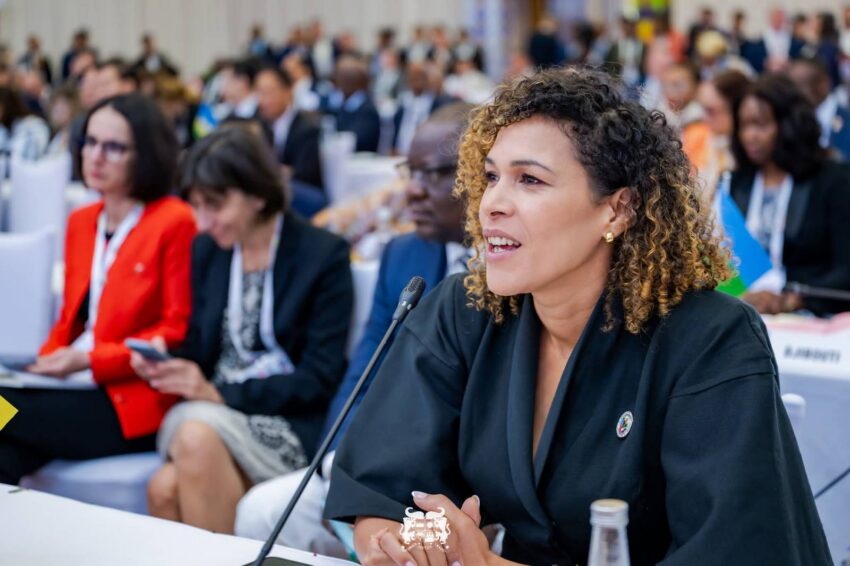
Representing Benin at the Phnom Penh negotiations, Foreign Minister Corinne Amorri Brunet underscored the nation’s commitment to leveraging its new position for mutual economic growth. Her engagements focused on three pillars: private sector collaboration, education exchange programs, and infrastructure investment incentives for French-speaking African nations.
These objectives mirror Benin’s domestic agenda, where reforms aim to position Cotonou as a logistics and financial hub connecting West Africa to global markets. By aligning its international advocacy with national development goals, Benin ensures that its diplomatic gains translate into real-world benefits for citizens.
Key policy areas where Benin will drive change
- Economic resilience: Advocating for a Francophonie-wide fund to support small and medium-sized enterprises (SMEs) affected by global supply chain disruptions.
- Digital transformation: Promoting cross-border e-commerce initiatives to boost trade among member states.
- Cultural diplomacy: Securing funding for digital archives of Francophone African literature and heritage preservation projects.
What the Phnom Penh agreements mean for Benin’s economy
The conference produced a Phnom Penh Declaration and a Crisis Resolution Resolution, both of which will now undergo final approval at the 2027 Summit. These documents commit member states to:
- Allocate 0.7% of GDP to development cooperation in Francophone Africa.
- Launch a Youth Entrepreneurship Fund to reduce unemployment among 18–35-year-olds.
- Create a Francophonie Green Investment Platform to fund renewable energy projects.
For Benin, these commitments are a strategic opportunity. The Youth Entrepreneurship Fund, for instance, could channel investments into tech hubs like Parakou and Abomey-Calavi, fostering high-value job creation. Similarly, the Green Investment Platform aligns with Benin’s 2030 Renewable Energy Roadmap, accelerating its transition to solar and wind power.
2027 Summit hosting rights: a diplomatic domino effect
Phnom Penh’s ministers also endorsed Benin’s bid to host the 2027 CMF session—a decision pending ratification by heads of state. Hosting the conference would position Benin as the diplomatic focal point for Francophonie economic policy for the next three years, elevating its global profile.
Domestic benefits would include:
- Tourism revenue: An influx of 5,000–7,000 delegates, boosting hotels, restaurants, and local airlines.
- Brand visibility: Global media coverage during the event would spotlight Benin’s business climate and cultural heritage.
- Trade deals: Pre-conference bilateral meetings could finalize agreements with French-speaking partners in West Africa and Europe.
Risks and challenges in the road ahead
While the vice-presidency opens doors, it also demands accountability. Critics argue that Benin must demonstrate measurable progress in implementing promised reforms or risk losing credibility. Key challenges include:
- Balancing domestic priorities with multilateral obligations.
- Ensuring transparency in fund allocation to avoid mismanagement.
- Managing geopolitical tensions that could derail consensus within the Francophonie.
Success hinges on Benin’s ability to translate diplomatic influence into visible, equitable economic benefits for its population. The world will watch closely as Cotonou navigates this high-stakes role.
The clock is ticking: Benin’s 2027 moment of truth
From 2026 to 2027, Benin’s foreign policy team has a narrow window to deliver on its promises. The vice-presidency isn’t just a title—it’s a platform to reshape economic trajectories for millions. Whether it becomes a catalyst for growth or a missed opportunity will depend on the decisions made in the coming months.
One thing is certain: Benin’s ascent in the Francophonie is no longer theoretical. It’s a high-stakes gambit with real consequences for its businesses, its citizens, and its global standing.