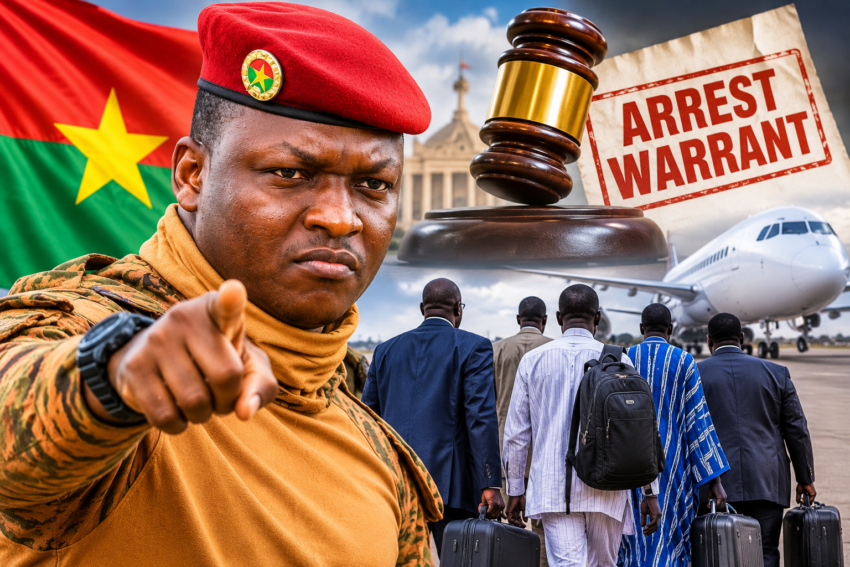
In Burkina Faso, the judicial pressure exerted on former political leaders, military officials, and journalists is escalating into a matter of growing national and international concern. Exiled figures once high-ranking officials, critics, or military personnel now face arrest warrants, extradition requests, and ongoing legal proceedings initiated from Ouagadougou, despite their physical absence from the country. To these individuals, exile was intended as protection against persecution, yet the Burkina Faso transitional authorities continue to pursue them with unrelenting vigor.
Why pursue critics beyond national borders?
The determination to extend legal action beyond Burkina Faso’s frontiers raises critical questions about the intent behind these measures. Are these proceedings grounded in genuine quests for accountability, or do they signal a broader campaign to silence dissent, even beyond the country’s borders? The persistent focus on individuals who have fled the country suggests a pursuit that transcends ordinary judicial action, morphing into a strategy that may have far-reaching implications for civil liberties and national stability.
Reassessing justice: a shield or a political weapon?
While no individual should be exempt from legal accountability, the manner in which these cases are pursued warrants scrutiny. The line between justice and political score-settling becomes dangerously blurred when legal mechanisms are deployed against exiles who reside in countries committed to protecting their rights. For justice to retain its legitimacy, prosecutions must be anchored in verifiable evidence and conducted through independent legal processes, free from political interference. Anything less risks undermining public trust in Burkina Faso’s institutions.
The international dimension of these legal actions introduces another layer of complexity. Burkina Faso’s reliance on extradition requests to foreign jurisdictions demands careful consideration of diplomatic relations, human rights obligations, and the sovereignty of host nations. Overreach in this sphere could isolate Burkina Faso diplomatically and strain relations with countries that prioritize the protection of refugees and exiles.
The political cost of silencing dissent
The broader consequences of this strategy are becoming evident. When a government appears to perceive every opposing voice as an existential threat, regardless of location, it undermines the principles of pluralism and free expression. A leader confident in their legitimacy should address criticism through policy, transparency, and democratic engagement not through prolonged legal campaigns targeting former officials and critics. Such actions risk reinforcing perceptions of authoritarianism and stifling the very dialogue needed to address Burkina Faso’s deep-rooted challenges.
National priorities at risk: where should focus lie?
Burkina Faso faces urgent crises that demand immediate attention: escalating insecurity, widespread displacement, economic hardship, and a deteriorating humanitarian situation. The overwhelming focus on pursuing former political figures diverts momentum and resources from these pressing issues. Citizens deserve governance that prioritizes their welfare, not prolonged legal battles that could deepen societal divisions and distract from the urgent task of rebuilding and stabilising the nation.
If every transition of power ushers in a cycle of retributive prosecutions, Burkina Faso risks entrenching itself in a pattern of perpetual political conflict. This approach not only fails to deliver justice but also sows the seeds of future instability and distrust in state institutions.
Balancing justice with accountability
At its core, this issue forces a reckoning: is Ibrahim Traoré’s administration pursuing justice in good faith, or is it weaponizing the legal system to eliminate political opposition? For a state governed by the rule of law, the measure of strength lies not in the number of former officials pursued, but in its commitment to impartial, transparent, and evidence-based legal processes. True leadership is demonstrated not through coercion, but through the establishment of institutions capable of delivering justice without discrimination or political motive.
The international community and civil society must closely monitor these developments. The pursuit of justice, no matter how vigorously pursued, must never come at the expense of human rights, democratic principles, or the foundational values that underpin the credibility of Burkina Faso’s institutions.
By Cécile Mboua — Journalist