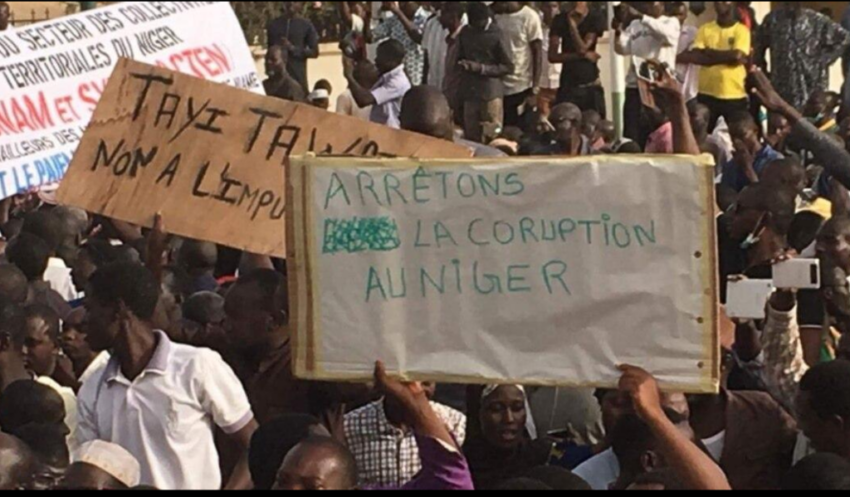
From promise to peril: the real-world stakes for Niger’s economy
With the World Bank preparing to channel an additional $760 million into Niger’s energy, agriculture, and water sectors, the spotlight is shifting from opportunity to accountability. At stake is not just whether the funds will arrive, but whether the fragile institutions tasked with managing them can withstand the pressure of opaque governance and a shrinking civic space. After plummeting from 33 to a mere 6 out of 100 on the Open Budget Index in just two years, Niger’s capacity to oversee billions in public spending is on life support. The question is no longer about the volume of support on offer, but about the consequences of mismanagement once the dollars land.
The November 2026 announcement in Niamey marked a pivotal moment. Ousmane Diagana, World Bank Vice President for West and Central Africa, outlined plans for roughly $760 million in fresh financing, layered atop an existing portfolio exceeding $4 billion. Targeted sectors—energy, agriculture, and water—are critical to a nation grappling with chronic infrastructure deficits and soaring social demands. Yet the absence of robust transparency and accountability frameworks threatens to turn potential into peril.
How a governance collapse could drain the promised billions
The numbers tell a distressing story. In 2023, Niger ranked 89th out of 125 countries in the International Budget Partnership’s Open Budget Survey, scoring 33/100 for fiscal transparency. By 2025, the score had cratered to just 6/100—a staggering drop of 27 points. Worse, citizen participation and budget oversight indicators both registered zero.
These aren’t abstract metrics. They reflect a collapsing environment where citizens cannot access budgetary information, participate meaningfully in financial decisions, or hold officials accountable for expenditures. As Niger prepares to absorb nearly three quarters of a billion dollars in new loans and grants, the mechanisms for tracking their use are dangerously underdeveloped. Without verification, audits, or public reporting, the risk of misappropriation rises sharply.
When civic space is under fire, oversight goes silent
The erosion of transparency coincides with intensifying restrictions on independent voices. Independent media outlets face mounting pressures, civil society groups report increasing difficulties in operating freely, and several NGOs have had permits suspended or revoked. These developments don’t just curtail freedoms—they silence the very watchdogs needed to detect corruption, inflated contracts, and conflicts of interest.
In a functioning democracy, an alert press exposes mismanagement; civil society mobilizes citizens to demand answers; and independent watchdog bodies conduct routine audits. When these safeguards weaken, financial controls weaken with them. Public funds, no matter how large, cannot remain insulated from misuse if the institutions meant to protect them are systematically dismantled.
Who will guard the 760 million? The structural gaps in accountability
The upcoming financial influx demands preemptive transparency. Niger’s government must publish the full terms of the World Bank deal, including sectoral allocations, repayment schedules for loan components, and detailed project lists. Every contract, tender notice, awarded bid, and quarterly performance report should be accessible in real time. Without such disclosures, public scrutiny becomes impossible—and opportunities for graft multiply.
Independent auditing and third-party oversight cannot be optional. Routine, unannounced financial audits by credible institutions must be embedded into project cycles. Equally important are whistleblower protections for anyone reporting irregularities. A system that hides financial misconduct behind legal jargon or bureaucratic delay is a system inviting abuse.The World Bank, too, bears a responsibility not to repeat past patterns. Its fiduciary and anti-corruption frameworks must be enforced rigorously. Where governance risks are high, financing should be phased, with disbursements contingent on verifiable milestones. There is no developmental logic in pouring hundreds of millions into weak institutions without insisting on ironclad oversight.
Sovereignty isn’t immunity: why public trust hinges on transparency
Nigerian authorities frame sovereignty as liberation from external dependency. But economic independence demands more than rejecting foreign oversight—it requires domestic accountability. A nation cannot claim sovereignty while denying its citizens the right to scrutinize how public funds are raised and spent.
There is a paradox at the heart of the current dilemma. The louder the rhetoric of self-reliance, the quieter the channels for civic participation become. If citizens are barred from accessing budget data, attending public hearings, or challenging irregular expenses, the very idea of national agency becomes hollow. Real sovereignty emerges when citizens can hold leaders to account—not when they are kept in the dark.
From windfall to waste? The human cost of financial opacity
The $760 million pledge could transform lives—if it reaches the intended beneficiaries. Reliable electricity, expanded irrigation, and clean water could lift thousands out of poverty and boost local economies. But without transparency, the risk is high that funds are diverted, projects stall due to corruption, or benefits concentrate among connected elites.
Every dollar misused represents a missed opportunity to build schools, clinics, or rural roads. Every contract inflated is a tax on the poor. And every audit delayed is a green light for malfeasance. The World Bank’s generosity is not the issue. The issue is whether Niger’s institutions—and its citizens—will be allowed to act as the final arbiters of how that money is used.
Final reckoning: will Niger rise to the transparency test?
The trajectory is clear: without urgent reforms, the $760 million could become a liability instead of a catalyst. Transparency is not a luxury—it is the firewall against financial ruin. Niger’s leaders face a defining choice. They can either embrace radical openness, publish every tender, subject every contract to scrutiny, and empower independent oversight bodies—or they can let opacity erode trust and squander the chance to turn debt into development.
The world will be watching. Not just to see how much money changes hands, but whether citizens ever get to see where it goes. A sovereign nation is not one insulated from scrutiny. It is one that chooses to open its books to the people who fund them—the citizens themselves.