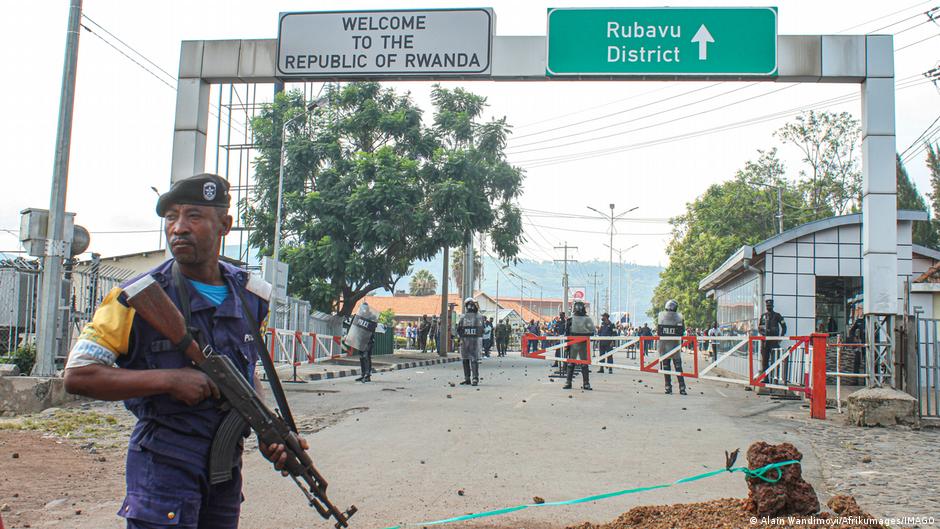
Residents of Goma, in the Democratic Republic of Congo (DRC), are feeling the economic pinch following the closure of border crossings with Rwanda. The decision, which has cut off trade flows between Goma and Gisenyi, has left local businesses scrambling to adapt.
The impact is most acute for small-scale traders like Jacques Safari, a hawker of eggs who has operated in Goma for years. His daily earnings have plummeted since the closure.
“Our income has dropped sharply. Before the border closed, I could sell five trays of eggs a day. Now, I struggle to sell even two. Most of my customers were travelers crossing the border, so the drop in foot traffic has hit us hard,” he explained.
supply chain disruptions for local businesses
Wholesalers in Goma’s Birere market are also grappling with shortages. Access to goods from Rwanda, once a common practice, has become nearly impossible.
“We used to cross the border freely to restock. Now, everything is complicated. Even finding customers is tough because money isn’t circulating like before,” said Hamuli Kasilembo, a wholesaler.
economists warn of deeper consequences
Economists argue that the closure, implemented by Rwandan authorities for public health reasons, will disproportionately affect small traders. Many rely on daily cross-border transactions to sustain their livelihoods.
Alphonse Muanda, an economist, highlighted the vulnerability of these traders: “When borders close, it’s the small business owners who suffer the most. They depend on cross-border trade for their daily income. Others sourced bulk supplies of rice, soap, and other essentials from Gisenyi.”
With the border still closed, fears are growing that the region’s social and economic hardships will worsen in the coming weeks.