The Transition Regime’s Descent into Autocracy
The Burkina Faso transitional government, led by Captain Ibrahim Traoré, appears to have crossed a critical threshold. Once hailed by supporters as a leader of change, the junta chief now presides over a regime that brooks no dissent—whether from civil society, religious institutions, or even his own military inner circle. In Ouagadougou, the air is thick with unease, and recent developments during Eid al-Adha suggest the power structure may be on the verge of collapse.
A Sacred Celebration Marred by Repression
The observance of Eid al-Adha, a time traditionally marked by unity and reflection, has instead exposed the fragility of Burkina Faso’s ruling administration.
The Detention of a Prominent Imam
The arrest of a widely respected religious leader during the holy week sent shockwaves through a population already weary from prolonged instability. This move, widely interpreted as an assault on fundamental freedoms, underscores the regime’s willingness to target even the moral pillars of the nation to suppress criticism.
Forced Mobilization and Punitive Measures
Concurrently, protesters and dissenting voices detained in recent days have been forcibly transferred to re-education centers and deployed to frontline positions. The militarization of penal enforcement reveals a state apparatus now functioning purely as an instrument of suppression.
Assessing the Political Landscape
For regional analysts, the Ouagadougou administration’s approach has abandoned any pretense of strategic governance. What was once a bid to stabilize the nation has devolved into a militarized command structure where dissent is equated with betrayal, and unquestioning obedience to a single figure is demanded.
The Oumarou Yabré Case: A Crack in the Security Apparatus
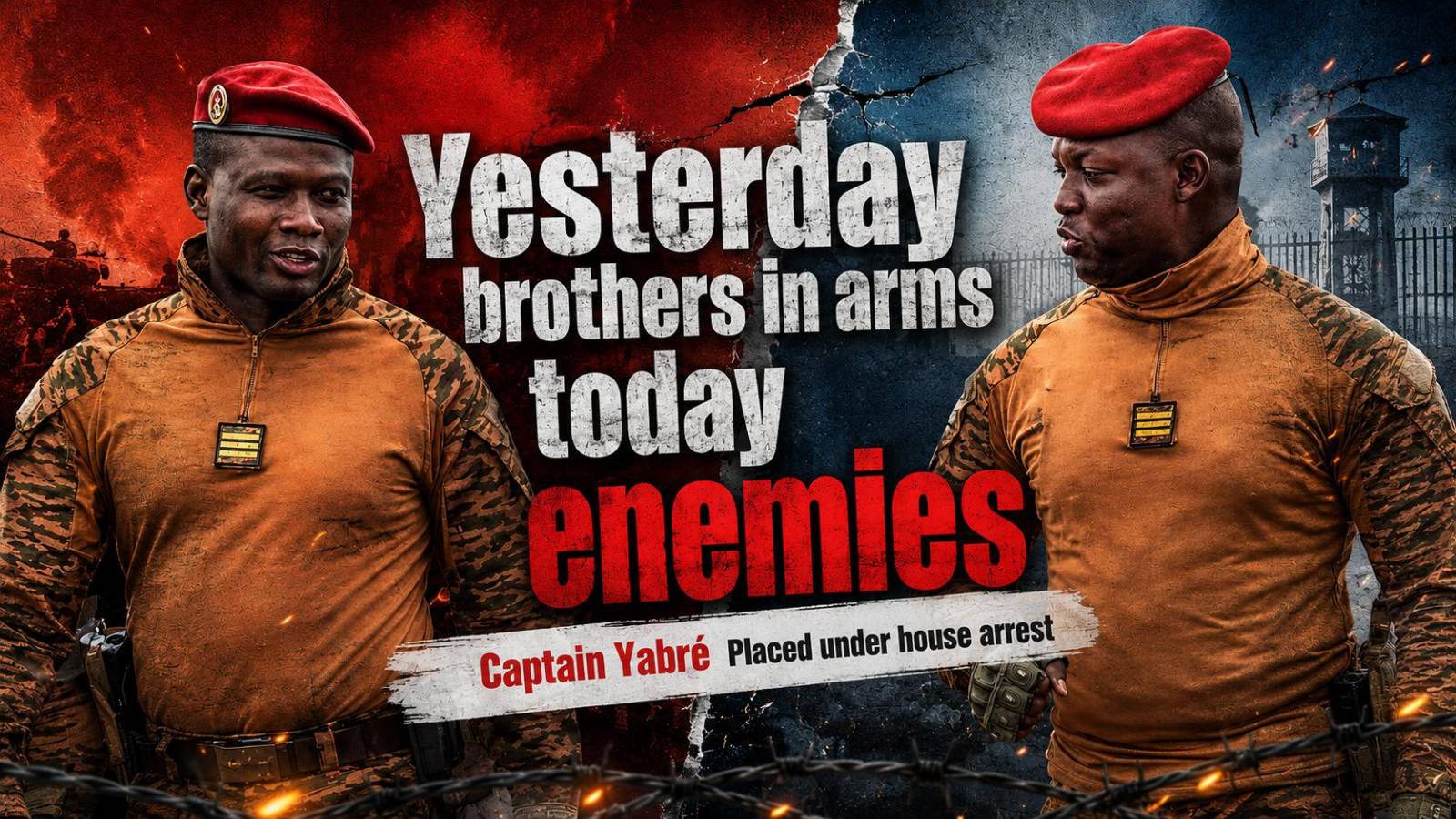
Recent reports have sent ripples through diplomatic and intelligence circles: Oumarou Yabré, head of the National Intelligence Agency (ANR), has reportedly been placed under house arrest. While official channels remain silent, multiple credible accounts indicate a deepening schism within the state machinery. On one side, Captain Ibrahim Traoré, in his dual role as Head of State and Transition President, has consolidated power while growing increasingly distrustful of his peers. On the other, Yabré, long a key architect of Burkina Faso’s security framework and facilitator of expanding Russian influence, is now suspected of harboring dissenting views—or at least opposing the regime’s security strategy and reliance on external partners.
This internal purge signals that paranoia has seized the highest echelons of the junta. By targeting those who helped build his security architecture and enabled Russian networks in Burkina Faso, Traoré risks undermining his own defenses.
Is a Final Confrontation Inevitable?
The brewing standoff between the two central figures of Burkina Faso’s security establishment was foreseeable to observers, who had long anticipated tensions. The struggle for control over the state apparatus, compounded by relentless pressure from armed terrorist groups, has created an explosive climate in Ouagadougou.
By alienating the populace, religious authorities, and now his closest military allies, Captain Traoré has isolated himself dangerously. West African coup histories consistently demonstrate that regimes sustained solely by fear—particularly those purging their own ranks—accelerate their own demise. The pressure in Ouagadougou is escalating, and the coming days may prove decisive for the nation’s future.