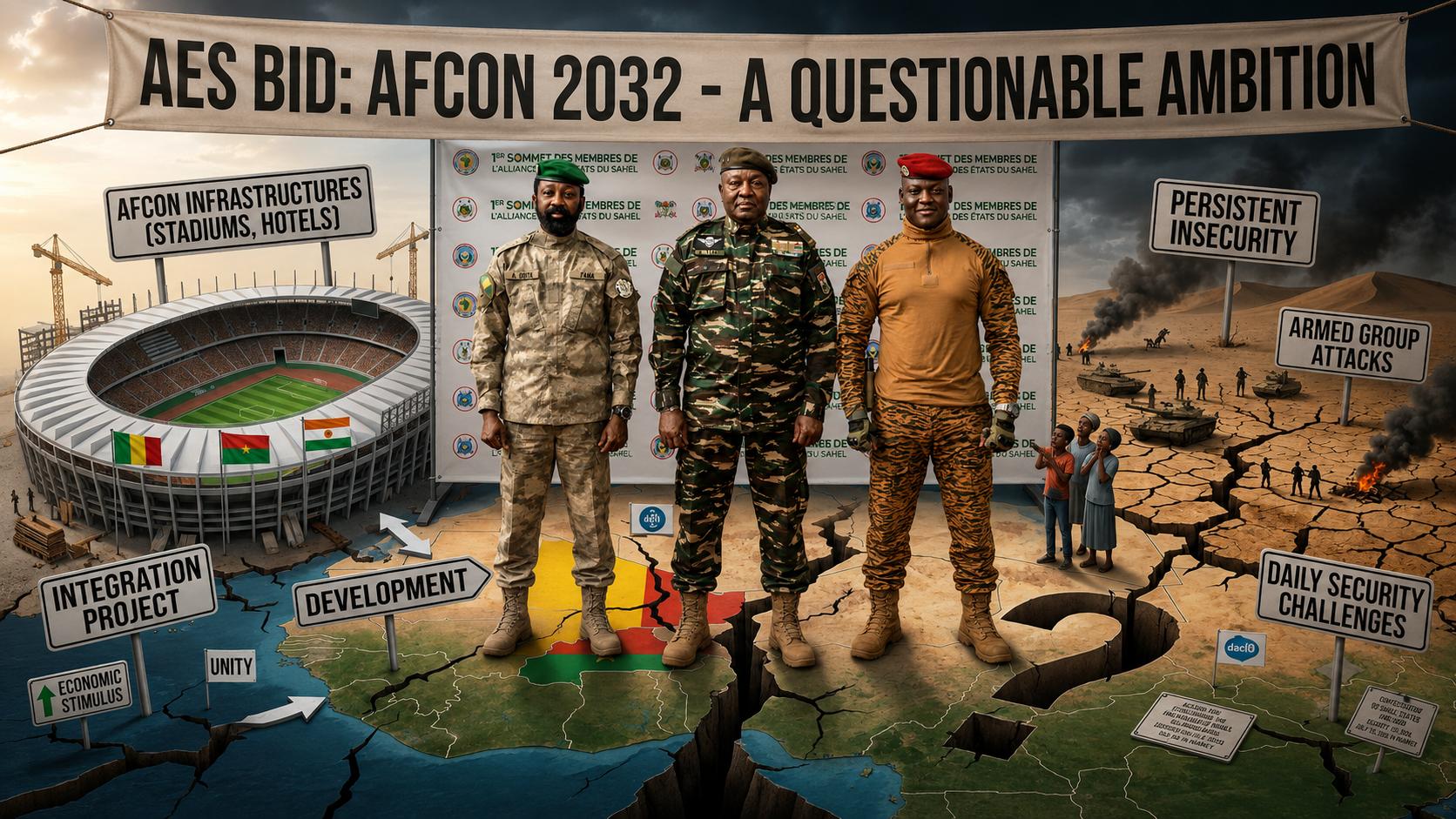
a bold bid with deep questions
The governments of Burkina Faso, Mali, and Niger have jointly submitted an official bid to host the 2032 African Nations Cup (CAN), positioning the move as a symbol of unity among the Sahel Alliance (AES) nations. The initiative aims to signal confidence across the continent, but beneath the ambitious declaration lies a pressing concern: do these three countries currently possess the minimum security and stability required to host Africa’s premier sporting event?
more than just stadiums
Hosting the CAN is not merely about constructing or renovating stadiums. It demands an environment capable of ensuring the safety of athletes, officials, journalists, fans, and the hundreds of thousands of visitors expected over several weeks. This is where the joint bid raises serious doubts.
Since military-led coups overthrew civilian governments in Burkina Faso, Mali, and Niger, the new authorities have framed their leadership as a necessary step to restore security and reclaim territory from armed groups. Yet years later, the reality remains grim. Attacks continue to target civilians, soldiers, and critical infrastructure across all three nations, with many regions still grappling with severe instability.
security as a prerequisite
In light of these conditions, some analysts argue that pursuing a continental competition while ongoing violence persists appears misaligned with urgent national priorities. Before welcoming foreign delegations and tourists, shouldn’t these governments first demonstrate that their own people can move and live securely within their borders?
logistical and financial hurdles
The challenges extend beyond security. Hosting the CAN requires robust road and airport infrastructure, a substantial hotel network, adequate medical facilities, and a credible security framework. Meeting these demands demands significant investment, particularly at a time when all three nations are allocating substantial resources to combat insurgency.
The international credibility of the bid also hangs in the balance. Federations, sponsors, broadcasters, and commercial partners prioritize stability to minimize risks associated with event organization. Any ongoing violence or uncertainty could undermine the assessment of this candidature.
a test of governance and results
This bid reignites debates about national priorities. For many citizens, the most anticipated achievement of the military-led governments remains the restoration of daily security. The promises that accompanied the overthrow of democratically elected leaders hinged largely on the expectation of more effective action against armed groups. Yet, persistent insecurity in multiple regions fuels skepticism about the true progress of this transitional period.
Critics contend that before aspiring to host the CAN in 2032, Burkina Faso, Mali, and Niger must first deliver tangible improvements in security, governance, and stability. Organizing such a high-profile event demands ironclad guarantees for participants and citizens alike.
can sport drive development?
A CAN bid can serve as a unifying project and a catalyst for growth. However, its credibility hinges not on political rhetoric but on the ability of these states to restore lasting security, strengthen institutions, and foster trust. Until these core challenges are addressed, many will argue that the priority remains protecting lives—not hosting a continental tournament.