Burkina Faso severs diplomatic relations with France, AES now fully aligned against Paris

On Friday, June 26, 2026, Burkina Faso announced the immediate severance of diplomatic ties with France. Ouagadougou framed this move as an exercise of national sovereignty, reflecting the severe erosion of bilateral relations. With this decision, Burkina Faso now aligns with Mali and Niger within the Alliance of Sahel States (AES).
Government spokesperson Pingdwendé Gilbert Ouédraogo delivered the announcement on national television, stating that the rupture took effect on June 26, 2026.
The Burkinabè government accuses Paris of acting contrary to its interests, citing interference, neocolonial ambitions, and support for networks hostile to Burkina Faso. French authorities have dismissed these charges as “hostile and baseless.”
This decision did not emerge in a vacuum. Since the September 2022 coup, tensions between Ouagadougou and Paris have steadily escalated. In recent years, Burkinabè leaders have taken multiple steps to reduce French influence.
In January 2023, Burkina Faso demanded the departure of French special forces operating under Operation Sabre. Later, it suspended or banned broadcasts of several French media outlets, including RFI, France 24, and TV5 Monde. Several French diplomats were also expelled amid recurring accusations of activities incompatible with Burkina Faso’s interests.
The diplomatic rupture thus marks the culmination of a process long in motion. It confirms that Burkinabè authorities have chosen to break with the former cooperation framework, especially in diplomatic, military, and media spheres.
France says it has taken note of Ouagadougou’s decision. The French foreign ministry is examining reciprocal measures and has urged its citizens in Burkina Faso to exercise increased caution.
AES now fully aligned against Paris
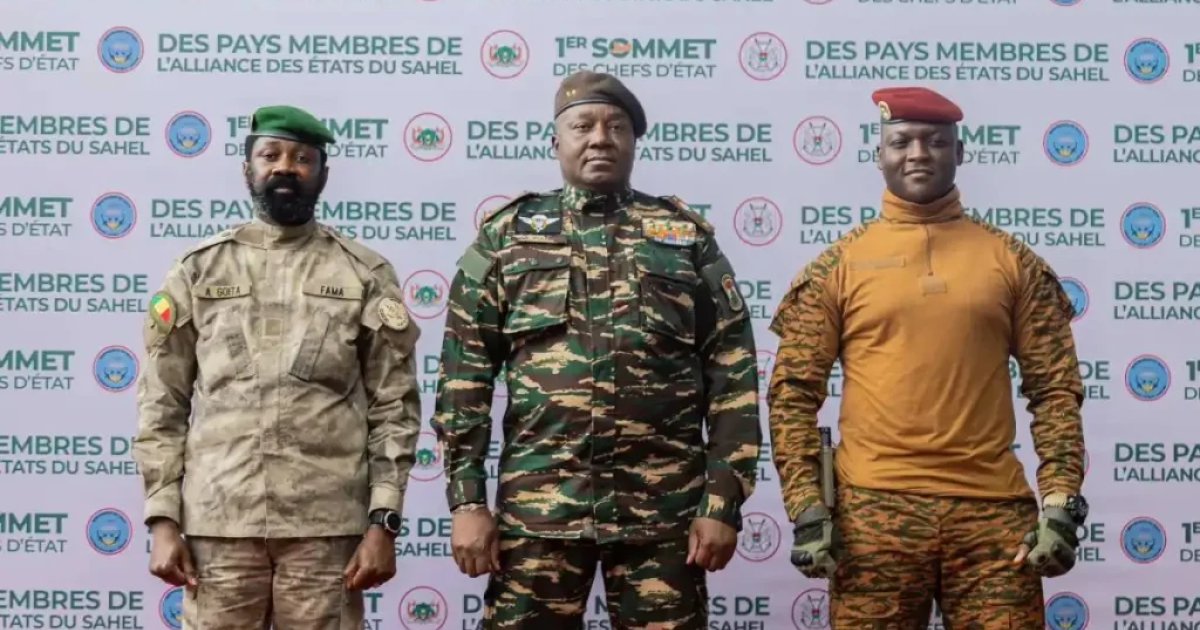
With this move, Burkina Faso joins Mali and Niger in an open rupture with France. The three Sahelian confederation members now share a unified stance toward Paris.
Mali and Niger had already initiated their own breaks with France amid escalating political, military, and diplomatic tensions. Burkina Faso’s decision completes the alignment of the AES countries along a sovereignist, anti-interference agenda.
This development underscores the ongoing reconfiguration in the Sahel. After withdrawing from the Economic Community of West African States (ECOWAS), Mali, Burkina Faso, and Niger have strengthened cooperation within the AES and diversified alliances, notably with Russia, Turkey, and Iran.
For Ouagadougou, breaking with Paris is part of a clear drive to redefine partnerships and regain control over its diplomatic and security options. For France, it represents a further decline in influence in a region where it once held a central role.
The decision opens a period of uncertainty regarding the management of diplomatic, consular, and security interests between the two countries. Above all, it confirms that the francophone Sahel has entered a new phase of reconfiguration, with the AES determined to speak with one voice toward former Western partners.