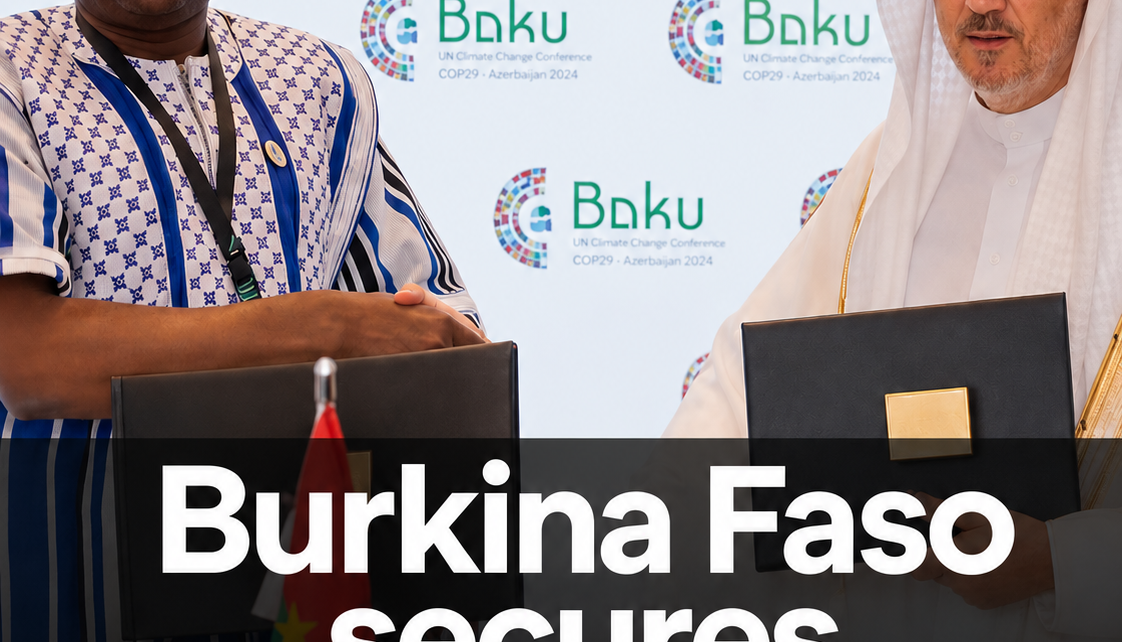
In Baku, Minister Aboubakar Nacanabo recently signed a new financing agreement with the International Islamic Trade Finance Corporation (ITFC). This financial injection—covering fuel, cereals, fertilizers, and support for small and medium enterprises—is set to provide a significant boost to the Burkinabè economy. While it offers a welcome breath of fresh air for the national market, it also serves as a stark reminder of the country’s actual financial reality.
Such signing ceremonies often go unnoticed, far from local media attention, yet they are crucial for the daily lives of Burkinabè citizens. By finalising this partnership in Azerbaijan, the government ensures the supply of essential goods. Without these funds, maintaining fertilizer stocks for agricultural seasons or stabilising fuel prices would become nearly impossible.
However, this transaction raises questions. For some time, a well-rehearsed refrain has echoed in official speeches and public rallies: Burkina Faso would be developing “on its own resources,” proudly proclaiming the slogan “no credit included.” This rhetoric of self-sufficiency is appealing, but it clashes directly with the harsh realities of economic geopolitics.
How can a country that loudly declares its ability to do without foreign aid end up signing such massive financing agreements thousands of kilometres from Ouagadougou?
The illusion of “zero debt” is comfortable, but it hides a dangerous boomerang effect. By refusing to confront this financial dependence, much of the population does not yet fully grasp the actual level of national indebtedness. Tomorrow, the awakening may be brutal: Burkina Faso could find itself just as constrained by debt as it was in the past—this time, with slogans added to the burden.
The economy has its own laws that politics cannot circumvent. Financing development through national effort is a noble ambition, but for now, the daily lives of Burkinabè still depend, to a large extent, on the signing of such international agreements.