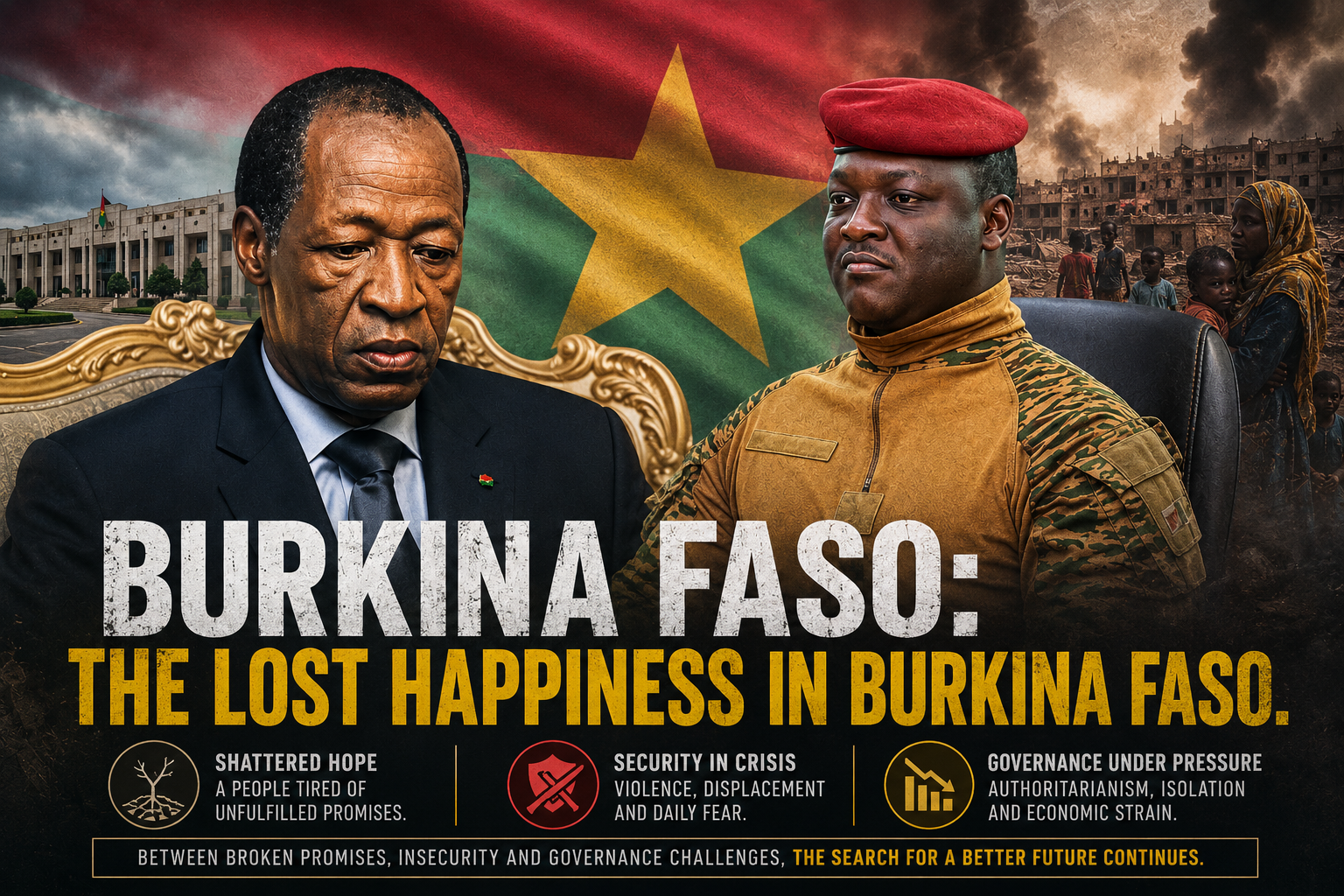
Burkina Faso once stood out for its relative stability rather than its misfortunes. This era, however, was not without its detractors. Blaise Compaoré faced accusations of centralizing power, stifling political discourse, and impeding democratic transitions. For twenty-seven years, his leadership drew consistent criticism from both domestic opposition factions and the international community.
Yet, in hindsight, a critical question emerges: what is the value of political discourse when citizens can no longer live safely? This very query now dominates discussions among many Burkinabè, who draw stark comparisons between the stability experienced during Blaise Compaoré’s tenure and the precarious reality under Captain Ibrahim Traoré.
During Blaise Compaoré’s rule, Burkina Faso was not a nation where its people lived under the constant threat of armed assault. Citizens traversed regions freely, farmers cultivated their lands, traders ensured markets were stocked, and families journeyed without the fear that each trip might culminate in tragedy. The scourge of terrorism, which would later destabilize the Sahel, had not yet plunged the country into a security crisis of such magnitude.
This historical context does not diminish the valid criticisms leveled against his administration. However, it underscores a fundamental truth: the paramount duty of any state is to guarantee the safety of its populace. Without security, the pursuit of freedoms, reforms, and political pledges largely loses its meaning.
Following Captain Ibrahim Traoré’s ascent to power through a military coup, Burkinabè citizens harbored strong hopes for a decisive shift in the security landscape. The new authorities vowed to reclaim national territory, bolster national sovereignty, and mount a more effective response against armed factions. Yet, several years on, these ambitious declarations continue to confront an exceptionally challenging reality on the ground.
Under Ibrahim Traoré’s administration, official communiqués frequently highlight military operations and successes by the defense forces. Nevertheless, in numerous regions, assaults persist, communities remain cut off, and crucial roadways pose significant dangers. For a segment of public opinion, these proclaimed victories struggle to translate into a sustained improvement in the daily lives of citizens.
Perhaps the most telling tragedy extends beyond the mere continuation of violence. It lies in the reality that thousands of Burkinabè now believe their safety is better assured away from their homes. Week after week, families abandon their villages, forsaking their lands, businesses, and dwellings to seek refuge in safer areas or to cross borders into neighboring nations. No populace willingly chooses exile when their homeland offers the conditions for peaceful existence.
This quiet exodus of people undoubtedly represents the gravest indictment of current security policies. When a citizen opts for displacement or refugee status over remaining in their village, it signals a profound erosion of trust in the state’s ability to provide protection.
Meanwhile, Ibrahim Traoré consistently champions a narrative heavily focused on national sovereignty, a break from former partner powers, and patriotic mobilization. These themes resonate with a segment of the populace. However, sovereignty cannot merely be a political slogan; it is also measured by a government’s capacity to exert its authority across the entire territory and safeguard the security of its inhabitants.
Another striking observation is the silence from many who once vehemently denounced Blaise Compaoré. Those who fiercely criticized his governance style now appear notably subdued when assessing the outcomes under Ibrahim Traoré. This disparity fuels a perception of selective judgment, where certain leaders face far greater scrutiny than others.
Comparing the Compaoré and Traoré eras is not about romanticizing the past or overlooking the limitations of the former regime. It serves to ask a straightforward question: what constitutes a state’s absolute priority? For a significant number of Burkinabè, the answer is clear. Beyond rhetoric, beyond symbols, and beyond grand pronouncements of sovereignty, a government’s primary expectation is its ability to protect its citizens.
A nation’s well-being is not encapsulated by slogans or the popularity of its leader. It is gauged by the tranquility of its villages, the safety of its thoroughfares, the accessibility of its schools, the vibrancy of its markets, and the confidence families hold for their future.
As long as Burkinabè citizens continue to abandon their country or regions in search of security elsewhere, the discussion surrounding the effectiveness of Ibrahim Traoré’s administration will persist. History, after all, will weigh actions more heavily than words, and tangible capabilities more than mere promises, in assessing a state’s success in providing its people with their foremost desire: to live freely, with dignity, and in safety.