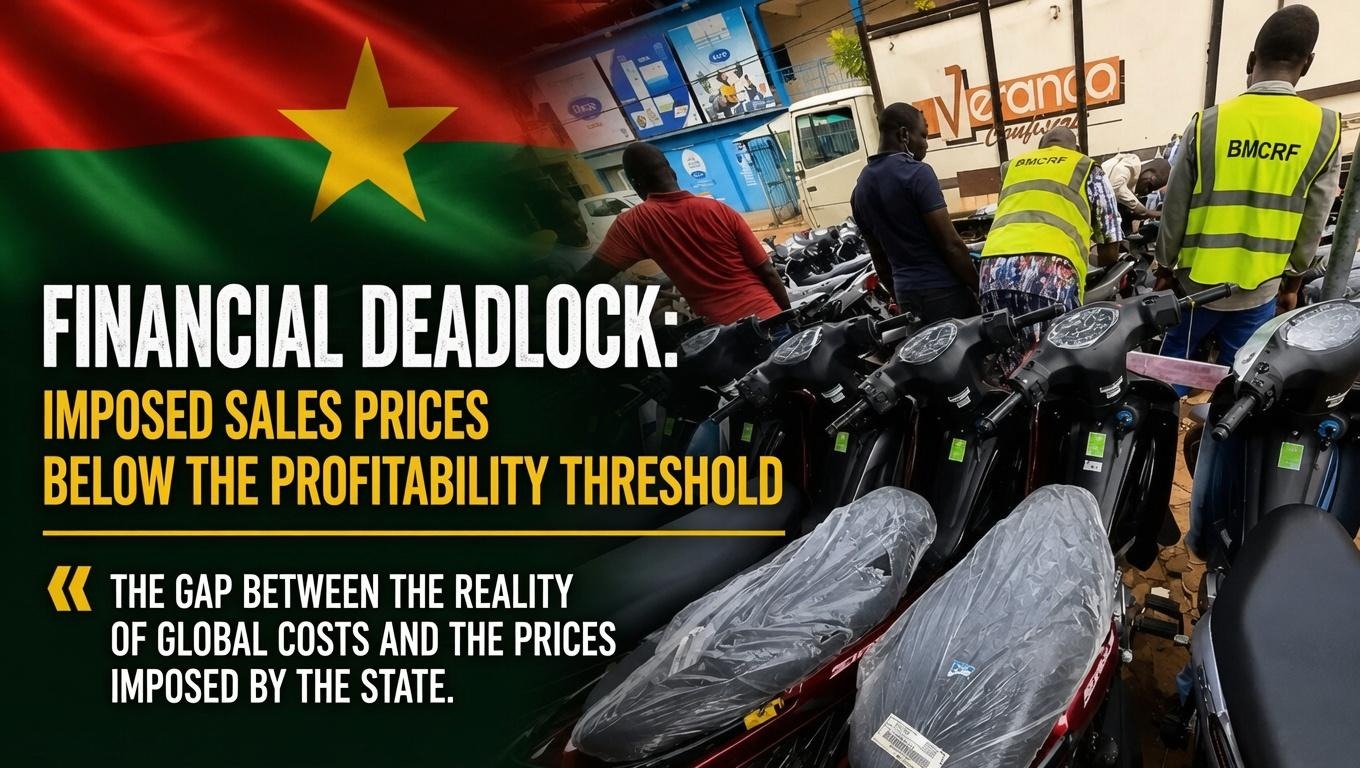
Since Captain Ibrahim Traoré assumed power, Burkina Faso has undergone a profound transformation marked by increasingly centralised governance. While official rhetoric champions sovereignty and strategic national reorganisation, the socioeconomic reality on the ground tells a different story. Behind the discourse of rupture, the Burkinabè people—particularly those in the commercial sector—are slipping into silent distress, trapped in a spiral of restrictions where consultation has given way to unilateral decree.
The latest example of this vertical governance is the months-long standoff between the Ministry of Commerce and motorcycle vendors. New measures imposed by authorities to drastically regulate the sale, pricing, and use of two-wheelers have dealt a heavy blow to an already struggling sector.
A vital sector held hostage
In Burkina Faso, motorcycles are not a luxury; they are the lifeblood of urban and rural mobility and the livelihood of thousands of families. By targeting price controls and restricting sale conditions and the circulation of certain vehicles, the military regime is affecting a critical sector.
On the markets of Ouagadougou and Bobo-Dioulasso, discontent is palpable, though muted. Traders describe a complete breakdown in social dialogue.
“Previously, there were frameworks for negotiation. Today, orders come from above and must be carried out without a murmur. If you object, you are labelled unpatriotic,” confides a major importer on condition of anonymity.
The spiral of silence and verticality
Since Captain Traoré took power, economic actors describe a climate where a single will is imposed on the nation. This excessive centralisation creates chronic unpredictability for businesses. Operators find themselves trapped: on one side, rising import costs and global market realities; on the other, strict state directives fixing selling prices below profitability thresholds.
The result of this policy of authority is immediate:
- Financial asphyxiation: Small resellers, unable to meet imposed margins, risk bankruptcy.
- Artificial shortages: Faced with price freezes, some importers prefer to suspend orders, threatening to choke supply.
- Legal insecurity: New circulation restrictions, officially motivated by security concerns, paralyse goods transport in several localities.
The heart cry of an economy in distress
The suffering of the Burkinabè people, and specifically the merchant class, is now lived out in silence. In a context of strict military transition, fear of reprisals suppresses public expression of grievances. Yet economic reality persists: prosperity cannot be decreed by simple orders.
By trying to control everything from the supply chain to citizens’ daily use, the transitional government risks breaking the fragile economic balance that keeps the country afloat. For two-wheeler traders, the assessment is bitter: the much-vaunted economic sovereignty increasingly resembles suffocating dirigisme.