Senegal’s debt strategy: exploring alternatives beyond IMF support
The mounting public debt in Senegal has once again thrust the nation’s financial trajectory into sharp focus. In Dakar, policymakers, economists, and business leaders are actively exploring innovative financing avenues and debt restructuring options that extend beyond traditional reliance on the International Monetary Fund (IMF). This strategic pivot comes amid tightening budget constraints and the urgent need to stimulate economic activity.
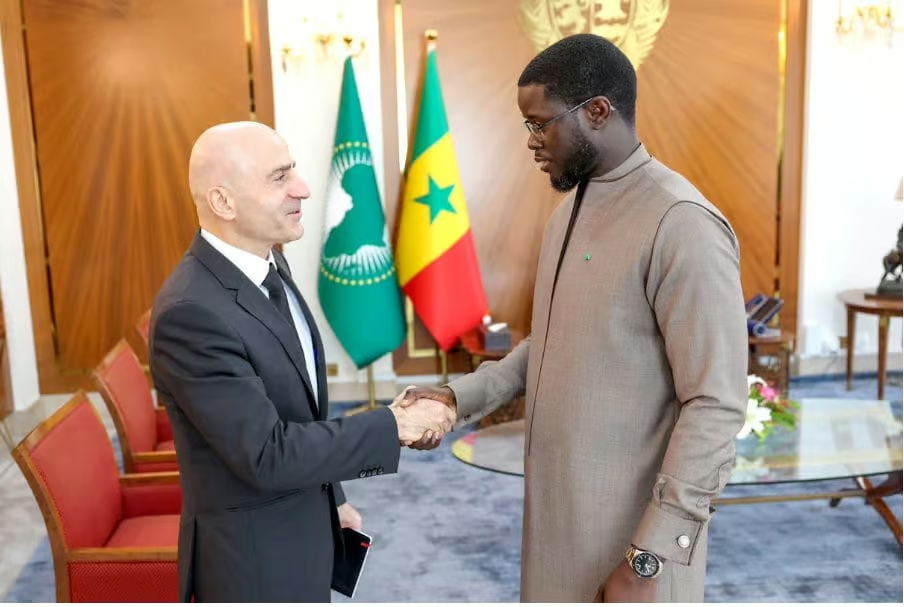
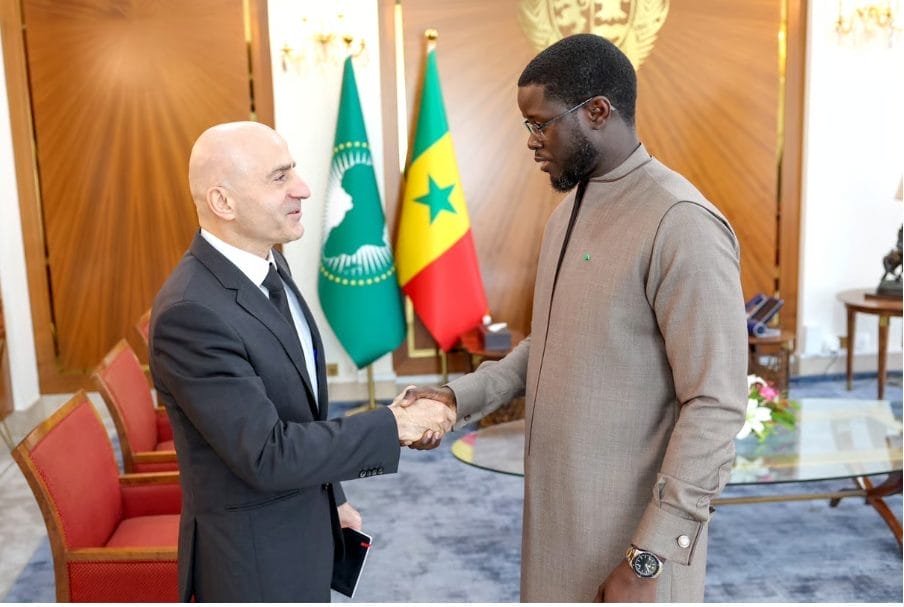
President Bassirou Diomaye Faye meets with Edward Gemayel, head of the IMF mission for Senegal in Dakar, August 28, 2025 © DR
With fiscal space rapidly shrinking, Senegal faces the dual challenge of reassuring international markets, regional partners, and potential investors while safeguarding its financial maneuverability. As a member of the West African Economic and Monetary Union (WAEMU), the country operates within a shared monetary framework where debt sustainability and fiscal discipline are closely monitored across the subregion. These considerations align with directives from the Economic Community of West African States (ECOWAS), the African Union (AU), and the African Development Bank (AfDB).
Exploring viable debt management solutions for Senegal
The conversation in Dakar centers on diversifying financing sources to reduce reliance on conventional multilateral institutions. Key strategies under discussion include:
- Increased recourse to the WAEMU regional financial market
- Enhanced mobilization of domestic savings
- Development of thematic bonds aligned with national priorities
- Strategic utilization of concessional financing with preferential terms
These approaches aim to lower the cost of servicing debt—which currently strains public expenditure—while avoiding abrupt adjustments that could negatively impact households and businesses. Finance experts emphasize the importance of widening the tax base without stifling economic growth, improving fiscal transparency, and prioritizing high-impact public investments.
Across Africa, many nations are grappling with the same dilemma: escalating debt repayments are eroding capacity to fund critical sectors such as infrastructure, education, and healthcare. Senegal’s situation has drawn regional attention, highlighting broader questions about how African economies can restore liquidity without becoming overly dependent on multilateral assistance programs.
Balancing fiscal responsibility with growth
Senegal’s path forward requires a delicate balance between fiscal responsibility and economic expansion. By exploring alternative financing mechanisms, the government hopes to maintain investor confidence while creating fiscal room to invest in long-term development. This strategy not only serves domestic priorities but also strengthens Senegal’s position within the WAEMU and the wider African economic landscape.
The outcome of these deliberations could set a precedent for other African nations navigating similar economic pressures, offering a model of resilience and innovation in debt management.