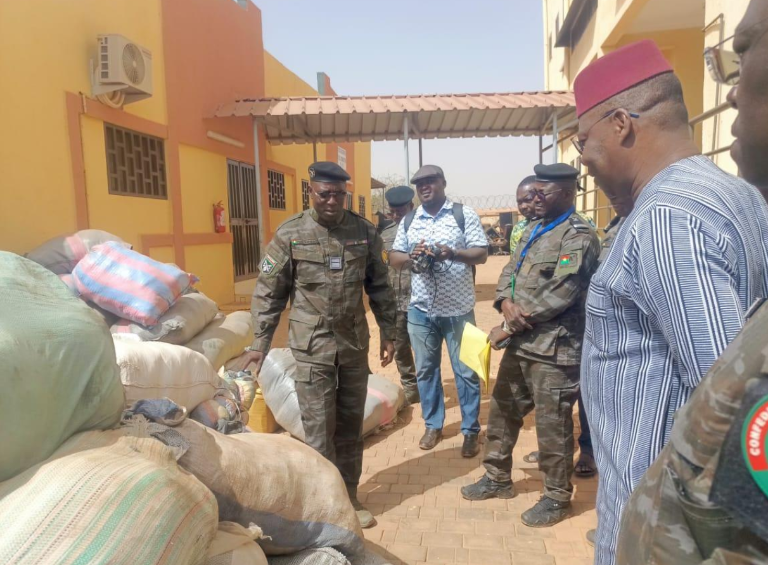
The three-month ‘Magnan Operation’ by Burkina Faso’s customs authorities has sent shockwaves through the nation, revealing the staggering scale of illegal trade networks threatening both public safety and economic stability.
How illegal trade is quietly undermining Burkina Faso’s economy
During the operation, customs seized goods valued at over 10.8 billion West African CFA francs—equating to approximately $18.5 million. This record haul goes beyond simple smuggling statistics, exposing a systemic problem that drains public revenue, distorts fair competition, and undermines legitimate businesses.
Fraudulent imports create an uneven playing field where compliant merchants struggle to compete against illicit traders who evade taxes and regulatory fees. This not only shifts market dynamics unfairly but also deprives the state of crucial funds needed for infrastructure, healthcare, and education.
The hidden cost of fake medicines flooding local markets
Nearly half of the total seized value—over 8 billion FCFA—was accounted for by Tapentadol, a strong painkiller frequently targeted by counterfeiters due to high demand and significant profit margins. Combined with another 11 tons of illegal and counterfeit medications totaling 1.1 billion FCFA, the discovery underscores a dire public health crisis.
Fake drugs often contain incorrect dosages, unsafe ingredients, or expired compounds that pose severe health risks to unsuspecting patients. The lack of proper storage and regulation in illicit supply chains further exacerbates the danger. Authorities warn that unchecked counterfeit pharmaceuticals not only jeopardize individual health but also erode trust in essential medical services.
Dangerous substances threatening lives and communities
The crackdown did not stop at pharmaceuticals. Customs intercepted:
- Illegal narcotics, including cocaine and cannabis
- Toxic chemicals such as cyanide and mercury
- Explosives and related paraphernalia
- Counterfeit pesticides and uncertified agricultural inputs
These discoveries highlight how smuggling networks exploit gaps in oversight to insert hazardous materials into both industrial and consumer supply chains, putting communities at risk of contamination, poisoning, or worse.
Everyday goods aren’t safe from smuggling either
In an eye-opening revelation, over 500 tons of fertilizers, nearly 490 tons of rice, and thousands of liters of cooking oil—products essential to daily life—were also seized. Counterfeit textbooks, unbranded cigarettes, and prohibited textiles added to the inventory, proving that smuggling is not limited to luxury or specialty goods.
These common items, when illicitly distributed, often lack quality control, safety testing, or adherence to national standards. Consumers end up paying the price—sometimes literally—with substandard or dangerous goods entering homes and workplaces undetected.
Why long-term action is critical beyond the seizures
The ‘Magnan Operation’ marks a notable victory, but customs officials emphasize that dismantling smuggling networks requires more than one-off interventions. Success depends on sustained intelligence, cross-border cooperation, and stronger regulatory enforcement.
Without coordinated efforts among customs, health regulators, law enforcement, and trade authorities, illegal networks can quickly regroup. Public awareness campaigns are also vital to inform citizens about the dangers of purchasing unapproved goods and to encourage reporting of suspicious activities.
As the government vows to continue the pressure, the real test lies in turning these short-term gains into lasting protection for Burkina Faso’s economy, health system, and citizens.