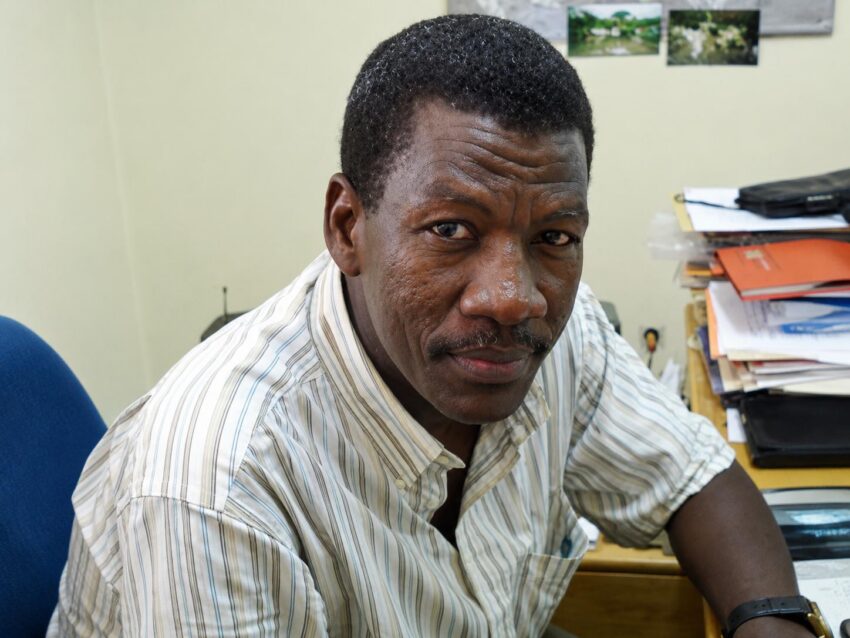
For months, Niger’s media landscape has been shadowed by a growing sense of unease. The sudden detention of Moussa Kaka—an award-winning journalist and long-standing advocate for human rights—has transformed from a troubling rumor into a stark realization: his mysterious disappearance is not just a personal tragedy, but a symptom of deeper institutional failures threatening the very foundations of press freedom in the country.
From silence to state custody: the unsettling timeline of Moussa Kaka’s case
Niger’s skies darkened on August 31, 2026, when Moussa Kaka vanished without warning. He had left his office in Niamey that afternoon, but unlike other days, he never returned home. Friends, colleagues, and family were left grappling with silence—no ransom call, no official statement, no explanation. For weeks, the country watched in silence, whispers of forced disappearance growing louder.
Pressure finally broke the dam. Amid mounting protests from journalist unions and international rights groups, authorities were forced to acknowledge what they could no longer hide: Moussa Kaka was alive—and in state custody. But confirming his survival only deepened the crisis, raising urgent questions about legality, accountability, and the cost of truth in Niger.
Beyond the veil of detention: what the government still refuses to say
Despite the acknowledgment, Niger’s transitional regime has remained tight-lipped about the core of the matter. For the Journalistes pour les droits de l’homme (JDHO), the absence of formal charges is not just an administrative oversight—it is a violation of constitutional principle. Their demands are clear and uncompromising:
- Speak the truth: “Tell us exactly what Moussa Kaka is accused of,” the JDHO has declared repeatedly. Without official notification of charges, his detention remains an act of opacity, not justice.
- Locate the detention site: Transparency requires disclosing where he is held. Only then can independent observers verify his conditions, assess his well-being, and ensure no abuse occurs in the shadows.
- Guarantee legal defense rights: The right to a fair trial means nothing without access. The JDHO insists on allowing immediate, unmonitored meetings between Kaka and his legal counsel—and his family—before the trial even begins.
The constitutional void in Niger’s detention practices
Moussa Kaka is not alone. His case reflects a disturbing pattern: since the country entered its transitional phase, journalists who challenge authority—whether through investigative reporting or public advocacy—face increased scrutiny. Yet the government justifies these measures under the banner of “national security,” a phrase that too often serves as a shield for arbitrary detention.
But for how long can a state claim security while eroding the rule of law? The longer Moussa Kaka remains in custody without formal charges, the more the integrity of Niger’s justice system is questioned—not just domestically, but on the regional and international stage.
Press freedom as a barometer of democratic resilience
The detention of Moussa Kaka is no longer just a personal crisis—it has become a litmus test for Niger’s democratic future. Will the transition government uphold the constitution, or will it normalize detention without trial under the pretext of stability?
The JDHO and the broader coalition of civil society organizations argue that the case is not about one individual. It is about the soul of press freedom in Niger. A free press is not a luxury—it is a necessity for transparency, accountability, and the prevention of abuse of power.
If Niger cannot protect a journalist documenting human rights, what hope remains for those defending democracy in the face of growing authoritarianism?
A call to action before silence becomes surrender
Time is running out. Every day that passes without formal charges or due process fuels the perception that Moussa Kaka is being held not for a crime, but for his voice. His detention does not strengthen security—it weakens it by stifling dissent and deepening mistrust in institutions.
Niger’s leaders must choose: continue down a path of opacity and repression, or restore faith in justice by honoring constitutional rights. The world is watching. But more importantly, the future of Niger’s democracy is on the line.