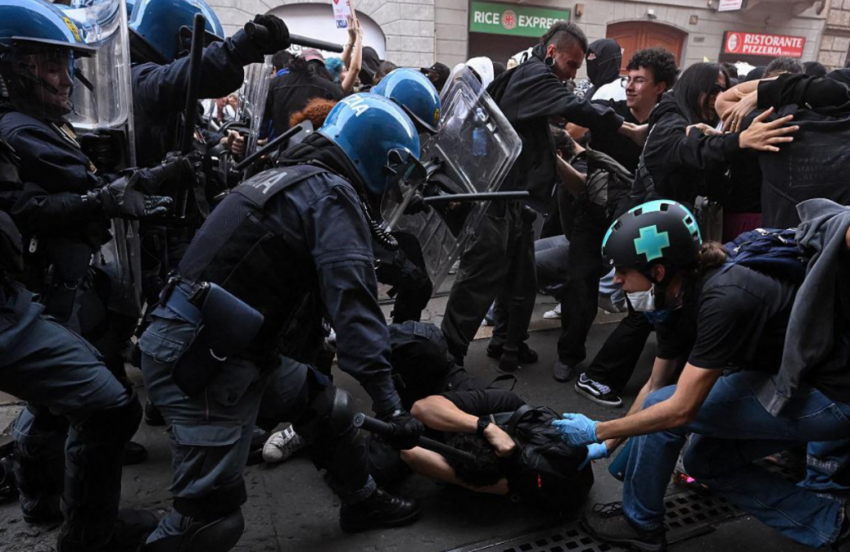
After waves of urban unrest, Rome tightens security amid growing public and economic concerns
The Italian government, led by Prime Minister Giorgia Meloni, has approved a sweeping new security decree in response to recent urban violence that has disrupted cities across northern Italy, including Milan. The move comes after a weekend of looting, vandalism, and clashes with law enforcement—events that triggered widespread debate about public safety, personal freedoms, and the economic fallout for communities and businesses.
Stricter penalties and financial consequences for collective violence
Under the new decree, the Italian government has introduced harsher penalties for violent participation in public gatherings. Individuals involved in collective acts of violence—defined as groups of five or more—face up to five years in prison and fines up to €20,000. Penalties are increased if participants conceal their identity or if injuries occur during the disturbances.
Moreover, the law targets organizers and instigators of violent protests. Organizing or promoting groups designed to incite violence during demonstrations—including through digital platforms—can result in prison sentences ranging from four to twelve years. This provision aims to dismantle both the actors on the ground and those fueling unrest from behind the scenes.
Families bear financial burden as government shifts responsibility to parents
In a controversial move, the decree expands legal responsibility to parents of minors involved in acts of vandalism and looting. Authorities now have the power to seek financial restitution from families for damages caused by their children aged 14 and older. The intent is to encourage accountability within households and deter repeat offenses, but critics question the fairness and practicality of holding parents legally and financially liable for adolescent behavior.
The new provisions also make it easier to prosecute minors aged 14 and above for involvement in civil unrest. Detention before trial can now be imposed on youths aged 14 to 17 if authorities deem them a potential threat, raising concerns about juvenile justice and due process.
Milan becomes a test case for tightened security
Milan, one of the cities hardest hit by the recent wave of unrest, has become the focal point of the government’s security push. Authorities announced the deployment of 500 additional military personnel under Strade Sicure (Safe Streets), a long-running operation aimed at securing public spaces and supporting police forces through year-end. The goal is to restore order in high-risk areas and protect vulnerable businesses and infrastructure.
While much of the public attention focused on vandalism and property damage, some protests also reflected deep-seated frustration over rising living costs, energy prices, and housing shortages. Despite these underlying social pressures, the government has maintained a firm stance: economic hardship cannot excuse violence. Critics, however, argue that a purely punitive approach fails to address the root causes of discontent.
Security vs. civil liberties: a national conversation intensifies
This new decree is part of a broader shift in Italy’s security policy since 2022. While praised by law enforcement advocates for giving authorities more tools to prevent and punish unrest, the measures have drawn criticism from civil rights organizations and police unions concerned about overreach and disproportionate use of state power.
Notably, a proposal to grant military police expanded powers in Milan was abandoned following constitutional and legal objections. Yet, the decree moves forward immediately as a decreto-legge—an urgent legislative act—with Parliament tasked to convert it into law within 60 days.
Will the measures restore calm without undermining justice and freedoms?
The ultimate test of this security overhaul will be whether it effectively reduces urban violence and protects communities—without eroding democratic freedoms or disproportionately punishing families and young people. As Italy navigates this delicate balance, the new law marks a defining moment in the nation’s evolving approach to public order, justice, and social responsibility.