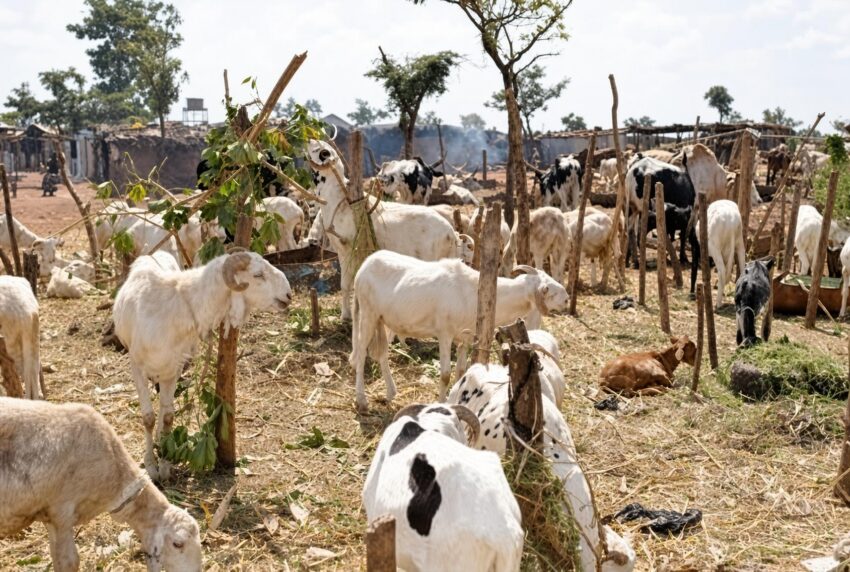
In a move that threatens to plunge Mali’s already fragile economy into deeper turmoil, authorities have chosen to scapegoat private entrepreneurs rather than address the root causes of soaring meat prices. The government’s decision to halt livestock exports for six months—renewable at will—is framed as a step to protect household budgets, yet the real consequences will ripple through the country’s backbone industry, devastating businesses, investors, and everyday citizens alike.
The heavy cost of state overreach on Mali’s pastoral economy
Livestock drives over 15% of Mali’s GDP and contributes more than $150 million annually to export earnings, making it a cornerstone of the national economy.
But instead of curbing inflation through targeted reforms, officials are imposing top-down restrictions that strip farmers, traders, and transporters of their ability to operate freely. By banning cross-border cattle trade with neighboring countries like Senegal, Ivory Coast, and Guinea, Bamako is setting the stage for artificial surplus, collapsing profit margins, and the potential ruin of thousands of small and medium enterprises already struggling under rising feed and transport costs.
Who really pays the price of export restrictions?
The immediate victims are not the faceless bureaucrats in government offices—they are the local entrepreneurs who form the lifeblood of Mali’s livestock sector:
- Cattle herders face plummeting demand and loss of income as borders close to key regional markets.
- Transporters see their fleets idle and contracts canceled, deepening financial strain.
- Traders and butchers struggle with supply chain disruptions and unpredictable pricing.
- Indirect jobs—feed suppliers, veterinarians, mechanics, and logistics workers—are all at risk of layoffs.
These businesses don’t exist in a vacuum. Many have built long-standing relationships with buyers across West Africa, sustaining families and communities for generations. When the state suddenly severs their access to these markets, it doesn’t just hurt profits—it erodes trust in Mali’s economic stability.
Why price controls and export bans never work
Historical evidence is clear: price caps and trade barriers destabilize sectors faster than they solve them. The current crisis stems not from a lack of state control, but from structural failures—over-regulation of livestock markets, surging feed costs, rampant insecurity on trade routes, and systemic extortion by armed groups.
Rather than dismantling these barriers, the government is doubling down on coercion. Farmers who might otherwise invest in modernizing their herds or improving cattle breeds now face the chilling reality that their livelihoods can be snatched away by a single administrative decree. Why invest when tomorrow’s exports could be banned again?
The false promise of short-term relief
Proponents claim the export ban will lower local meat prices by increasing domestic supply. But the evidence tells a different story. Past attempts at supply-side manipulation have led to:
- Severe supply shortages during peak demand periods.
- Price volatility as informal markets mushroom to fill the gap.
- Long-term decline in livestock quality as producers cut corners to survive.
Mali’s livestock sector thrives on regional trade. Nearly 99% of its cattle exports go to neighboring countries, where demand is far more stable and prices higher. Cutting off this lifeline doesn’t protect consumers—it kills the very engine that drives the market.
Undermining the future: legal insecurity and investor exodus
When the government arbitrarily suspends exports, it sends a dangerous signal to regional and international investors: Mali is not a safe place to do business. Predictability—once a rare strength in the country—is now evaporating.
Entrepreneurs require stability to plan, invest, and grow. A climate of sudden, punitive measures discourages foreign capital, stifles innovation, and pushes skilled labor abroad. Over time, this erodes Mali’s competitiveness not just in livestock, but across its entire economy.
The message is clear: if you’re a business owner in Mali, your rights are secondary to political convenience. The long-term damage to investor confidence may far outweigh any short-term gains in meat price stabilization.
What Mali must do to fix its meat price crisis
Solving the problem begins with honesty. The real causes of high meat prices are not external traders or greedy businesspeople—they are systemic failures that only the state can address:
- Secure trade routes: End roadblocks and extortion by armed groups along cattle trails.
- Ease administrative burdens: Simplify licensing and reduce bureaucratic hurdles in livestock markets.
- Stabilize feed costs: Subsidize or regulate essential animal feed to lower production expenses.
- Reinstate regional trade: Unblock exports to restore liquidity and investor confidence.
- Promote transparency: End arbitrary suspensions and create clear, predictable trade rules.
None of these solutions require suspending market freedoms. They require leadership—not command and control. Mali’s livestock sector doesn’t need to be saved from its entrepreneurs. It needs to be saved for them.
Conclusion: a self-inflicted wound on Mali’s economic future
The export ban is not a policy—it’s a confession. It reveals that after years of mismanagement, insecurity, and failed interventions, the Malian state has run out of ideas. And instead of fixing the system, it’s choosing to break the people who keep it alive.
For a nation already struggling with food insecurity, inflation, and a fragile private sector, this decision is not just shortsighted—it’s dangerous. The true cost of export bans won’t be measured in days or weeks, but in years of lost growth, vanished opportunities, and a weakened national economy.
The solution isn’t control. It’s freedom. And unless Bamako reverses course, Mali will pay the price—not once, but for generations to come.