From patriotic slogans to economic abandonment
For years, government officials in Burkina Faso have championed economic sovereignty, framing the nation’s gold wealth as a pathway to national prosperity and individual opportunity. Yet the recent expulsion of thousands of Burkinabè artisanal miners from Guinea has exposed a stark contradiction: a state that claims self-reliance for its economy has failed to deliver tangible solutions for those forcibly returned from abroad.
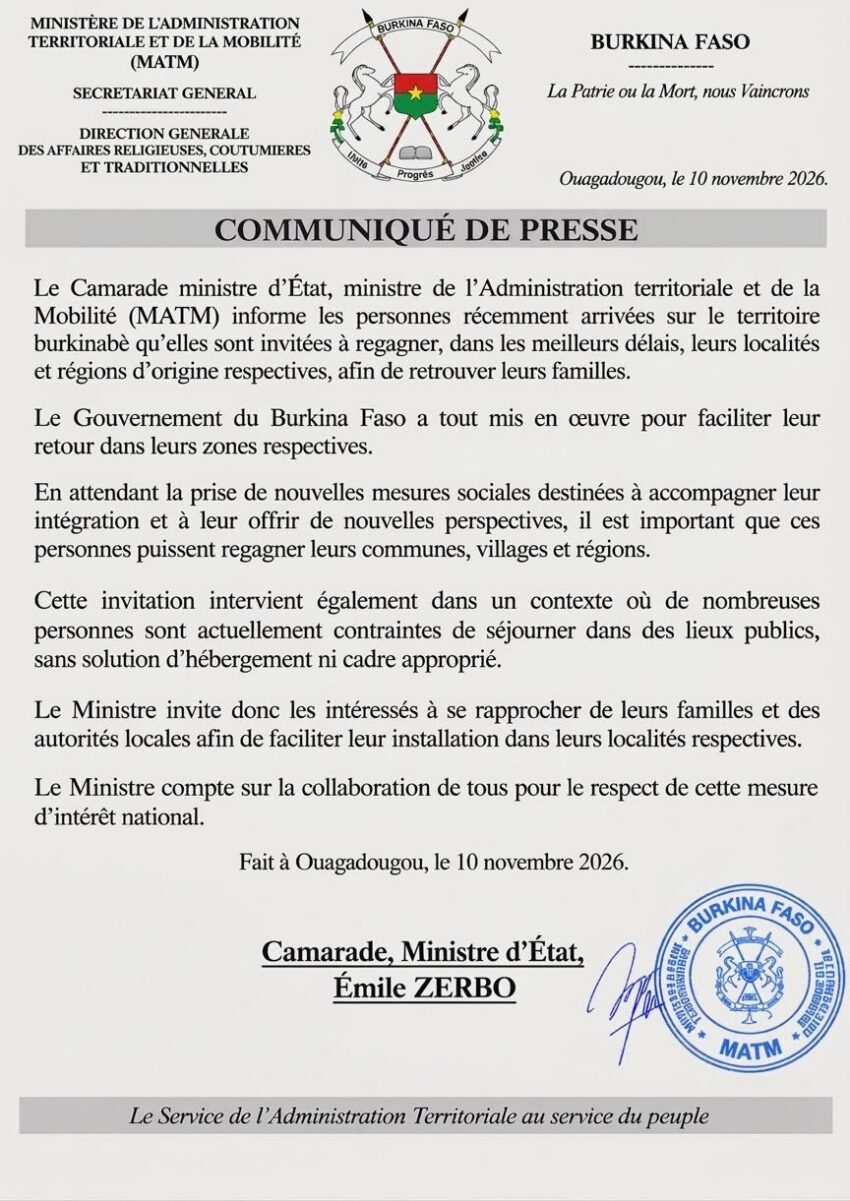
The government’s response urging expelled miners to return to their villages and resume rural life amounts to administrative triage rather than a structured recovery plan. Without reliable jobs, capital, or livelihood support, these young men and women face the same economic instability that once drove them across borders in search of gold. Their return does not solve unemployment, impoverishment, or the collapse of family livelihoods built on artisanal mining.
Unemployment and lost livelihoods: the human cost of repatriation
These miners did not leave Burkina Faso by choice. Many turned to artisanal gold extraction because it offered the only reliable income in regions with few other opportunities. Their expulsion did not just relocate them it cut off their primary source of earnings, shattered project financing for families, and left entire households without financial security. Repatriation without economic opportunity does not restore stability; it deepens vulnerability.
Can the state genuinely claim sovereignty over its resources when thousands of its citizens, once engaged in legitimate mining, return to villages with no path to employment or income? The return home is not an end to hardship it is the beginning of a new crisis of survival for families who depended on these workers’ earnings.
Sovereignty isn’t just mining control it’s creating jobs from national wealth
The government’s narrative of economic self-determination hinges on recovering mineral wealth from foreign actors and promoting industrial-scale mining. But sovereignty cannot be measured solely by control of extraction or nationalization rhetoric. True sovereignty demands that Burkina Faso’s mineral wealth translates into secure jobs, sustainable incomes, and dignified livelihoods for its people. Where are the concrete policies that turn gold into paychecks?
Promises of agricultural conversion, livestock projects, and vocational training sound comprehensive on paper. Yet without land access, capital, technical support, and market pathways, these measures amount to empty directives. A few weeks of training without startup funds do not create careers. Paper cooperatives with no equipment or financing do not generate livelihoods. And appeals to return home without economic prospects do not restore food security or educational continuity for children.
Why agriculture, livestock, and artisanship aren’t silver bullets
Transitioning from artisanal mining to farming requires fertile land, seeds, tools, and market access none of which are guaranteed in many rural regions. Raising livestock demands start-up capital, veterinary care, and fair-value sales channels. Artisanal craftsmanship needs production tools and a receptive market. Simply telling former miners to pursue these sectors without providing the necessary infrastructure and financing is not a viable solution. It transfers responsibility from the state to individuals who have already lost their primary income.
Real economic sovereignty means addressing these barriers head-on: financing land leases, subsidizing agricultural inputs, offering low-interest microloans, and ensuring cooperatives receive equipment and working capital. Without such measures, repatriated miners are not being supported they are being left to fend for themselves.
The missing link: equitable finance and tailored support
For many expelled miners, the journey back to Burkina Faso drained savings or forced them to borrow just to return home. Some arrive with no financial cushion to restart a business. Others face families with school fees due, medical expenses, or debts accumulated during their absence. Financial recovery must start with accessible credit, mentorship, and grants not just moral encouragement.
A credible rehabilitation program should differentiate between miners with prior farming experience and those with none. It should prioritize those at immediate risk of hunger or schooling interruptions. It must also track progress: how many receive training? How many secure seed capital? How many remain employed a year after repatriation? Without measurable outcomes, government initiatives risk becoming performative gestures rather than real public policy.
Formalizing artisanal mining: a missed chance to rebuild local economies
The state’s push for industrial mining dominance must not sideline the thousands who earned a living through small-scale gold extraction. A coherent mining policy should include regulated artisan sites, improved safety standards, cooperative development, and official gold purchasing channels. Such a framework would create legal paths to livelihood, reduce environmental harm from illegal mining, and preserve knowledge among displaced workers.
Instead of pushing former miners into unfamiliar sectors, the government could invest in formalizing and upgrading artisanal mining granting licenses, providing equipment, and buying gold at fair prices. This would not only stabilize incomes but also integrate miners into a legal economy, reducing risks while affirming national resource control.
Traoré’s government faces its moment of truth
The expulsions from Guinea are not just a foreign policy issue they are an economic stress test for Burkina Faso’s leadership. Defending citizens’ rights abroad is essential, but governing effectively means ensuring their survival upon return. Six months from now, will these young miners have jobs? Will their families have food on the table? Will their children stay in school? If not, the state’s narrative of sovereignty rings hollow.
Sovereignty is not declared in speeches. It is built in villages, measured in paychecks, and proven in the daily lives of citizens. Ibrahim Traoré’s administration now faces the urgent task of turning gold wealth into real prosperity or risk reducing the dream of economic independence to yet another unfulfilled promise.
By Cécile Mboua — Journalist