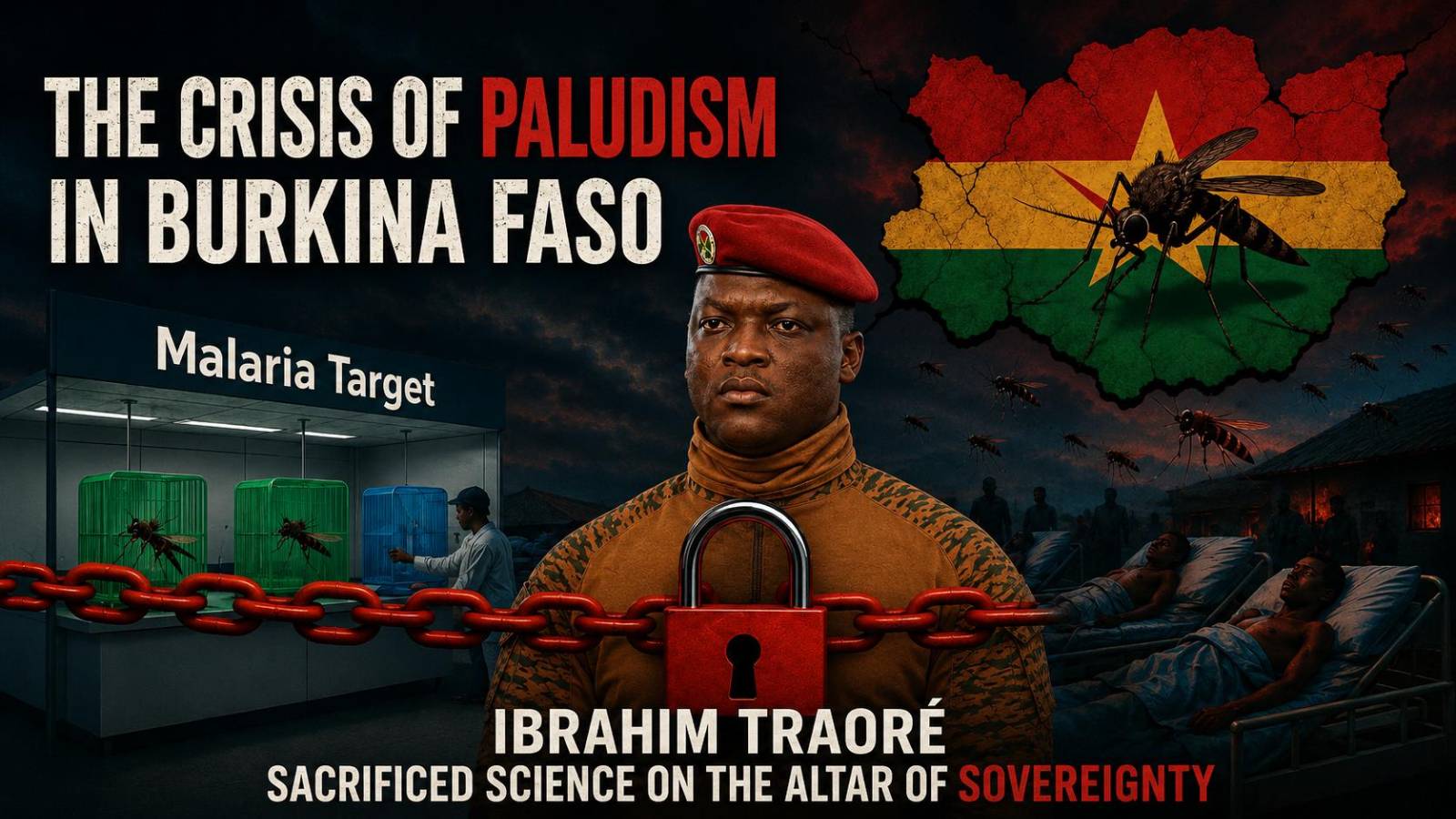
The decision by Captain Ibrahim Traoré’s regime to permanently shutter the Target Malaria project’s laboratories and mandate the destruction of its genetically modified mosquito samples marks a pivotal moment in Burkina Faso’s sovereignist rhetoric. While framed as a bold assertion of national autonomy, this drastic measure raises critical questions about the nation’s medical research future and the economic repercussions of its growing scientific isolation.
This move sends a stark, almost symbolic message to international partners and global scientific consortia. By terminating the decade-long Target Malaria initiative—largely funded by the Bill & Melinda Gates Foundation—and demanding the total eradication of its genetically modified mosquito samples, Ouagadougou has abruptly concluded a contentious chapter in both science and politics.
The suspension of activities in August 2025 had already signaled an irreversible shift. Now, the Burkinabè state has transformed that interim halt into a definitive ideological rupture, one that transcends mere policy and enters the realm of geopolitical realignment.
A tragic trade-off: science sacrificed for political symbolism
The Target Malaria project, though divisive, stood as one of the most promising avenues for combating malaria—a disease that continues to devastate populations across Sub-Saharan Africa, particularly children under five. Its approach relied on cutting-edge gene-drive technology to suppress mosquito fertility, offering hope for long-term disease reduction. Critics, however, warned of ecological uncertainties, branding the country a ‘playground for unchecked experimentation.’
The regime’s defense of ‘sanitary sovereignty’ rings hollow in the face of deeper concerns. Beyond the ideological posturing, the closure deals a severe blow to Burkina Faso’s scientific ecosystem:
- Stifling local innovation: The project integrated leading Burkinabè researchers, including those from the Institut de Recherche en Sciences de la Santé (IRSS). Its abrupt termination strips the scientific community of critical funding, expertise, and state-of-the-art infrastructure.
- Risk of brain drain: By effectively criminalizing international research collaborations, the government sends a chilling message to local academics and scientists, discouraging future partnerships and pushing talent abroad.
- A geopolitical earthquake: The decision reshapes perceptions among investors, credit agencies, and NGOs, exposing three critical fractures in Burkina Faso’s credibility:
- Erosion of contractual security: Once characterized by predictable state agreements, Burkina Faso now operates under a regime of abrupt, unilateral decisions driven by political expediency. For funders, this translates to an immediate freeze on long-term investments.
- Opacity in regulatory frameworks: Former reliance on regional and international norms has given way to arbitrary governance through decrees and sudden policy shifts. The result? A flight of capital toward more stable and institutionally reliable jurisdictions.
- Distrust in R&D cooperation: Programs that were once lauded as engines of development are now viewed with suspicion, accused of veiled espionage or foreign interference. This pervasive skepticism risks locking Burkina Faso out of global technological and scientific advancements.
The illusion of sanitary autarky
By framing the closure as a defense of its ‘biological heritage,’ the government seeks to assert full control over its health sovereignty. Yet the feasibility of this vision remains questionable. Malaria eradication demands billions in investment and sustained cross-border cooperation—mosquitoes do not recognize national borders. The notion of self-reliance in this domain is not just ambitious; it is dangerously misguided.
Understanding this geopolitical signal is essential for stakeholders across West Africa. The slide from misguided sovereignty to technological autarky risks isolating the Sahel from global capital flows and life-saving therapeutic innovations. The ultimate losers in this political posturing may well be the very citizens Burkina Faso claims to protect—those most vulnerable to malaria, now abandoned in the wake of this reckless decision.