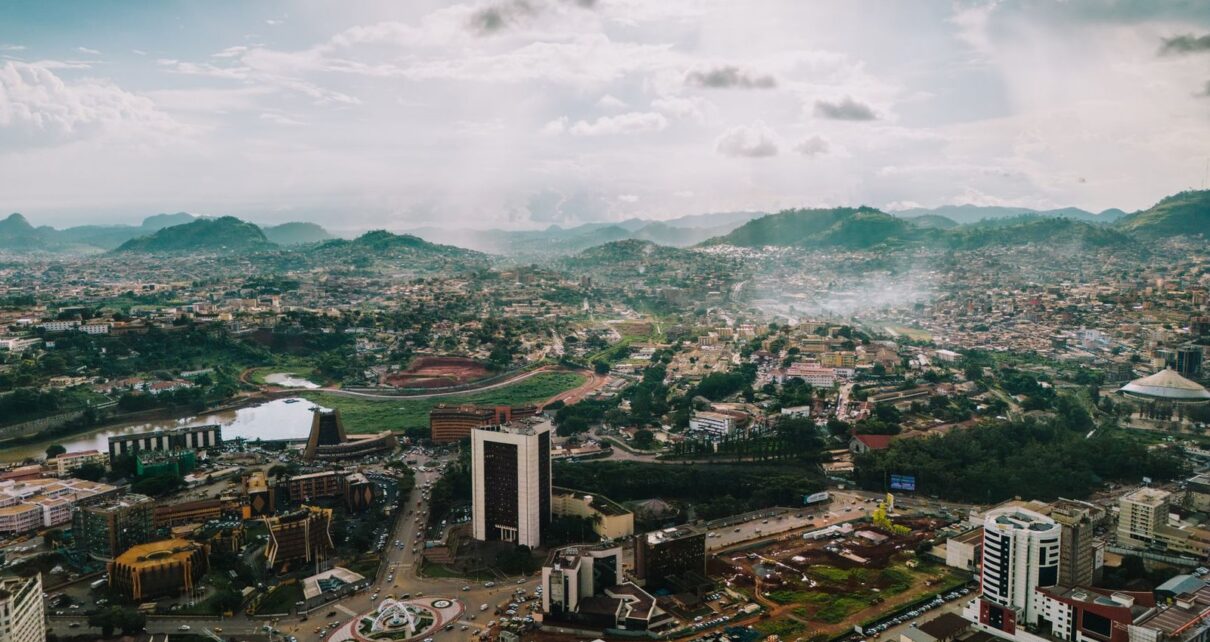
Yaoundé braces for the imminent return of President Paul Biya, a figure whose prolonged absences from Cameroon have sparked persistent speculation about his health and the continuity of governance. At 91, Africa’s longest-serving leader has spent significant time abroad in recent months, prompting renewed questions about the stability of the nation’s executive branch despite official reassurances.
The presidency’s brief statement confirms the president’s scheduled homecoming, aiming to quell rumors circulating across social media and diplomatic circles. These suspicions often revolve around the possibility of a power vacuum, a recurring concern each time Biya undertakes extended foreign trips.
Centralised leadership tested by distance
Since assuming office in November 1982, President Biya has cultivated a political system defined by extreme verticality, where power is concentrated around a single figure. His frequent absences, however, have exposed a structural fragility: how effectively can the government function when its highest authority is physically distant? Cabinet meetings occur sporadically, public statements from the president are rare, and major policy decisions often materialise through remotely signed decrees.
This intermittent governance has fostered growing unease within Cameroon’s political landscape. Opposition leaders, including Maurice Kamto of the Movement for the Renaissance of Cameroon (MRC), have repeatedly demanded clarity on whether the president retains full capacity to carry out his duties. In response, the ruling Cameroon People’s Democratic Movement (RDPC) maintains a unified front, insisting that the president remains both lucid and actively engaged.
Pre-election tensions heighten stakes
The announcement of Biya’s return takes on added significance as Cameroon gears up for the 2025 presidential election. The upcoming vote is poised to shape the country’s political trajectory, with speculation rife over whether the incumbent will seek an eighth term. To date, neither the RDPC nor Biya himself has provided a definitive answer, leaving the domestic political arena in a state of strategic ambiguity.
Meanwhile, Cameroon faces formidable economic challenges. With growth hovering around 4%, the figure falls short of meeting the demands of a rapidly expanding young population. The Anglophone crisis in the Northwest and Southwest regions, the persistent threat of Boko Haram in the Far North, and recurring communal tensions further underscore the need for responsive leadership.
International partners monitor stability
For international stakeholders—including France, China, and the United States—Cameroon’s stability remains a cornerstone of regional security. The country’s strategic location bridges Central Africa and the Gulf of Guinea, boasts a significant oil sector, and serves as a vital logistics hub for landlocked neighbors like Chad and the Central African Republic. Any prolonged uncertainty over governance is viewed as a regional risk factor.
Domestic business circles have adapted, albeit uncomfortably, to this pattern of indirect leadership. Decisions in critical sectors such as telecommunications, infrastructure, and hydrocarbons are often delayed or slowed by the absence of presidential directives. Yet, the administrative apparatus, conditioned by decades of this system, continues to operate with minimal disruption.
The impending return of Paul Biya signals a reinforcement of the status quo rather than a shift toward new political dynamics. In Yaoundé and beyond, all eyes are now on the coming weeks to determine whether actions will align with official statements. The president’s inner circle has confirmed the imminent homecoming, leaving observers to assess whether this marks a return to business as usual or a turning point for Cameroon.