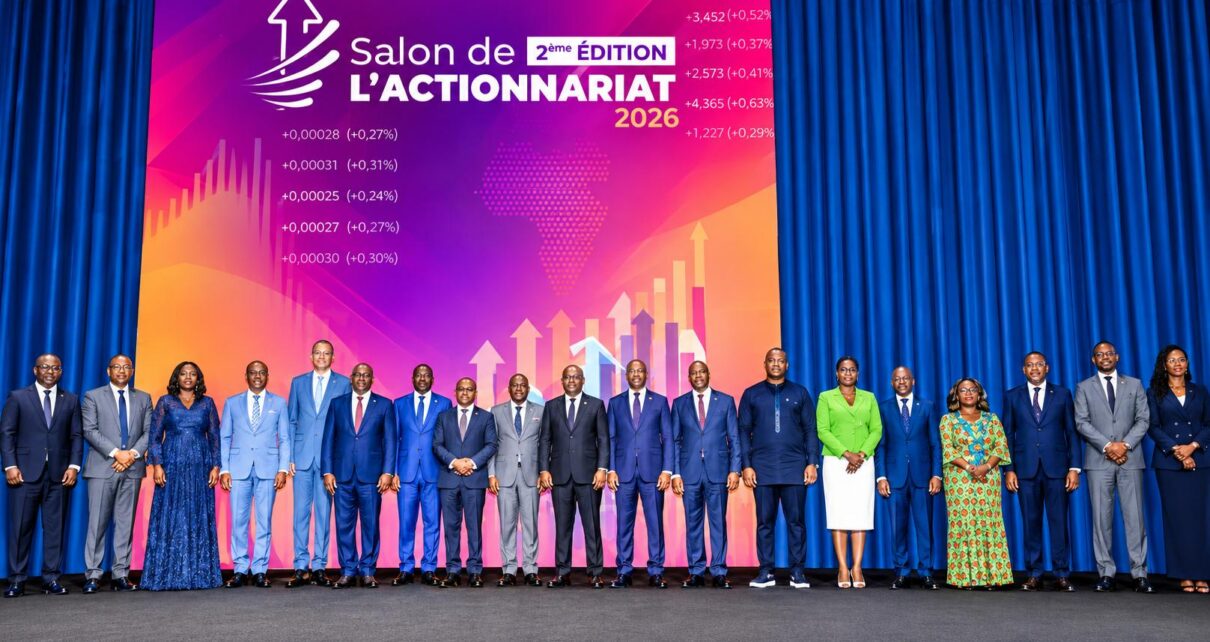
Money that sits still has a price, and in West Africa that price is paid by households, small businesses and the wider economy every single day. Fewer local companies manage to raise the equity they need, and the region keeps leaning on capital that arrives from outside on terms it does not set. That was the message that dominated Cotonou during the second edition of the regional shareholder forum, held on 17 and 18 September 2026.
Gathered in the Beninese economic capital, institutional players, company executives and market specialists called for a deep shift in how people across the West African Economic and Monetary Union (UEMOA) put their money to work. The theme they adopted — “Shareholding and financial sovereignty: mobilising savings to accelerate economic transformation” — framed a paradox that has persisted for years: although the UEMOA zone keeps posting strong growth, its financial markets still fail to capture the local savings held inside the region itself.
What the status quo costs the UEMOA economy
The organisers and the regulators did not shy away from the consequences. Building a broader base of everyday shareholders is not a slogan; it is the mechanism that would turn money currently left dormant, or channelled into very short-term placements, into productive capital. That shift would give small and medium-sized enterprises, as well as larger local groups, the own funds their expansion depends on.
Households that save but never own a share of growth
For ordinary savers, the current pattern means contributing to the economy without holding any stake in it. Keeping money in low-yield, short-horizon products limits both the returns households can capture and the role they can play in financing the businesses operating around them.
Local firms short of the equity they need to expand
On the other side of the equation, companies in the zone keep searching for long-term resources that domestic investors could, in principle, provide. The gap between those two sides is precisely what the Cotonou discussions set out to close.
Sovereignty: a buffer against shocks the region cannot control
Representatives of the Central Bank of West African States, the UEMOA Commission and the financial markets authority stressed the structural nature of the issue. By making the financing of local economies more autonomous, states and companies in the sub-region harden their defences against external shocks and the volatility that comes with international markets. Read through that lens, savings policy stops being a technical matter and becomes a question of how much control the region keeps over its own development path.
Three priorities that emerged from the Cotonou sessions
Over the two days, the work focused on a set of concrete levers:
- Access to capital markets: making it easier for local companies to list and injecting fresh momentum into the Regional Stock Exchange (BRVM).
- Inclusion and innovation: putting digital tools to work so that investment opportunities reach the general public, alongside stronger financial education.
- Regulation and public policy: adapting tax and legal frameworks so that savings are steered, durably, towards infrastructure and private-sector financing.
From idle deposits to shared ownership: what citizens would notice
As the sessions closed on Friday in Cotonou, participants converged on one point of urgency: encouraging every citizen to become a direct player in the region’s economic growth through shared investment. If that call is acted upon, the effects would surface in daily life — households holding a genuine stake in the companies operating in their own markets, local businesses financing their expansion closer to home, and a regional economy far less exposed to decisions taken beyond its borders.