Fichier généré le

Cameroon: “The Fallen of the Republic”
Since 1982, President Paul Biya has shaped and reshaped the political landscape in Cameroon, elevating and then abruptly discarding key figures. Some ambitious men paid the price for their aspirations with lost freedom, while others simply sought a share of power alongside the long-serving leader.
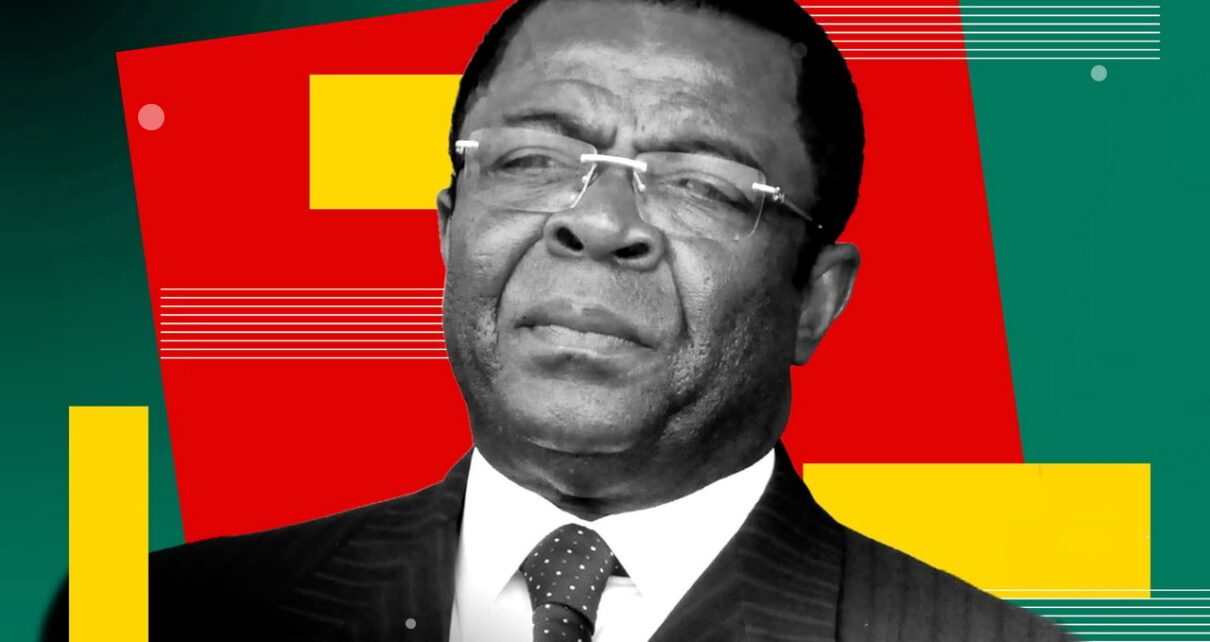
Edgar Alain Mebe Ngo’o: The downfall of Cameroon’s once-powerful security chief
Once a trusted figure within Cameroon’s corridors of power, Edgar Alain Mebe Ngo’o rose through the ranks as a security expert and defense minister, earning a reputation for unshakable loyalty to President Paul Biya. His career trajectory mirrored that of many political heavyweights in Yaoundé—until it took a dramatic turn toward disgrace.
A career built on loyalty and influence
Mebe Ngo’o’s ascent in Cameroon’s political sphere was nothing short of meteoric. Appointed as Minister of Defense in 2011, he became a central pillar in Paul Biya’s strategy to maintain control over the country’s security apparatus amid growing challenges. His tenure was marked by a firm hand in managing internal security and external threats, positioning him as a key player in the regime’s stability narrative.
Behind the scenes, he was often seen as a hardliner within the government, advocating for a no-nonsense approach to dissent and opposition. His influence extended beyond military matters, as he played a role in shaping Cameroon’s broader political landscape, particularly during periods of heightened instability in the Anglophone regions.
The turning point: from favor to fall
The relationship between Mebe Ngo’o and the presidency, however, was not as unbreakable as it seemed. Tensions simmered beneath the surface, fueled by shifting power dynamics and the president’s long-standing practice of replacing loyalists once they became too prominent. His eventual removal from office in 2018 sent shockwaves through the political establishment, marking one of the most visible cracks in a system built on perceived invincibility.
The reasons behind his dismissal remain shrouded in speculation. Some analysts suggest it was a response to internal power struggles, while others point to his perceived overreach within the security sector. Whatever the cause, his departure signaled a broader trend: no one, regardless of their past service, is immune to the president’s shifting priorities.
Life after power: a fallen heavyweight
Since his ousting, Mebe Ngo’o has largely retreated from the public eye. His once-dominant presence in state media has faded, and his name is no longer a fixture in discussions about Cameroon’s future. Yet, his story serves as a cautionary tale for others who have enjoyed the president’s favor—reminding them that in Cameroon’s political arena, today’s trusted ally can swiftly become tomorrow’s disgraced figure.
His fall also highlights the volatility of power in Cameroon, where loyalty is a currency that can be spent—and then revoked—without warning. As the country continues to navigate complex security and political challenges, the rise and fall of figures like Mebe Ngo’o offer a glimpse into the inner workings of a system where survival often depends on reading the room—and knowing when to step back.