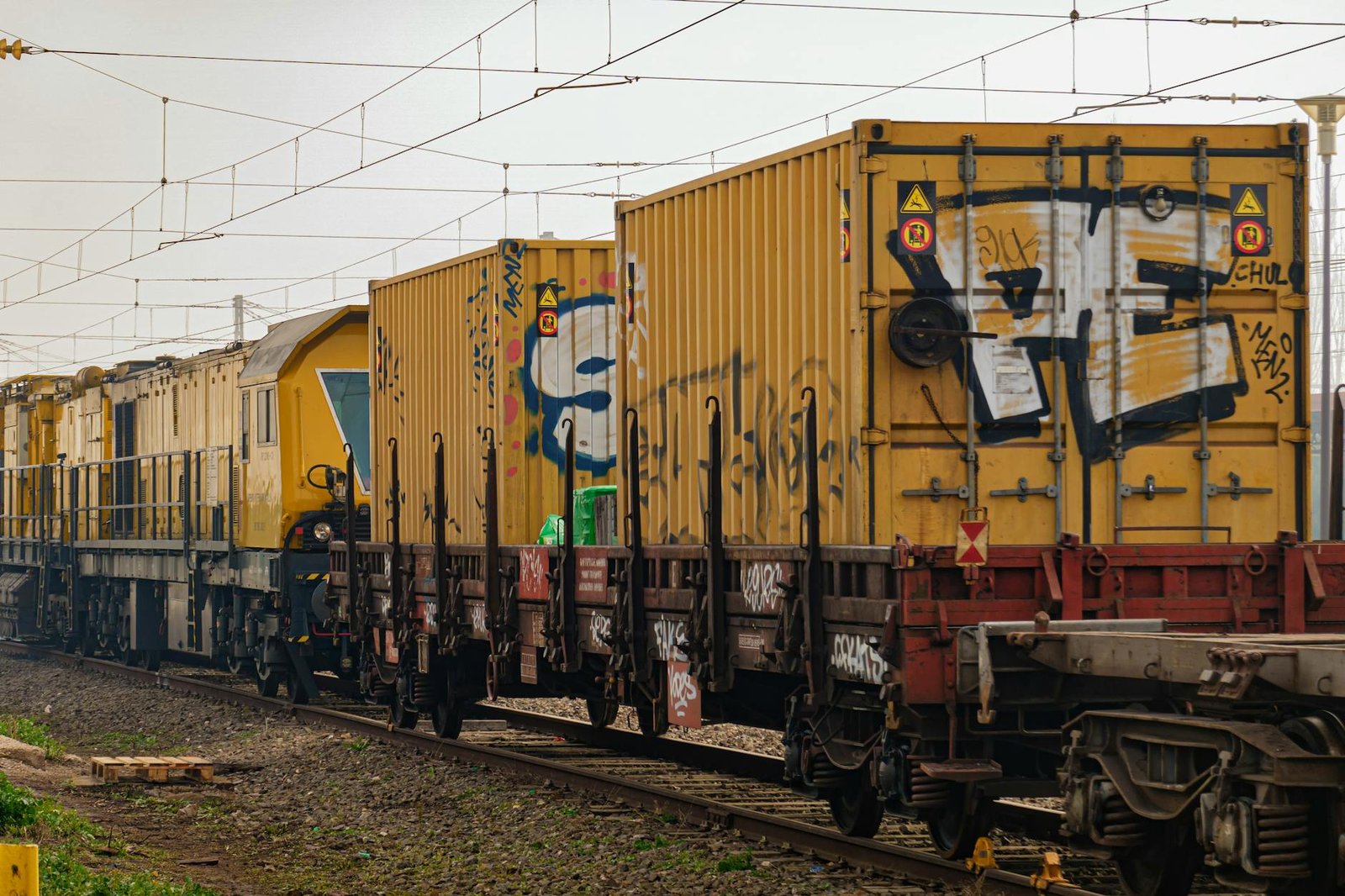
The Edéa–Kribi–Lolabé–Campo railway corridor project in Cameroon reaches a pivotal milestone this week with a landmark memorandum of understanding (MoU) set to be signed in Yaoundé. The agreement, slated for Thursday’s ceremony at the Starland Hotel, unites the Cameroonian government, Africa Global Logistics (AGL), and Camalco—Canyon Resources’ local subsidiary. At the helm of the event is Jean Ernest Massena Ngallè Bibehe, Minister of Transport, who will oversee discussions aimed at finalizing the framework for this critical infrastructure.
Railway corridor to redefine Cameroon’s logistics landscape
The MoU signing marks more than just an administrative formality; it signals a strategic overhaul of Cameroon’s logistical backbone. The Edéa–Kribi–Campo corridor has long been a cornerstone of the nation’s railway expansion plans. Since 2021, authorities have been laying the groundwork for two key sections totaling 291.5 kilometers: the Edéa–Kribi–Campo route (184.5 km) and the Douala–Limbé–Idénau segment (107 km). The updated proposal integrates Lolabé, a strategic site adjacent to the deep-water port of Kribi, enhancing the corridor’s role in southern Cameroon’s development.
The proposed public-private partnership will encompass every phase of the project, from feasibility studies and financing to construction, operation, and long-term maintenance. While no final investment decision has been made, key details remain under review, including the exact alignment, phased construction timeline, total budget, concession duration, and service launch schedule. For the government, this project is a strategic move to unlock the economic potential of southern regions and boost export corridors. For AGL, a major player in Central African logistics, it represents an opportunity to solidify its leadership in cargo transportation networks.
Kribi port emerges as a linchpin for mineral exports
The corridor’s economic viability hinges on Kribi’s deep-water port, Cameroon’s only such facility. Despite its potential, the port’s growth has been constrained by limited overland access—a gap that a railway connection could effectively bridge. Such a link would create a seamless integration between the port, nearby industrial zones, and international trade routes. Kribi could then handle volumes that Douala, constrained by the Wouri estuary, struggles to process efficiently due to navigational limitations.
The MoU also underscores the corridor’s mining dimension, thanks to Camalco’s involvement in the Minim Martap bauxite project in the Adamaoua region. Canyon Resources estimates proven reserves at 144 million tons, with an average alumina content of 51.2% and silica at 1.7%. Total resources are projected at a staggering 1.102 billion tons. Such massive volumes demand a robust evacuation chain, spanning mining operations, rail transport, storage terminals, and mineral-carrying vessels.
Camalco secures critical infrastructure links
In the interim, Canyon Resources’ short-term strategy continues to rely on Douala for mineral exports. To strengthen this pathway, Camalco has invested 9.852 billion FCFA to increase its stake in Camrail—operator of Cameroon’s railway network—from 9.1% to 26.9%. Additionally, the company has allocated 347.447 million FCFA to expand Terminal Bois du Port de Douala S.A. Preparations are also underway for the Inland Rail Facility and port upgrades, with the first locomotives slated for delivery by the second quarter of 2026 and wagons following in July. The maiden voyage of bauxite exports is targeted for the third quarter of 2026.
However, Douala’s navigational constraints inevitably inflate operational costs for bulk mineral shipments. The Edéa–Kribi–Lolabé–Campo corridor offers a long-term solution by providing direct access to a deep-water port, reducing reliance on the current system. For Cameroon, the project aligns with broader goals: regional connectivity, natural resource valorization, and positioning Kribi as a premier export hub.
Uncertainties remain, particularly regarding the total investment cost, risk-sharing models, and potential environmental and land-use impacts. These factors will determine the project’s appeal to international investors and the sustainability of its economic model. Nonetheless, the Yaoundé MoU signals the corridor’s reinstatement as a national priority, paving the way for a future logistics architecture where rail, ports, and mining converge.