
Historical roots of Cameroon’s federal structure
Cameroon’s journey toward federalism traces back to its early post-independence years. In the 1960s, the country emerged from colonial divisions that had separated its Anglophone and Francophone regions. The reunification of British Southern Cameroons with French Cameroon in 1961 laid the groundwork for a federal system designed to accommodate both linguistic and cultural divides.
Under the leadership of President Ahmadou Ahidjo, Cameroon adopted a federal constitution in 1961, granting significant autonomy to its two federated states. This structure aimed to preserve the distinct identities of the Anglophone and Francophone regions while maintaining national unity. However, the federal experiment lasted only until 1972, when a referendum replaced it with a unitary system.
Revival of federalism debates in modern Cameroon
Decades later, the federalism debate has resurfaced amid deepening tensions in the Anglophone regions. Since 2016, protests and armed conflicts have flared up, driven by grievances over marginalization and demands for greater autonomy. The crisis has reignited discussions about revisiting the federal model as a potential solution to the ongoing strife.
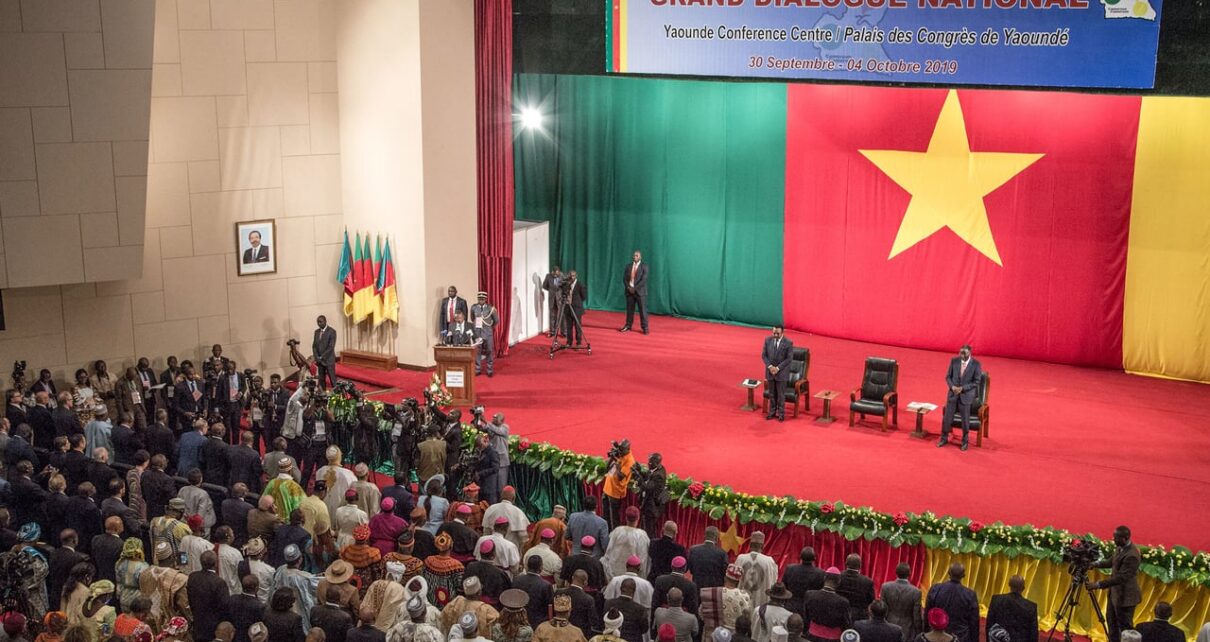
In 2019, President Paul Biya initiated a national dialogue to address the Anglophone crisis. The talks, presided over by Prime Minister Joseph Dion Ngute, brought together government officials, civil society leaders, and representatives from the Anglophone community. While the dialogue aimed to foster reconciliation, participation from key separatist figures remained conspicuously absent, limiting its potential impact.
Challenges to restoring federalism
The path to federalism in Cameroon is fraught with obstacles. One of the most pressing challenges is the lack of consensus among stakeholders. While some advocate for a return to federalism as a means to pacify the Anglophone regions, others argue that a unitary system is better suited to maintain national cohesion. Additionally, separatist groups remain deeply divided, with some rejecting any form of negotiation short of outright independence.
Another hurdle is the political will required to implement structural reforms. Federalism would necessitate constitutional amendments, which could face resistance from entrenched political elites wary of decentralization. The government’s approach to the Anglophone crisis has also been criticized for its heavy-handed tactics, which have exacerbated tensions rather than eased them.
Can federalism unite Cameroon?
The question of whether federalism can restore unity to Cameroon remains hotly contested. Proponents argue that a federal system could grant the Anglophone regions greater autonomy, addressing historical grievances and reducing separatist sentiments. By devolving power to regional governments, federalism may offer a framework for power-sharing and inclusive governance.
However, skeptics point to the risks of federalism exacerbating divisions rather than resolving them. They warn that decentralization could empower regional leaders to the detriment of national unity, particularly if such leaders prioritize parochial interests over collective progress. The success of federalism would hinge on Cameroon’s ability to foster trust, inclusivity, and a shared vision for the future.
Looking ahead: prospects for reform
As Cameroon grapples with its federalism dilemma, the road ahead is uncertain. The government’s willingness to engage in meaningful dialogue and implement reforms will be critical in determining whether federalism can serve as a viable solution. Meanwhile, the Anglophone crisis continues to exact a heavy toll on the nation, underscoring the urgency of finding a sustainable path forward.
The federalism debate is more than a political discussion—it is a reflection of Cameroon’s struggle to reconcile its diverse identities while preserving its sovereignty. Whether federalism can bridge these divides remains an open question, but one thing is clear: the stakes for national unity have never been higher.