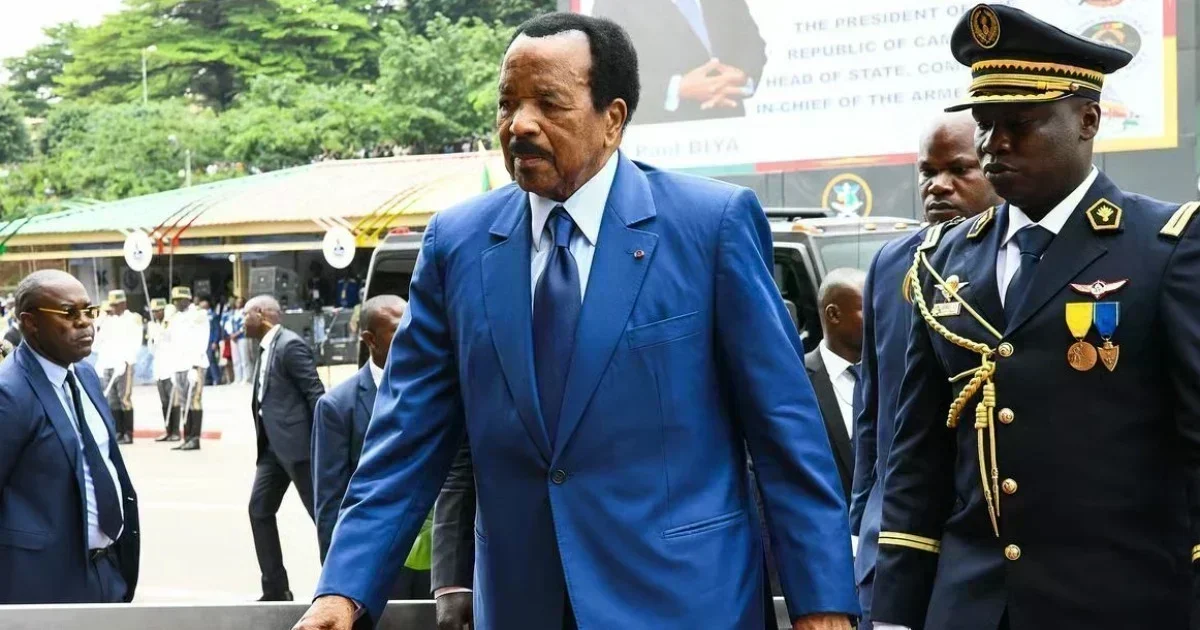
Cameroon is currently witnessing a significant overhaul in its military leadership, just as President Paul Biya marks nearly two months outside the country. A presidential decree dated August 3 has officially confirmed the appointment of four high-ranking officers, including a new commander for the presidential guard—a role historically reserved for senior security officials entrusted with the safety of the head of state.
Strategic military appointments amid political uncertainty
The reshuffle affects key positions within the Cameroonian armed forces, reflecting a tightening of security measures around the president’s protection. Among the newly appointed generals is Raymond Jean Charles Beko’o Abondo, who now leads the presidential guard, a move described as unprecedented in recent decades.
Additionally, General Ebaka Hypolite, aged 73, has been named Major-General of the Armed Forces. While retaining his position as the army’s top commander, he now holds a dual role that places him second only to the Chief of Army Staff, General René Claude Meka. This restructuring underscores an intensified focus on leadership continuity and operational command within the defense sector.
Concerns rise over prolonged presidential absence
President Biya’s extended stay abroad—since June 7—has triggered widespread speculation regarding his health and ability to govern. At 93, he is the world’s oldest serving head of state, having led Cameroon since 1982. Government officials have dismissed concerns about his well-being, describing his trip as a private visit to Europe.
However, critics, including opposition figures, argue that his absence has created a dangerous institutional void, with the country allegedly operating in autopilot mode. Calls for the appointment of a vice president and a new government have grown louder, yet no concrete steps have been taken to address these concerns.
Security apparatus strengthened during leadership transition
The timing of these military appointments has not gone unnoticed. With the president away, the government appears to be reinforcing its security framework by placing trusted military personnel in critical roles. The decree, bearing Biya’s signature, signals a deliberate effort to stabilize the country’s leadership structure despite the ongoing uncertainty surrounding his return.