In a strong statement, the National Episcopal Conference of Congo (CENCO) condemns any attempt to alter the constitution of 18 February 2006. According to the church, modifying the entrenched provisions would expose the country to “enormous risks, including balkanisation.”
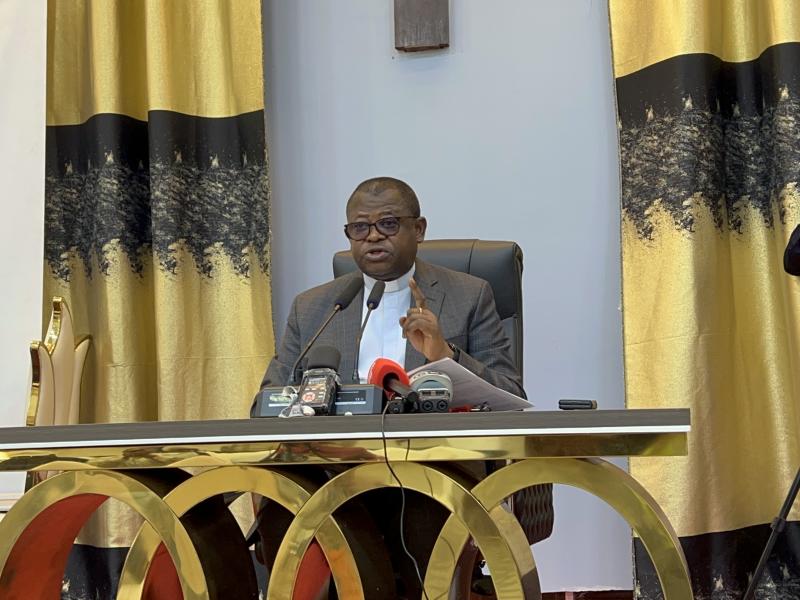
The Catholic Church is ramping up its opposition to proposed constitutional changes. In a public declaration, Donatien Nshole, then spokesperson for CENCO, denounced the move as a way to “grant another term to the current president of the republic.”
For CENCO, such a step undermines “a historic political compromise that was hard-won after all the crises the country has faced since independence.” The bishops are directly targeting the referendum law, which they say was passed “under the pretext of filling a legal vacuum.”
According to Donatien Nshole, that law would pave the way for a popular consultation that could, “in violation of the constitutional order, modify the intangible matters already locked in by Article 220.”
CENCO’s spokesperson recalled that Article 220, which among other things locks the number and length of presidential terms, “stands as a real safeguard against dictatorship and the privatisation of the state.” The church’s warning also focuses on the consequences. “Any forced move in this direction carries enormous risks, including the balkanisation of the country,” Donatien Nshole stressed. He also fears the “triggering of another civil war” in a context where “political rivalries take on ethnic and tribal undertones.”
At the end of what he called “deep discernment,” CENCO says it sees “neither the necessity, nor the urgency, nor the opportunity for a constitutional change.”
For the Catholic Church, the priorities in the Democratic Republic of the Congo remain “peace, the social well-being of the Congolese people, unity and national cohesion.”