Le Tchad s’envole avec la première édition du Café Drone
Le Tchad accueille la première édition du Café Drone, explorant les opportunités des drones civils dans l’agriculture, l’élevage et la gestion environnementale. Des experts discutent des défis réglementaires, de formation et d’intégration.
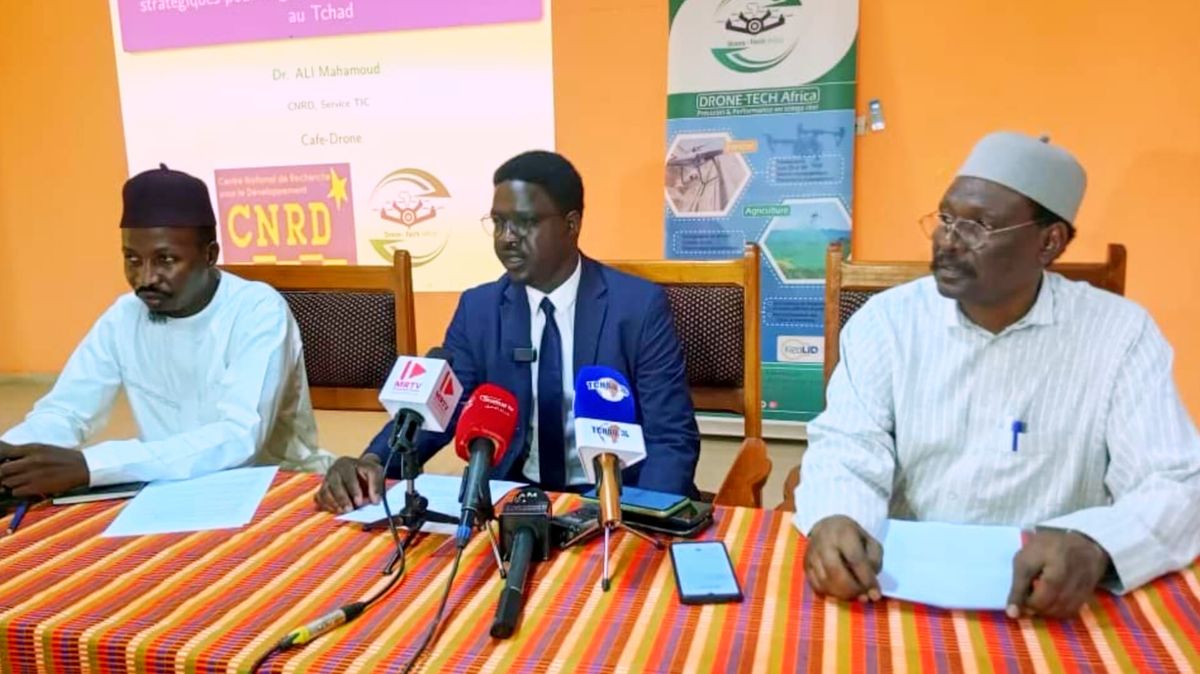
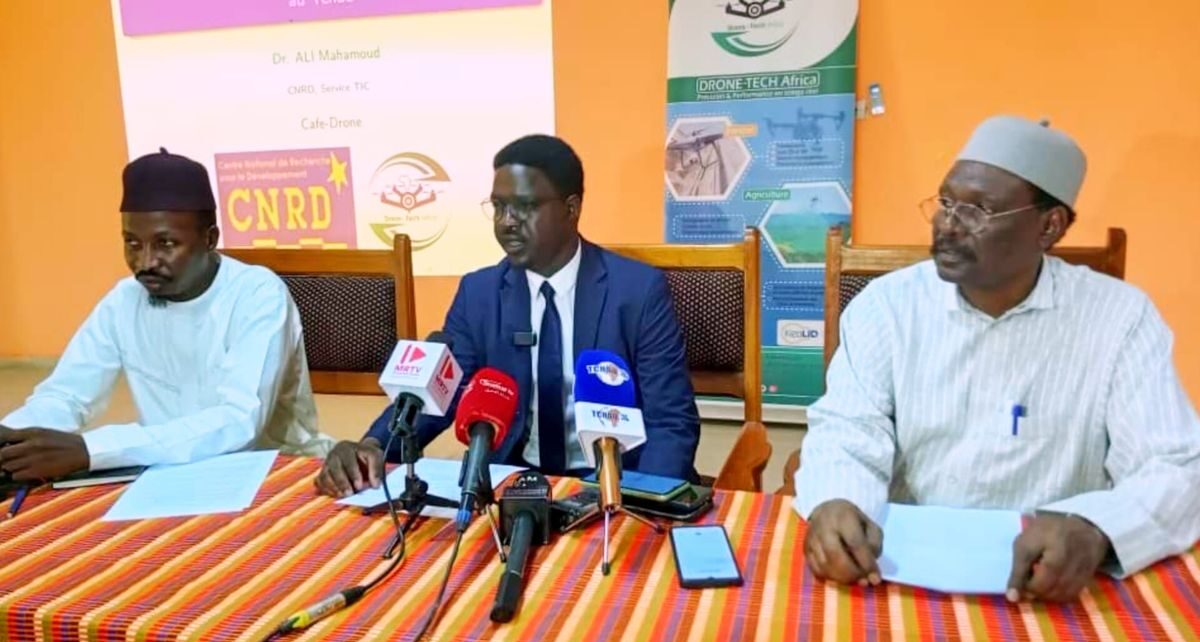
On June 25, 2026, N’Djamena witnessed a landmark event as Tech Africa, Tchad FlyingLabs, and WeRobotics, in collaboration with the Centre National de Recherche pour le Développement (CNRD), hosted the inaugural Café Drone. This pioneering gathering, held at the CNRD premises, centered on the compelling theme: « Les opportunités liées aux drones civils » (Opportunities related to civil drones).
The initiative’s core objective was to champion the significance and practical deployment of unmanned aerial vehicles across various critical sectors within Chad. Discussions specifically highlighted their potential in advancing agriculture, optimizing livestock management, and enhancing the oversight of the nation’s vital natural parks and reserves.
Professor Mahamoud Youssouf Khayal, Director General of the CNRD, opened the event by emphasizing its historic nature. He remarked that it was the first time national and international experts in drone technology had convened in N’Djamena at a dedicated research and development facility. Prof. Khayal underscored that drones are no longer a futuristic concept but a tangible reality of the present. He articulated, « Au Tchad, notre vaste territoire, nos défis logistiques, nos besoins en données géospatiales et en réponse rapide aux crises font des drones une solution d’une pertinence exceptionnelle » (In Chad, our vast territory, logistical challenges, geospatial data requirements, and need for rapid crisis response make drones an exceptionally relevant solution).
Professor Khayal also outlined several crucial challenges that Chad must overcome to fully harness the benefits of this aerial technology:
- Regulatory Framework: How to ensure the safe operation of drones while simultaneously fostering innovation.
- Training and Education: The imperative to equip young Chadians with the skills demanded by future careers in drone technology.
- Integration and Collaboration: The necessity of fostering dialogue and synergy among governmental institutions, private sector operators, and researchers.
Expressing gratitude, the CNRD Director General commended Drone Tech Africa, Tchad FlyingLabs, and WeRobotics for their visionary initiative and unwavering commitment. He also acknowledged the presence of experts who have already translated these technologies into operational solutions. He urged participants to seize this unique opportunity for learning, forging partnerships, and laying the groundwork for a comprehensive national drone roadmap. « La recherche n’est pas une activité lointaine. Elle est ici, au cœur de nos préoccupations quotidiennes. Et les drones en sont une illustration parfaite » (Research is not a distant activity. It is here, at the heart of our daily concerns. And drones are a perfect illustration), he declared. Prof. Khayal extended further thanks to the dedicated CNRD teams for their seamless organization of the event, as well as the technical and financial partners who believed in the project’s vision.
Mahamat Issa Abakar, Director of Drone Tech Africa, captivated the audience with a presentation showcasing research achievements, including projects conducted in Burkina Faso. He detailed agricultural studies undertaken in Chad’s Guéra province, specifically in Mongo, Baro, and Tabo, where a women’s agricultural endeavor was documented by drone. This filming aimed to understand their agricultural practices in the face of resilience challenges. The overarching goal of this research was to identify methods to boost agricultural yields by up to 30% through advanced drone utilization.
Ali Mahamoud, a service head at CNRD, then delved into the application of Artificial Intelligence in research and highlighted the critical role of drones in mitigating conflicts between farmers and herders. These conflicts are often exacerbated by drought, water scarcity, and the broader impacts of climate change. He further elaborated on the vital function of drones in wildlife surveillance within Zakouma National Park, monitoring transhumance corridors, aiding mineral prospecting, and facilitating gold exploration. Mahamoud stressed the indispensable value of drones in acquiring crucial statistical data across these diverse fields.
The third speaker, Dr. Djimassal, a research officer, provided insightful clarifications on the use of satellite imagery. He explained how satellites capture images from space to visualize various environmental features, including vegetation patterns, rivers, clear forests, human habitations, shrub and herbaceous savannas, grazing areas, and thickets, particularly in Chad’s northern regions. Dr. Djimassal offered a detailed interpretation of these images, demonstrating how they reveal insights into different natural resources, lakes, and indigenous forests.
Following these illuminating research presentations, a dynamic panel discussion was convened, allowing participants to engage in a deeper exchange on the profound importance of employing drones across a multitude of sectors.